
Can You Use AI Photos on Dating Apps? The 2026 Rules
Tinder, Hinge, and Bumble all allow AI-enhanced photos. None let you be someone else. The 2026 rules, the detection tech, and a three-question disclosure test.
Short answer: yes, carefully. Tinder, Hinge, and Bumble all allow AI-enhanced photos. None of them let you be someone else. The rule that matters isn't "is this AI" but "does it still look like you in real life". Miss that line and you risk a ban, a broken first date, or both.
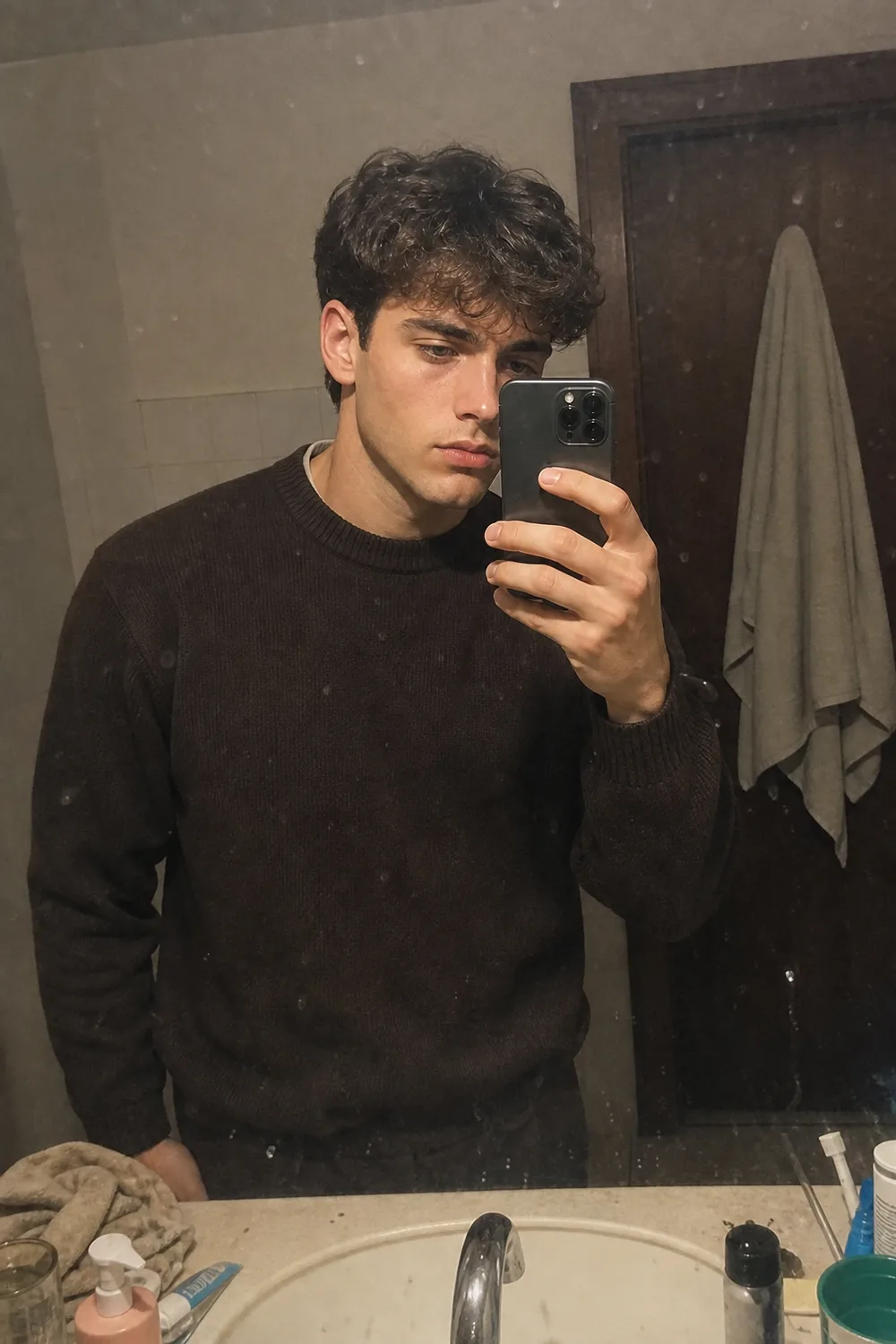 Before
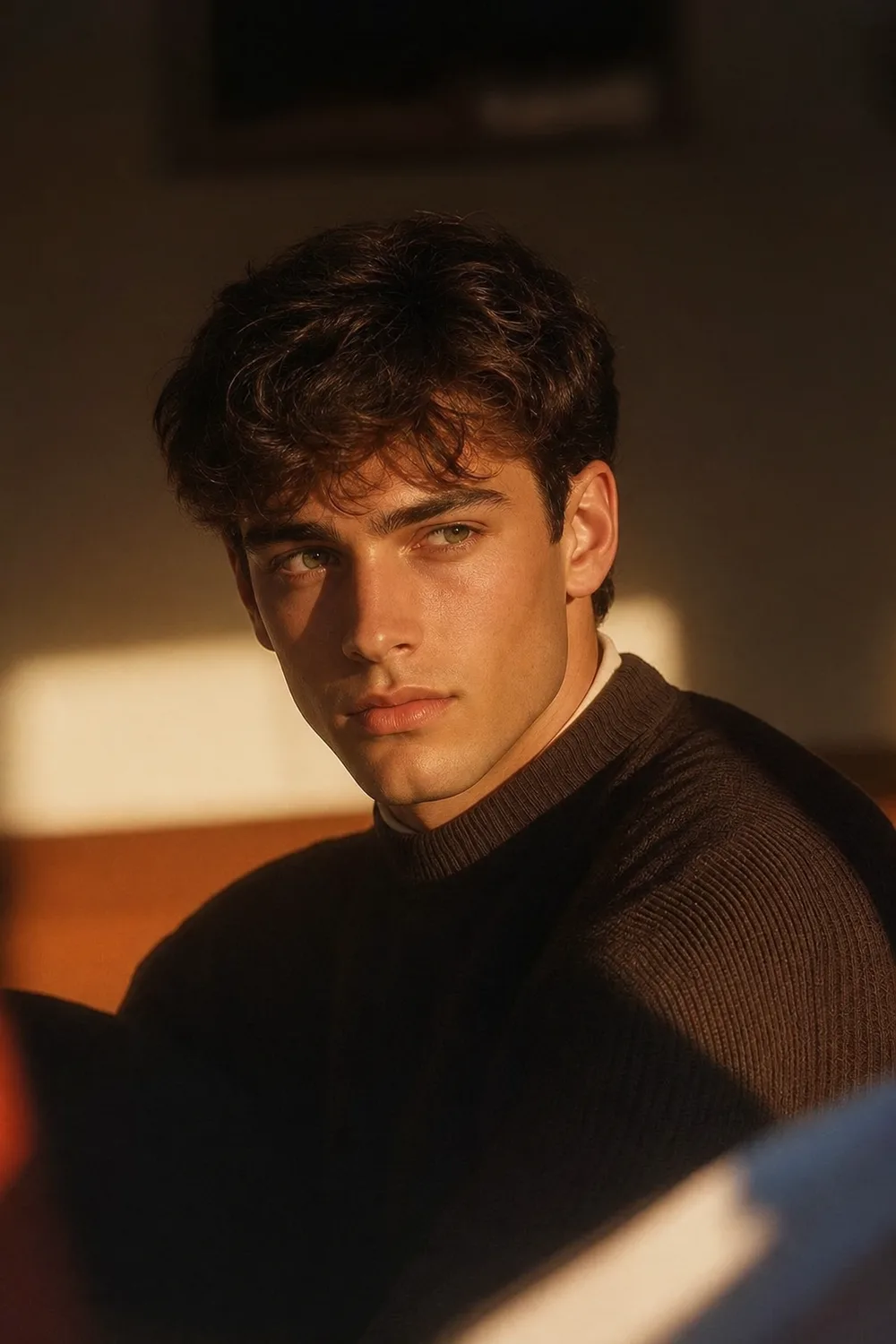 After
AfterStudio / Private by design
See yourself shot properly.
Use our AI dating photo generator to create profile pictures from four everyday selfies. Your uploads are encrypted, never used to train AI, and become inaccessible five days after upload.
Or quick sign-in from here
Tinder, Hinge, Bumble: what each app actually says
We all want a simple yes or no on this. The policies don't quite give us one. But if you read the actual language on the actual pages (not the forum rumors), a pattern shows up fast. Every major app treats AI as a tool you're responsible for, not as a disguise you can hide behind.
Tinder covers it in Section 3a of the Terms of Use: "Certain tools or features may allow you to generate or enhance content based on Your Content, including with the use of AI Technology. This is still Your Content, and you are responsible for it." Translation: use AI, fine, but if the photo misrepresents you, Tinder treats that exactly like any other fake profile. Section 2c of the same Terms specifically bans users from misrepresenting "identity, age, employment (current or previous), qualifications or affiliations." And Rule 5 of the Community Guidelines is blunt: "Be yourself."
Hinge has the clearest policy of the three, and it sits on a standalone page called AI Principles. The Authenticity principle reads: "If you decide to include generative AI images, audio, or video in your profile, it should not be used to misrepresent yourself or your intentions, per our Terms of Service and our Community Guidelines." Read that twice. Hinge says AI is OK but misrepresentation is not. Same line as Tinder.
Bumble took a third approach. Rather than publish a long AI policy, Bumble added a reporting category in July 2024 that lets users flag "Using AI-generated photos or videos" under the Fake profile umbrella. VP of Product Risa Stein framed the launch like this: "An essential part of creating a space to build meaningful connections is removing any element that is misleading or dangerous." The message is obvious. Bumble watches for deception.
Match and OkCupid, both under the Match Group umbrella that also owns Hinge and Tinder, inherit the same overall posture (plus a heavy asterisk on data trust: Match Group agreed to an FTC settlement in April 2026 that includes a 20-year ban on misrepresenting its data practices, tied to OkCupid handing ~3 million user photos to Clarifai in 2014 without consent). If you're weighing whether to trust the platforms on AI, that asterisk is worth holding.
The line: enhancement vs an invented face
Here's the part the policy pages don't quite spell out. There's a big difference between AI that shows the you who already exists more clearly, and AI that invents a you who doesn't. Only the first one survives a first date.
The cleanest framing I've heard on this came from a CBC News feature on AI dating: treat AI enhancement the way you'd treat describing a real physical feature in your bio. If you have a prosthetic leg and you mention it in your bio, nobody accuses you of catfishing. You're helping your match form a realistic picture of you. AI that tidies your hair, fixes the lighting, or puts you in a cleaner shirt is doing the same job. It's presenting an already-existing you more faithfully.
Invented faces are different. Reshaped jaws, slimmed noses, new bone structure, a smile your phone camera has never once captured. That's not you being photographed differently. That's a stranger. And when that stranger shows up to coffee, your match figures it out in about three seconds. (One eJuiceDB survey of 1,000 U.S. daters in February 2026 found that 41% said "looking significantly different in real life from profile pictures" kills attraction outright.)
Dating photographer Eddie Hernandez takes a harder position and it's worth hearing. Some over-smoothed AI photos, he writes, "are super obvious and can suggest insecurity, misleading efforts or even catfishing." But in the same piece he also notes that "using AI generated images is just like photoshopping your photos" when it's used as enhancement. The line between those two sentences is the one that matters.
My view: tools that work from several real face angles, disclose their data handling, and ask you to review every result sit on the safer side of the policies quoted above. Dating Image Pro uses four selfies, never uses web uploads for AI training, and expires web source uploads after five days. See the Web Studio workflow and use only results that remain recognizably you.
How dating apps detect AI photos in 2026
If you've been reading forums, you've probably seen some version of "they'll never know." That is increasingly wrong. Here's what the major apps actually run right now:
Face Check Scan (Tinder and Hinge). Match Group extended FaceTec's biometric liveness tech to Hinge globally in February 2026, after making it mandatory on Tinder in the U.S. The scan, in Hinge's own words, "checks that the video was taken of a real, live person, and that it was not digitally altered or manipulated." Under the hood, it builds a 3D face map (a FaceMap) and converts it to a numeric signature (a FaceVector) used to catch the same face across multiple accounts. AI photos that reshape facial features tend to fail the match against the live video selfie.
Bumble Deception Detector. Launched in February 2024, Bumble reported it blocks up to 95% of accounts it flags as fake. By July 2024 Bumble said the system had also reduced member reports of spam, scams, and fake profiles by 45% overall. The July reporting update added a specific bucket for "Using AI-generated photos or videos," which feeds the model more labeled examples over time.
Pixel-level detectors. Tinder reportedly uses Amazon AWS image recognition as one detection layer (per a 2026 GetMatches survey). These models look at sensor noise signatures, texture fingerprints, and JPEG compression artifacts (the invisible stuff real cameras produce and diffusion models don't). Google's SynthID watermark goes further, embedding markers inside the image itself so detection doesn't have to depend on artifacts at all.
Identity verification is also spreading. Bumble added government-ID verification across 11 countries in March 2025, including the U.S., U.K., Canada, Australia, France, India, Ireland, Spain, Germany, Mexico, and New Zealand. The U.K.'s Online Safety Act and Australia's Social Media Minimum Age Act also pushed Match Group to roll out Facial Age Estimation on Hinge in those markets in 2026. The trend line is going one direction: more verification, not less.
And then there's the ban pattern nobody likes to talk about. A July 2025 X thread by signüll described Hinge bans as operating as "biometric exile," locking the user's face through facial recognition plus Apple DeviceCheck so the ban survives reinstallation and new iCloud accounts. That's consistent with what users report in r/hingeapp: once a face is flagged in connection with an AI-photo ban, getting back in is extremely hard.
The trust paradox: what other daters actually think
This is the part of the research that genuinely surprised me. Users are far more comfortable using AI themselves than they are with matches using AI on them.
In a 2026 U.K. survey by Sumsub (building on Censuswide polling of 2,000 dating app users in January 2025), 54% said they are open to or already using AI to edit or create their own profile images. And yet 64% of daters say they distrust matches who use AI-generated images (GetStream). On the U.S. side, 56% of singles in an eJuiceDB February 2026 poll called AI-generated or heavily edited photos a "red flag."
The gap is the whole story. Your match has to survive it. (We've all been the person refreshing a profile for a second look, wondering if the photos are real. That sting doesn't come from a policy page.)
There's a detection gap on top of the trust gap. The same U.K. research found 75% of dating app users believe they've come across deepfake profiles, and 19% say they've personally been fooled by one. The sneaky stat is this: 79% of the users who were actually fooled had been confident they could spot a deepfake. A landmark 2022 PNAS study by Nightingale and Farid found people judged AI faces as real at roughly 50% accuracy (pure chance), and actually rated AI faces as 7.7% more trustworthy than real faces. A 2025 Vrije Universiteit Amsterdam study looked specifically at dating profiles and found detection accuracy drops below chance there.
Translation: most people think they can spot AI photos. Most people can't. So whose comfort matters more here, yours or your match's? The only stable defense for the person on the other end is that the face they saw online is the face that shows up to dinner.
What doesn't work (and will get you banned)
The patterns below fail on every platform, every time, and they're the ones to leave alone.
- Completely invented faces. Any tool that generates a portrait without using your actual selfies as reference. Zero-shot "handsome stranger" generators fall here. These fail Face Check Scan the moment you try to verify.
- Heavy face reshaping. Changed jawlines, altered noses, enlarged eyes, slimmed cheeks. The PNAS finding on detection (50% chance) doesn't protect you once your live video selfie is run against the photo.
- Old photos re-dressed with AI. A flattering 2019 selfie, upscaled and restyled, is still a misrepresentation if you've aged five years. Use current reference shots.
- Over-smoothing. Skin with no visible pores, and eyes symmetrical down to the millimeter. This is the plastic look Eddie Hernandez calls out. Bumble's Deception Detector and the pixel-level model at Tinder both flag over-smoothed skin as a strong AI signal.
- Using someone else's face. Obvious, but worth stating. Tinder Community Guideline Rule 11 prohibits posting others' images without consent, and using another person's face to extract money or emotion crosses into federal territory (18 U.S.C. 1343 wire fraud, plus identity theft). Catfishing sentencing starts at six months for misdemeanors. Felony catfishing starts at 12 months or more.
The three-question disclosure test
Before a photo goes on your profile, ask yourself three questions. If you can't answer yes to all three, take the photo out.
- Does it still look like me? The friend test: send the photo to two people who know your face well, without context. If they comment on anything that isn't true in real life (new hair, new skin, new teeth, different build), recut the photo. TruShot puts it plainly: "If your close friends can't recognize you, matches won't either."
- Would I be comfortable if my match asked about it? Imagine a first-date moment where your match says, "Is your first photo AI?" If the honest answer is "it's AI-styled but that's how I actually look," you're fine. If the answer needs an apology or a long explanation, take it out.
- Does it pass the platform's rule? Re-read the two-sentence tests from earlier. Tinder: is this still me, and am I responsible for it? Hinge: is it misrepresenting me or my intentions? Bumble: would a reasonable user be misled?
If you want to disclose in your bio, one line does the work. "First photo is AI-styled, the rest are phone pics" preempts the awkward question without turning your bio into a legal disclaimer. Most users don't need to say anything. If the three-question test already passes, the photo has done the disclosure work by looking like you.
How photos fit into the rest of your profile
Photos aren't everything. But on dating apps, they're the first gate. Data from Hily's 2026 Gen Z dating survey showed that profiles with incomplete photo sections were roughly 8x less likely to get first matches than complete profiles. TruShot's own user data points the same way: where photos fail, the bio and the prompts barely get read.
The sequence most experts I've talked to suggest: get the photo foundation right first, then the prompts, then the bio, then the algorithm hygiene (see How to Get More Matches on Dating Apps for the full sequence, and Why Am I Not Getting Matches for a troubleshooting flow if nothing is landing). If you decide to use AI on the photo foundation, spend thirty minutes on the post-generation audit: How to Make AI Dating Photos Look Real covers the seven-point realism checklist, and How to Generate Dating Photos With AI walks the full workflow.
What I'd tell anyone thinking about all this: the safest AI photo is the one that looks exactly like you on a good day, because that's also the one that leads to a real second date.
Questions, answered.
01Will I get banned for using AI photos on Tinder, Hinge, or Bumble?+
Not for AI by itself. All three apps allow AI-enhanced photos. Bans come from misrepresentation. Face Check Scan on Tinder (U.S.) and Hinge (globally, as of February 2026) runs your live video selfie against your profile photos and flags accounts where facial features have been altered. Bumble's Deception Detector has reportedly blocked up to 95% of accounts flagged as fake and received a 45% drop in spam, scam, and fake-profile reports after launch. The pattern: enhancement is fine, invented faces are not.
02Is it catfishing to use AI dating photos if they still look like me?+
No. Catfishing, legally and socially, is misrepresenting identity. AI photos that enhance lighting, wardrobe, or background on reference shots of your real face sit on the enhancement side of the line. The friend test is the cleanest check: if two people who know your face well can recognize you from the photo without any context, it is enhancement, not catfishing.
03Do I have to disclose that I used AI on my dating profile?+
No platform requires it, and U.S. law does not require it either. Social context is a different question: 56% of U.S. singles flagged AI-generated or heavily edited photos as a red flag in an eJuiceDB February 2026 survey, and 64% of daters say they distrust matches who use AI-generated images (GetStream). Most users do not need to disclose when the enhancement genuinely looks like them. If you want to, one line in your bio like "first photo is AI-styled, rest are phone pics" is enough.
04Can dating apps actually detect AI-generated photos?+
Yes, and increasingly well. Face Check Scan (Match Group, on Tinder and now Hinge) uses FaceTec biometric liveness plus a 3D FaceMap that detects altered facial features against your live video. Bumble Deception Detector blocks up to 95% of accounts it flags as fake. Tinder reportedly uses Amazon AWS image recognition for pixel-level detection of sensor noise and compression artifacts. Google SynthID adds invisible watermarks inside AI images. The "they'll never know" era is mostly over.
05What is the safest type of AI photo to use on a dating app?+
Reference-based AI: tools that take 3 to 5 of your current selfies and restyle the lighting, background, or wardrobe without changing your facial features. Trained-model tools like Photo AI, Aragon, and TinderProfile.ai work this way, as do preset-based tools like Dating Image Pro. Zero-shot "handsome stranger" generators that invent a face are the unsafe category and the category Face Check Scan is designed to catch.
06Is using an AI photo generator for my dating profile legal?+
Yes. U.S. federal law does not criminalize fake profile photos on their own. Catfishing becomes criminal only when paired with wire fraud (18 U.S.C. 1343), identity theft, cyberstalking, or extortion. Sentencing starts at six months for misdemeanors and 12 months or more for felonies. A small number of U.S. states have passed AI-image-specific fraud statutes, but the core picture is: AI enhancement of your own face is legal. Using AI to impersonate someone else to extract money or emotion is not.
07Can I use AI to put myself in scenes I have never actually been in, like hiking or a black-tie event?+
No platform explicitly bans it. But it crosses into misrepresentation if the scene implies interests, experiences, or a lifestyle you do not actually have. Hinge's AI Principles specifically flag generative AI that misrepresents your "intentions," which is broad enough to cover fabricated lifestyle scenes. Stick to scenes that reflect how you actually spend your time. If you have genuinely hiked before, an AI hiking photo is enhancement. If you have never hiked, it is a lie your match will catch fast.
Author / reviewed profile
Sam Patel
Sam writes about modern dating, relationships, and the psychology of attraction. With a background in behavioral science and years of interviewing couples, Sam brings research and real stories together.