
How to Stand Out on Dating Apps (Expert Tips)
Most "stand out" advice is generic. The real lever is specificity, and the research backs it. Here's a three-layer system average daters can use to bend the math back.
Here's what most "stand out" advice gets wrong. You don't beat the algorithm with gimmicks or alpha posturing. You stand out by being specific. A 2022 Tilburg University study of 1,234 dating-site users found that original profiles scored higher on intelligence and attractiveness. The math is stacked against generic profiles. Here's how to bend it back.
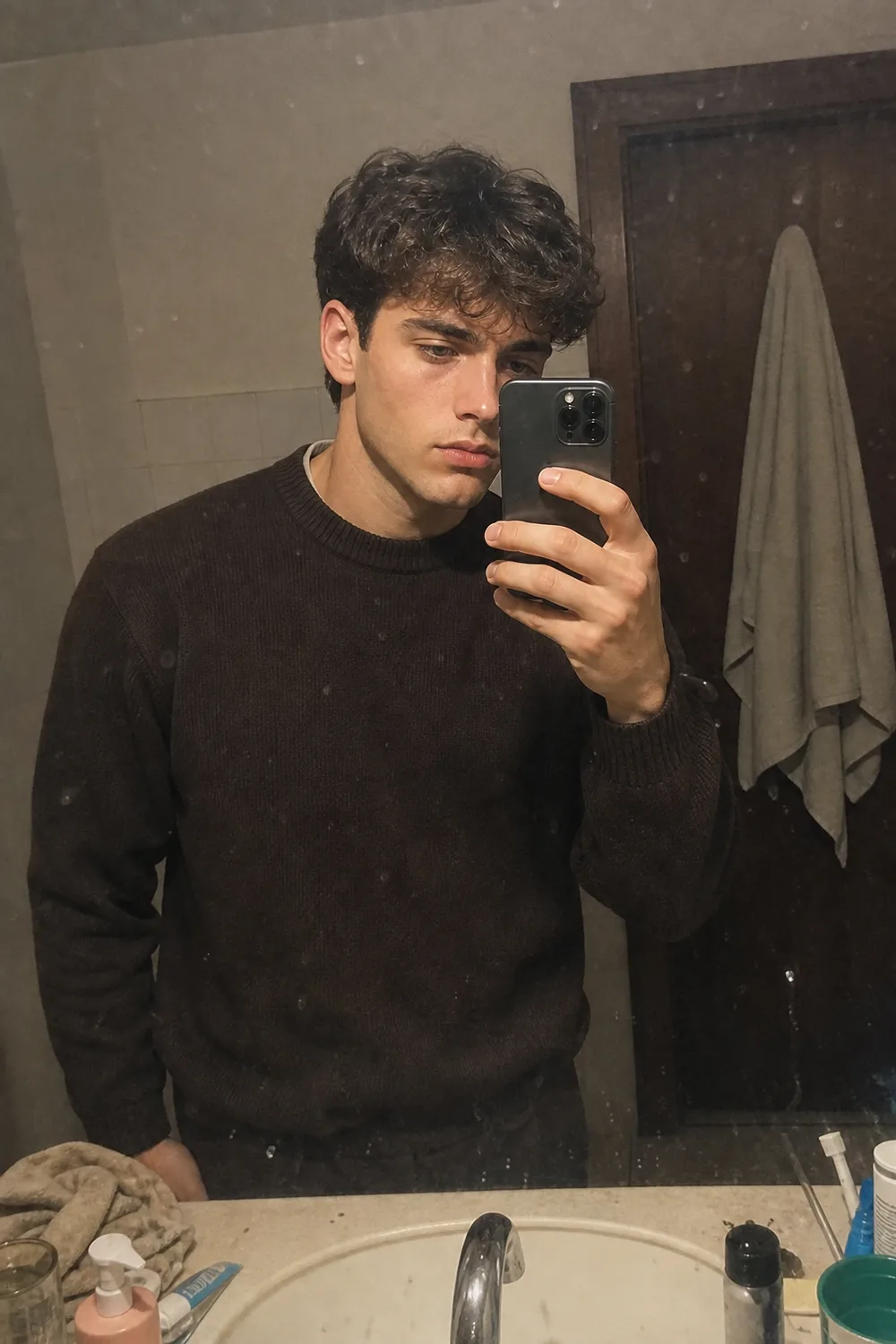 Before
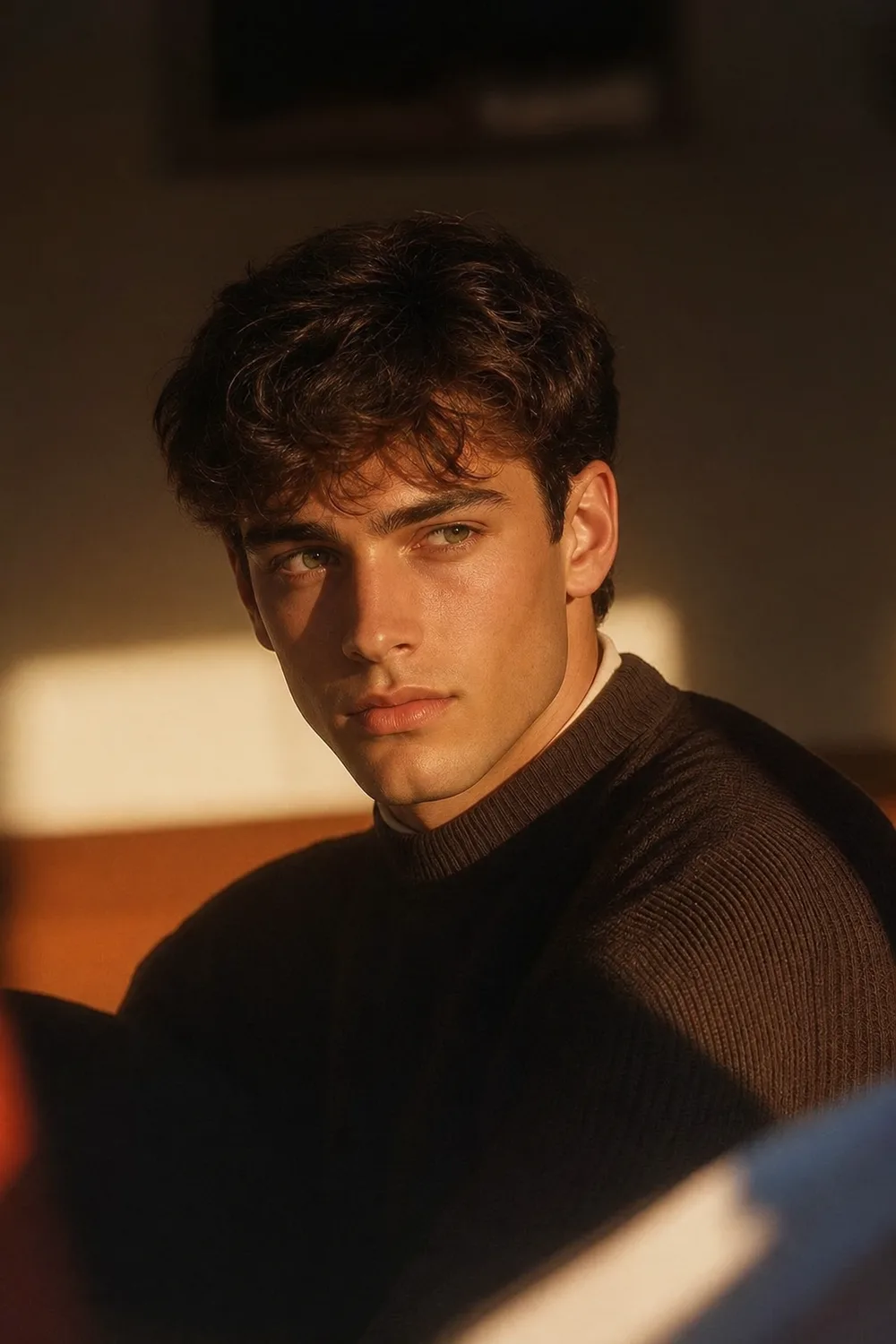 After
AfterStudio / Private by design
See yourself shot properly.
Use our AI dating photo generator to create profile pictures from four everyday selfies. Your uploads are encrypted, never used to train AI, and become inaccessible five days after upload.
Or quick sign-in from here
Why Standing Out Is So Hard Right Now
The problem is volume and speed. Dating apps are designed for quick, almost reflexive decisions, and a 2023 SAGE study on online dating found that more options on the platforms leads to more rejection, not more connection. Researchers call it choice overload, and the pattern shows up across the behavioral literature. Your profile isn't being read. It's being scanned against hundreds of others in a five-minute swipe session.
Then there's the halo effect. Psychology Today's coverage of digital-era dating explains it this way: when we have a positive impression of someone's attractiveness, we unconsciously assume they also have kindness and intelligence. The first photo does most of that work. A 2025 paper from Witmer and colleagues confirmed that the first profile photo dominates the matching decision, with the effect size much larger than most daters realize.
Here's the ugly implication. If you're average-looking (and most of us are), the halo effect works against you by default. But the same research points to a way out: specificity and originality in everything else. One of my clients spent six months trying to "look hotter" in photos and got nowhere. Two weeks after he rewrote one prompt with a specific, slightly weird story, his like rate doubled. Sound familiar? Most people grind on photos and skip the layers underneath.
The Originality Advantage Almost Nobody Uses
In 2022, researchers at Tilburg University published a landmark study in PLOS ONE. They gave 1,234 dating-site users 308 authentic profile texts to evaluate. 4,289 individual ratings came back. The findings were clear enough to quote directly:
- Original profile texts raised perceived intelligence (b = 0.56, p < .001).
- Original profile texts raised perceived sense of humor (b = 0.45, p < .001).
- Originality actually lowered perceived oddness (b = -0.21, p < .001). That one surprised the researchers.
The assumption going in was that quirky bios would make people seem weird. The data said the opposite. Tess van der Zanden, one of the authors, summed it up: "Owners of profiles perceived as more original tended to also score higher on perceived intelligence, sense of humor, attractiveness, and likelihood of being chosen for a date."
Here's the bit nobody repeats. The study found that stylistic features and self-disclosure features together explain 43.8% of the variance in originality scores. Translation: you can manufacture this. Originality is teachable. Style (word choice, sentence rhythm) and self-disclosure (concrete details, real opinions) together account for most of what readers call "original."
The data outside academia backs the same pattern. Displayr's aggregated Tinder data shows profiles with bios get 4x more matches than blank ones. Hinge reports that profiles with interesting bios get 3x more replies than empty ones. If you skip the bio, you're leaving most of the pool on the table.
Layer 1: Photos That Trigger the Halo Effect
The first photo sets the ceiling. Nothing else in your profile fully overcomes a weak opener. Hinge and Tinder product research lines up here: the first card image drives the majority of the swipe decision before the reader even sees a prompt.
What wins as a first photo? A clear, well-lit face with eye contact and an unforced smile. That might sound boring, but the data keeps confirming it works. Most dating photos fail on one of those three inputs. The lighting is flat, the eyes aren't meeting the lens, or the smile looks held. Photofeeler's aggregated scoring across years predicts swipe rates from these basic elements more than almost any styling choice.
Photos 2 through 6 are where standing out actually happens. Each one should show a different context: an activity you actually do, a social scene, a specific setting. A bathroom mirror selfie in slot 3 undoes the work of a great first photo. One rule from my coaching practice (I've tested this across hundreds of client accounts): the second photo should answer the question "what would a date with you look like?" A single well-composed activity photo in that slot outperforms every "pick a filter, add a dog" trick I've seen tried.
For the full photo strategy, our best Tinder photo tips guide goes deep on composition and photo order. The two layers below assume your photos are at least competent. If they aren't, nothing in the bio or openers will save you.
Layer 2: Bio and Prompts With Real Originality
Most profiles fall apart here. The Tilburg research gave us a blueprint: stylistic originality plus self-disclosure. Let's translate that into specific writes.
Stylistic originality means the sentence doesn't read like every other bio. Boring bios copy the structure "I love X, Y and Z." The fix is to break the pattern. Drop one noun. Swap a generic verb for a specific one. Add a time or a place.
- Generic: "I love to travel."
- Specific: "I ate pani puri on three continents last year. The best was a cart in Kolkata."
Same interest, completely different signal. The second line tells you where I went, what I ate, and that I have opinions. A reader finishes that sentence knowing more about me than the first one communicates in 20 bios stacked together.
Self-disclosure means sharing something slightly vulnerable or unusually specific. The kind of thing a friend might say at minute 40 of a first beer, not minute 1.
- Surface: "I like hiking."
- Self-disclosure: "Training for the Wonderland Trail next summer. Currently at mile 8 before my lungs stage a protest."
The self-disclosure version hands the reader an opener. They can ask about the trail, the training, or the lungs. You've done the conversation work for them, which matters because 43% of men's matches get 0 or 1 message according to a large-scale analysis of 50 million dating-app messages by researcher Dylan Ryder. If your profile doesn't cue a question, most matches die in silence.
Two practical rules I give clients. First, every claim needs an anchor: a number, a name, a place, or a date. "I like music" is a dead line. "I'll argue that Björk's Homogenic was the album of the 90s" is a conversation starter. Second, one weird specific detail beats three normal ones. Remember: the PLOS study found originality went with lower perceived oddness, not higher. The thing you think is too weird is usually the thing that gets you likes.
If you write on Hinge, take special care with prompts. Hinge's own newsroom data shows likes on text prompts are 47% more likely to lead to a date than likes on photos. 63% of Hinge daters report struggling with what to write. Most people treat prompts as an afterthought. They're the highest-impact surface in your profile.
Layer 3: Openers That Reference Something Specific
Standing out doesn't end at your profile. The first message either extends the differentiation or collapses it. Dylan Ryder's analysis of 50 million dating-app messages found one pattern dominated all others: openers that referenced something from the other person's profile ("you mention...", "I noticed...") raised reply likelihood by about 50% over generic openers.
The same analysis found optimal first messages ran 40 to 90 characters. Top-performing openers shared three traits: cognitive ease (easy to answer in under 10 seconds), low commitment (no "let's plan a date" pressure), and implicit reciprocity (they invited a return question without demanding one).
- Weak: "Hey, how's your week?"
- Better: "You mentioned sourdough on your third prompt. Starter question: how old is yours?"
Same effort, roughly triple the reply rate on the profiles I've tested in coaching sessions. If you're not referencing the other profile, you're not really messaging that person. You're messaging a template.
Platform-Specific Quick Wins
The general rules above hold across apps. But each platform has surfaces that multiply the effect when you use them.
| Platform | Top-impact surface | Specific data point |
|---|---|---|
| Hinge | Voice Prompts and filling all 3 prompt slots | Voice Prompt profiles 32% more likely to lead to a date (SwipeStats). Filling all 3 prompts associated with 73% more quality matches. |
| Bumble | 2 to 3 well-chosen prompts | Women with 2-3 prompts got 33% more responses than those with none (SwipeStats). Bumble caps display at 3 out of 40+ available prompts. |
| Tinder | A bio, any bio with a specific anchor | Profiles with bios get 4x more matches than blank profiles (Displayr). 500 characters, use them. |
Hinge also launched newer surfaces worth using. Video prompts get around 50% more engagement than text prompts according to industry tracking, and 35% of Gen Z daters say they want more voice notes from matches in Hinge's 2025 Gen Z report. Bumble rolled out AI Profile Guidance in February 2026, which flags weak prompts during editing. Use it as a proofreader, not a writer.
One practical note. App-specific features evolve fast. Always double-check the current character limits inside the app itself, since Match Group and Bumble Inc. push updates almost quarterly.
What Actually Doesn't Work
Some popular "stand out" tactics actively hurt you. Forget what you've heard about the tricks below. All of them are common, and all of them fail.
- Alpha posturing. The luxury car photo, the shirtless mirror selfie, the "looking for my queen" bio. A 2026 Cleverdude editorial summarized the current trend bluntly: authenticity is outperforming alpha posturing, not the other way around. The Tilburg data agrees.
- Copy-paste "viral" bios. If you saw it on TikTok, so did 2 million other people. Reddit threads on r/OnlineDating are full of women reporting they've seen the exact same "math teacher but make it interesting" bio 40 times in a week.
- Vague travel brags. "Love to travel" is the single most common phrase in dating bios. It stands out by being invisible. If travel is your thing, name a country and a reason.
- Gimmicky opener one-liners. Pickup lines, riddles, and "would you rather" hooks without context all underperform referencing the profile by a wide margin.
- The empty bio with three photos. A profile with no text signals you couldn't be bothered. Even a single specific line beats silence by 3x in Hinge's reported data.
I've watched clients try all five. None of them worked. Forget what you've heard about being "mysterious" as a strategy too. On apps where attention spans are measured in seconds, mystery reads as laziness.
Your One-Week Differentiation Plan
Here's the plan I give coaching clients who ask "how do I stand out?" Do this over seven evenings.
- Day 1: Audit your first photo. Clear lighting, eye contact, unforced smile. If two of three are missing, that's your priority. Dating Image Pro can generate new candidates in minutes from four selfies, which addresses the foundation photos carry most of the work on.
- Day 2: Replace your weakest single photo, not all of them at once. Swap slot 3 or 4 with an activity photo that answers "what would a date with me look like?"
- Day 3: Write one new bio line or prompt using the "anchor every claim" rule. Read it aloud. If the line could come from any other profile, rewrite it.
- Day 4: Add a weird, specific detail somewhere. A book, a dish, a bad opinion. Something only you would say.
- Day 5: On Hinge or Bumble, record a Voice Prompt if the app supports it. Sounding awkward on a voice prompt is completely fine. Staying silent on the feature is the actual problem.
- Day 6: Rewrite your standard opener template into a "reference the profile" script. Save two variations you can paste quickly.
- Day 7: Review. If likes and replies haven't moved in 10 days, revisit the photos and start over. Our full matches guide covers deeper troubleshooting, and our algorithm breakdown explains what the app is doing with your swipes in the background.
Where Photos Actually Fit Into the System
The three layers work together. Photos trigger the halo effect. Bios and openers convert the halo into perceived humor and intelligence through originality. Skip any layer and the system leaks.
Ordering matters, though. Photos are the foundation because nothing else gets read if the first image fails. That's not my opinion. Photofeeler's aggregated scoring data has shown consistently that weak photos make prompts and bios irrelevant because the card gets swiped before the reader ever reaches them. Once photos are solid (which Dating Image Pro can help with in minutes from four selfies), the bio and opener work does the rest.
The math still isn't kind to average profiles. But with all three layers working, "average" is enough to get a disproportionate share of the attention. That's the real standout advantage. Not being the hottest person in the feed. Being the most specific one.
Questions, answered.
01What is the single biggest change I can make to stand out on dating apps?+
Your first photo. Weak photos cap everything that comes after. Photofeeler data shows photos drive roughly 90 percent of the swipe decision, and the first image sets the halo effect for the rest of the profile. Fix that first, then work on prompts and openers.
02Is trying to be quirky or original going to make me look weird?+
The intuitive fear says yes, but the research says no. A 2022 Tilburg University study of 1,234 users published in PLOS ONE found originality actually decreased perceived oddness (b = -0.21, p < .001). The risk of being too generic is much higher than the risk of being too specific.
03Should I copy a bio that worked for someone else?+
No. Popular bios from TikTok or Reddit get copied by thousands of daters within weeks. The originality advantage disappears the moment a line is recognizable. Use other bios as structural inspiration, then rewrite every specific detail with your own facts.
04How long does it take to see results after changing my profile?+
Give it 10 to 14 days. Match Group says the algorithm adjusts the profiles you see every time your profile is Liked or Noped, so it takes time for new signals to propagate. If likes and replies have not moved after two weeks, revisit photos first.
05Do these standout tactics work the same on Tinder, Bumble, and Hinge?+
The three layers (photos, bio/prompts, openers) apply everywhere, but the emphasis shifts. Hinge leans heavily on prompts (47 percent more likely to lead to a date than photo likes). Bumble weights prompts and its women-message-first rule. Tinder still weights photos the most. Adapt the emphasis per platform.
06Are AI-generated photos allowed on dating apps?+
Policies vary and change often. Most major apps allow AI-enhanced or AI-stylized portraits of the real user. Fully fabricated identities are prohibited across platforms. Always use photos that genuinely look like you, so the match in person matches the profile.
Author / reviewed profile
Alex Chen
Alex has helped over 5,000 singles improve their dating profiles and build confidence. With a background in psychology and 8 years of dating coaching experience, Alex knows what actually works on dating apps.