
First Message Tips for Dating Apps That Get Replies
You have probably sent hey a hundred times and watched most of them vanish. Here is the three-part opener formula that actually moves reply rates, backed by OkCupid and Hinge opener data.
You've probably sent "hey" a hundred times and watched most of them vanish. That's not a personality problem. The openers that actually move reply rates have three parts: a specific hook from the other person's profile, a short question they can answer in one line, and zero compliments about their looks. Everything else is garnish.
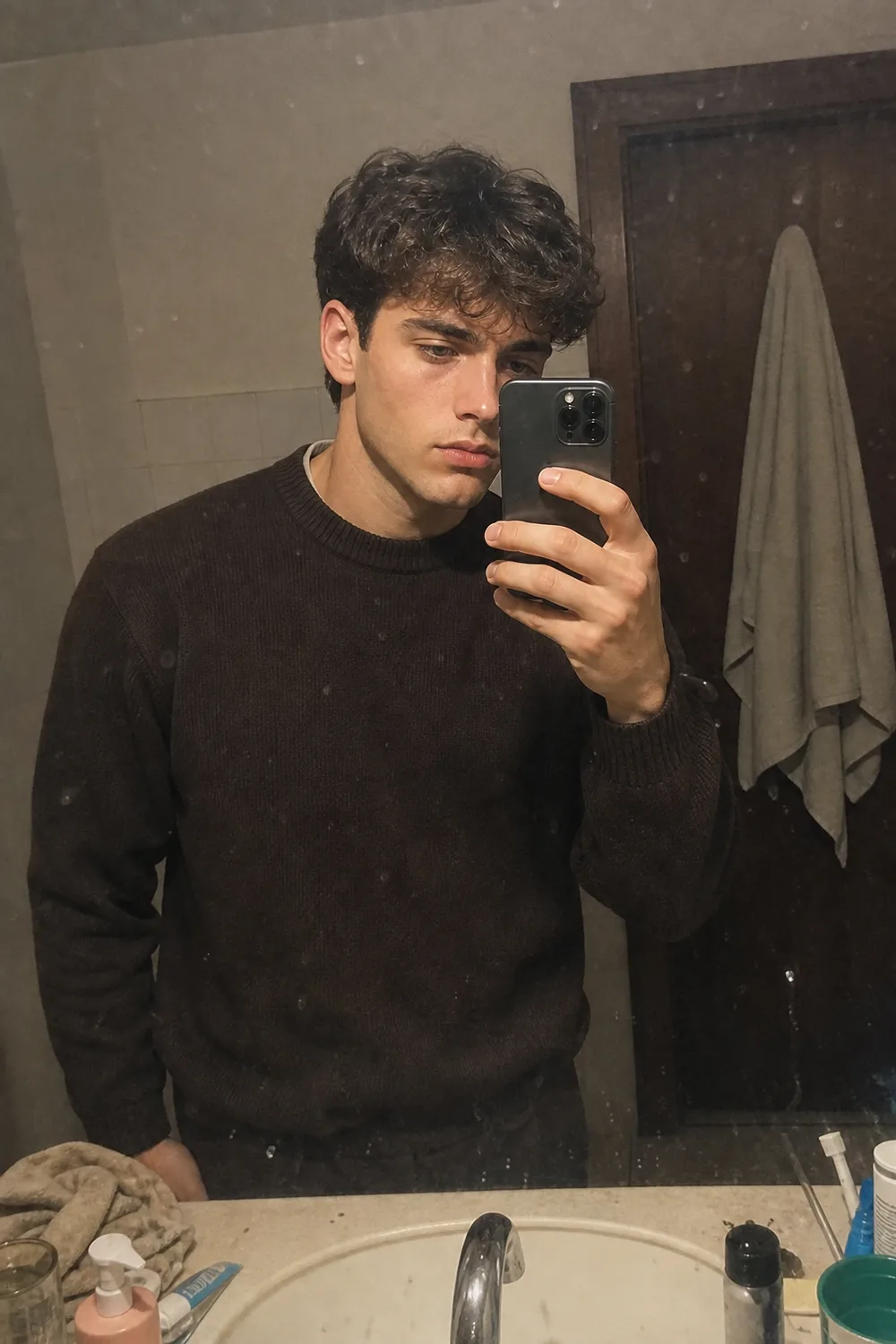 Before
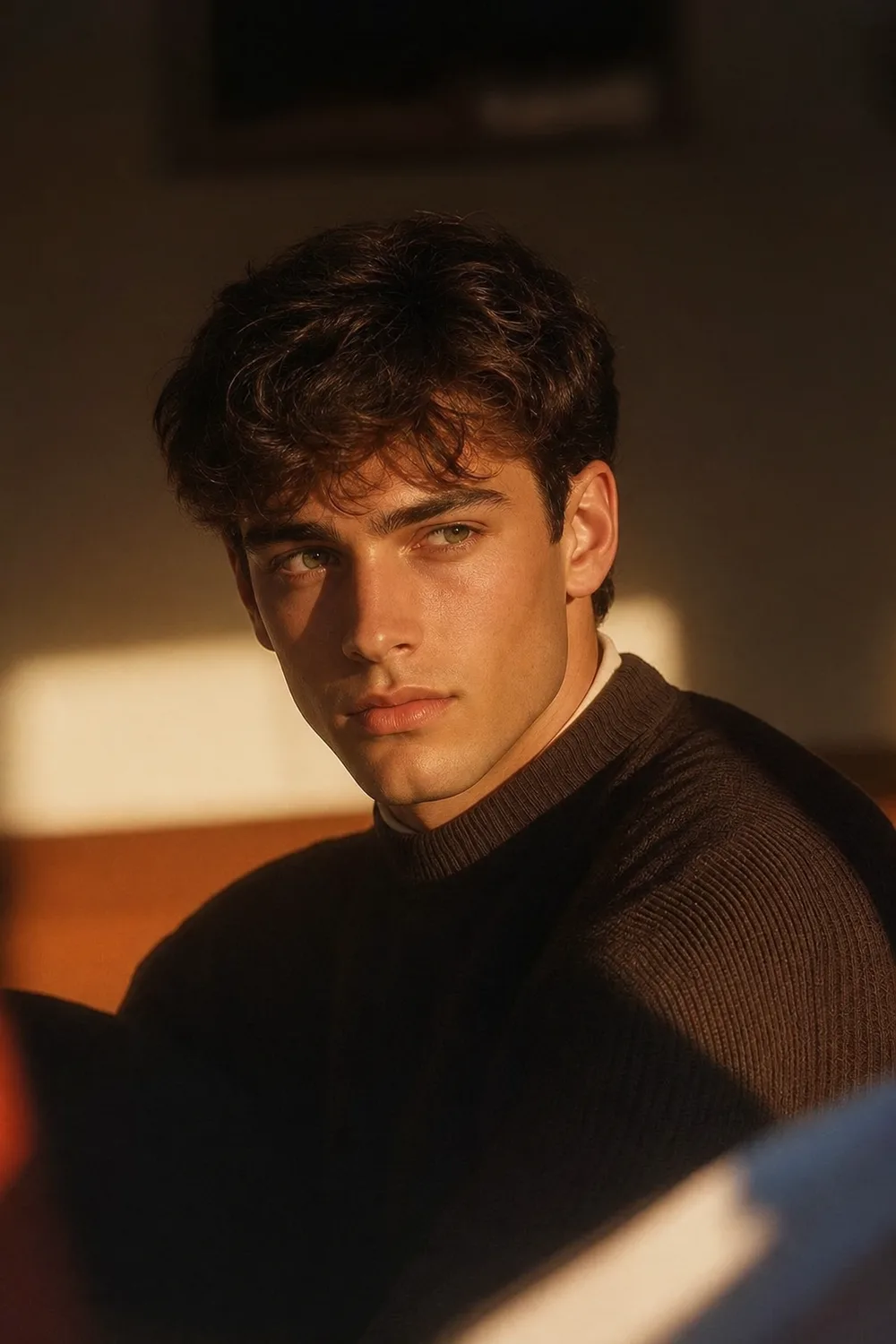 After
AfterStudio / Private by design
See yourself shot properly.
Use our AI dating photo generator to create profile pictures from four everyday selfies. Your uploads are encrypted, never used to train AI, and become inaccessible five days after upload.
Or quick sign-in from here
The Real Problem Probably Is Not Your Opener
Most people who message me about "bad openers" actually have a match-volume problem wearing a messaging costume. The original OkCupid data team analyzed more than 500,000 first contacts and found the baseline reply rate sits at 32 percent. Not 90, not 70, just 32. Two out of three first messages die even when they are sent by competent daters with decent profiles.
The gender asymmetry is worse. Irrational Labs, a behavioral science team, tracked 1,227 Tinder users across five U.S. cities and reported that women see a 50 percent response rate to the openers they send. Men hear back 21 percent of the time. And on the broader platform, DatingNews data shows 57 percent of Tinder conversations never make it past the first message, and men need to send around 114 messages on average for a 99 percent chance of a single reply.
Here's the client pattern I see most often (I've run this diagnostic with maybe 300 people at this point). Their match-to-reply rate is already fine. Their match count is the actual bottleneck. If you're getting three matches a month, changing your opener from "hey" to Shakespeare moves the needle by zero replies. Fix the supply first. Our how to get more matches guide walks through that math in detail.
The Formula That Actually Moves the Needle
So what works? The same OkCupid dataset gave up the formula over a decade ago, and nobody has meaningfully beaten it since. Messages that reference something specific from the recipient's profile ("you mention," "I noticed") raise reply likelihood by roughly 50 percent. Datezie's aggregated opener data landed at 2.5x more replies for messages referencing specific profile interests over generic greetings. Same direction, different dataset.
The formula has three pieces, and each one does a specific job. Here is what each piece actually means in practice.
The hook is a real detail from their profile. Not "your smile is nice." Their sourdough prompt. Their dog's weird pose in photo three. Anything you could not send to another match without changing the words.
The question should be answerable in one line. "What's the worst thing you've ever baked?" works. "Tell me about yourself" does not. Keep it low-stakes and quick to answer.
The easy reply surface means leaving something for them to grab: a half-joke or a small mistake they can correct. OkCupid's length study landed on around 270 characters as optimal. One or two sentences is usually enough, and past 1,800 characters reply rates collapse.
Openers That Work, By Platform
The formula holds everywhere. Each app has a different amplifier.
Hinge: comments on prompts win. Hinge's Newsroom launched Convo Starters in late 2025 and reported two findings worth taking seriously. Likes sent with a comment are 2x more likely to lead to a date than plain likes, and 72 percent of daters say they are more likely to consider someone when the like includes a written message. SwipeStats adds a sharper number: commenting on a prompt is 47 percent more successful than commenting on a photo. Prompts are where the conversation actually gets built.
Template: react to their prompt with a short personal detail, then end with an easy question. Example: "The Julia Child answer cracked me up. I once set off the smoke alarm making toast. What's the worst thing you've ever cooked?"
Bumble: women message first, so the clock is tight. Women have 24 hours to open the conversation on Bumble. Keep it under 90 characters. Reference a photo or prompt, then ask a low-stakes question. A specific anchor also lifts the chance he replies inside his own 24-hour window. Example: "Your road-trip answer has me rethinking my snack choices. Best gas-station snack you've ever grabbed?"
Tinder: no prompts, so the hook comes from photos or bio. Tinder's own data via Time showed a GIF in the first message lifts response likelihood by 30 percent over plain text. Length matters here: 40 to 90 characters performs best, partly because Tinder users are scanning fast. Example: "That dog looks like the real main character. Name?"
The Hinge 2015 Study Still Holds Up
Here is a fossil that refuses to die. In 2015, Hinge analyzed 8 million impressions of opening messages and published the cleanest opener data most daters have never heard of. Karen Fein, then VP of Marketing at Hinge, summed it up: "The more targeted to the specific person, the more contextual you can make it, the better it'll be."
| Finding | Lift vs baseline |
|---|---|
| Men more likely to reply to assertive messages like "Free this week?" | 98% |
| Women more likely to reply to food-related messages | 40% |
| Men's reply likelihood drops if no response within 6 hours | 25% |
| Women's reply likelihood drops if no response within 6 hours | 5% |
| "Two truths and a lie, ready, set, go" response rate, ages 29 to 34 | +34% |
One opinion I'll defend. The "two truths and a lie" opener gets dismissed by every modern dating coach for being overused. They are wrong. It works because it is easy to answer. Cleverness is not the point. Every "boring" high-performer on these lists outperforms the "original" lines that sound good at a bar and die on a phone. Use it.
The caveat: the study is a decade old. Treat it as a starting point, not a bible. But the underlying principle (specific beats clever, easy-to-answer beats impressive) has not shifted.
What Actively Does Not Work
Forget what you've heard about "being memorable." The biggest win is usually cutting bad lines rather than adding clever ones.
- Generic greetings. SwipeStats found only 1 in 500 Hinge conversations starts with "hey," and almost none of them survive. Variants like "hi" or "sup" land the same way, measured in silence.
- Netspeak and sloppy spelling. OkCupid's original analysis showed "ur," "u," "wat," and "wont" drop reply rates to under one-third of baseline. Properly spelled "don't" pulled 36 percent replies and "won't" pulled 37 percent. Correct spelling is a free lift.
- Physical compliments. "Gorgeous," "stunning," "sexy" score poorly across every dataset worth trusting. Compliment a choice (an outfit, their dog's expression) rather than a feature.
- The interrogation opener. Three stacked questions read like a job application. One question, one answer required.
- The life story. Two paragraphs about how much you also love sourdough, with no question attached. The reader has nothing to reply to, so they do not.
Sound familiar? I've coached hundreds of clients out of versions of these, and the pattern is almost always the same: nobody thinks they are doing it, and most of them are.
Timing Matters Almost As Much As Content
VIDA Select's compilation of dating app activity puts peak messaging engagement between 8 and 10 pm on weekdays. Hinge adds a weird wrinkle through their reported internal data: activity spikes 47 percent during winter storms, and phone numbers exchanged rise 56 percent. Bad weather pushes people toward their phones, and toward each other. (Not something I'd build a campaign around, but a funny enough data point to keep in mind.)
The 2015 Hinge study also flagged a response-time asymmetry worth taking seriously. Men's reply likelihood drops 25 percent if they do not hear back within 6 hours of matching. Women's drops only 5 percent. If you match with someone, message that session. Waiting three days to "seem cool" is a way to lose the match while feeling clever about it.
Once you are actually in a conversation, CupidAI's 2026 Hinge data showed men who reply within 24 hours are 72 percent more likely to land a second date. The window usually matters more than the specific line.
Your Photos Decide Whether Your Opener Ever Gets Read
A good opener can not save a weak profile, even if you nail every rule above. Openers work downstream of photos. The pattern Photofeeler's aggregated scoring has shown for years has not moved: if your first photo reads wrong, the card gets swiped before anyone sees a prompt, let alone a first message.
One client I worked with last fall spent two weeks rewriting his opener scripts before I asked him to pull his actual numbers. His match-to-reply rate was 38 percent. His problem wasn't the messages at all. It was his eight matches a month. We cleared that up by fixing photo 1 and photo 3, and matches jumped roughly 3x inside 10 days. The openers he already had carried the rest of the way.
So here is the order. Audit photos first. Dating Image Pro turns four selfies into professional-looking portraits in minutes, which handles the foundation most people skip. Once that layer is solid, the opener work starts earning its keep. Our photo tips guide goes deep on the visuals, and how to stand out on dating apps is the companion piece to this one.
Your Two-Week Reply-Rate Action Plan
Here is what I give coaching clients who want to actually move their reply rate. No magic lines, just measurable changes.
- Audit the last 10 first messages you sent. Count how many got a reply. If it is under 3 out of 10, the messages are the issue. If it is 4 or more, the issue is volume and the fix starts with photos.
- For the next 10 matches, only send openers with a specific profile reference. "You mention," "I noticed," or a direct reaction to a prompt. No exceptions.
- Cap yourself at 2 sentences. Feel the urge to add a third? That is a sign you do not trust the first two.
- End with one question they can answer in one line. Not three.
- Send between 8 and 10 pm local time when you can. Weekday engagement is measurably higher there.
- If they do not reply within 48 hours, move on. Skip the follow-up "hey" and the "bump" reminder. Leave it.
- Track your numbers for two weeks: matches, openers sent, replies, conversations over two exchanges, meetups. Find which stage leaks, and fix only that one.
Two weeks of that usually moves reply rate 10 to 15 percentage points, which is more than any specific opening line has ever done. The Tinder algorithm breakdown covers what the app is doing with your swipes in the background if you want to dig one layer deeper.
Questions, answered.
01What makes a first message on a dating app actually get a reply?+
A specific hook from their profile paired with a short question they can answer in one line. Skip compliments about their looks. OkCupid analysis of more than 500,000 first contacts and the 2015 Hinge opener study both point to the same formula: specific beats clever, and easy-to-answer beats impressive.
02Should I send a GIF as my first message?+
On Tinder, it helps. Tinder own data via Time in 2016 showed a 30 percent lift in reply rate when first messages included a GIF. On Hinge or Bumble, a GIF works best paired with a short comment on their profile rather than sent on its own.
03How long should my first message be?+
One to two sentences. OkCupid length study pointed to around 270 characters as optimal, and reply rates fall off hard past 1,800 characters. On Tinder specifically, 40 to 90 characters performs best, partly because users are scanning fast.
04How long should I wait to message after matching?+
Do not wait. Hinge 2015 data showed men reply likelihood drops 25 percent if there is no exchange within 6 hours of matching. Women reply likelihood drops only 5 percent in the same window. If you match, message that session rather than trying to seem busy.
05What if I still get no reply no matter what I send?+
Most non-replies trace back to profile problems rather than bad openers. If your match-to-reply rate is under 25 percent, work on your photos before rewriting your lines. A better opener can not fix a profile that looks like every other profile in the stack.
06Are template openers a bad idea?+
Not necessarily. OkCupid co-founder Christian Rudder noted that template messages actually outperform customized ones as a long-term strategy because volume matters. The catch: the template still needs a specific hook from the person profile. A copy-paste opener with zero personalization is the worst of both worlds.

Author / reviewed profile
Alex Chen
Alex has helped over 5,000 singles improve their dating profiles and build confidence. With a background in psychology and 8 years of dating coaching experience, Alex knows what actually works on dating apps.