
Got Ghosted on a Dating App? Here's What It Actually Means (and What to Do Next)
Most ghosting on dating apps isn't a verdict on you. The Thriving Center of Psychology found 84 percent of Gen Z and Millennials have been ghosted, and Hinge focus groups say 23 percent are people who "got busy and forgot." Here's the bounce-back playbook.
If your match went quiet, the research has good news and a checklist. The Thriving Center of Psychology surveyed 1,000-plus daters in 2023 and found 84 percent of Gen Z and Millennials have been ghosted on a dating app. The single most common reason given in Hinge focus groups: "got busy and forgot." Most ghosting isn't about you. The move: one polite follow-up, then the bounce-back protocol below.
 Before
 After
AfterStudio / Private by design
See yourself shot properly.
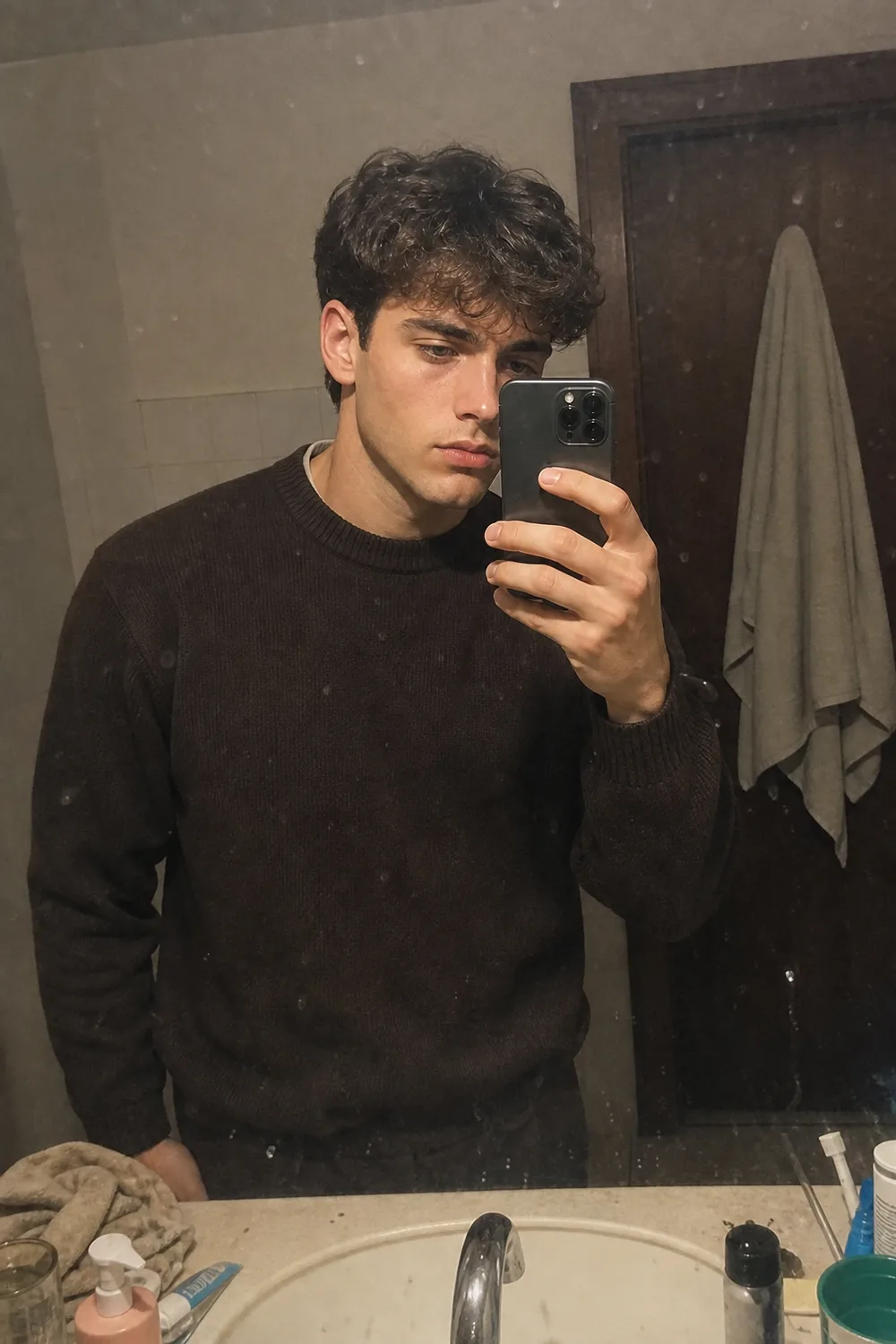
Use our AI dating photo generator to create profile pictures from four everyday selfies. Your uploads are encrypted, never used to train AI, and become inaccessible five days after upload.
Or quick sign-in from here
Yes, Ghosting Really Is That Common
The numbers are almost embarrassing. The Thriving Center of Psychology's 2023 survey found 77 percent of Gen Z and 61 percent of Millennials have ghosted someone themselves, and roughly two in three say it's appropriate in some situations. Forbes Health's 2023 poll of about 5,000 active daters put the lifetime ghosted rate at 60 percent. Pew-cited synthesis from late 2025 narrows the lens to active dating-app users: 62 percent have been on the receiving end, compared to 30 percent of US adults overall. (We've all felt that exact sting at least once.) If it feels like ghosting is the default mode of modern dating, that's because, for active app users, it basically is.
Volume is the other half of the story. South Denver Therapy's 2025 statistics roundup found 78 percent of online daters in a 1,000-person survey felt emotionally exhausted by online dating at least sometimes, and 69 percent of dating apps downloaded in 2025 were deleted within a month. People aren't ghosting because you're uniquely unworthy of reply. They're ghosting because the medium runs hot, the queue is overflowing, and they're already looking for the exit.
Why It Hurts So Much (the Actual Brain Science)
Knowing ghosting is common doesn't take the sting out. Here's the part that finally explains why. In a 2003 fMRI study published in Science, Eisenberger, Lieberman, and Williams showed that social rejection activates many of the same brain regions involved in physical pain, especially the dorsal anterior cingulate cortex. Subjects in the now-famous Cyberball ostracism task showed measurable distress within 2 to 3 minutes of being excluded by strangers in a virtual ball-toss game. Your brain is reading the silent unmatch as something close to actual harm. That's neurology, not weakness.
The second piece is the lack of an ending. Family therapist Pauline Boss, who built the "ambiguous loss" framework over decades of grief research, has a memorable line for this. "Closure is a myth," Boss writes in The Myth of Closure (2021). "The idea that you can put grief or loss neatly behind you is one of the most damaging beliefs we hold." Ghosting is the textbook ambiguous loss: the person is physically gone but emotionally still present, because there's no clear ending. The wound stays open because the brain keeps searching for an explanation that never comes.
And there's a third layer the data backs up. Pronk and Denissen's 2020 paper "A Rejection Mind-Set" in Social Psychological and Personality Science showed that more options in online dating produce more rejection sensitivity, not less. Choice overload doesn't toughen us up. It thins our skin.
The 8 Reasons People Ghost (and Most Aren't About You)
This is the diagnostic that breaks the spiral. When the chat goes quiet, "what's wrong with me" is the wrong question. Try this one instead: which of these eight things probably happened? Mindbodygreen's expert-reviewed roundup and Psychology Today's Marisa Cohen converged on roughly the same list:
- Not actually interested in pursuing it.
- Conflict avoidance, especially around having to say "no thanks."
- Overwhelm or burnout from too many active matches.
- The match did or said something they disliked.
- A mental-health flare-up that pulled them off the apps for a while.
- Met someone else who jumped to the top of the queue.
- Fear of vulnerability after the chat started getting real.
- The chat itself became a chore to keep alive.
The gendered split tells you more. A BuzzFeed survey cited in Bankmycell's ghosting analysis found 81 percent of people who ghosted said it was because they "weren't into" the other person, and 64 percent said the other person had done something they disliked. Women's top motivation, at 50 percent, was avoiding confrontation. Men's top reasons were two specific ones: feeling that the match's photos misrepresented their real-life looks, and feeling the other person was too needy. (The catfish doubt accelerates ghosting once the chat starts. We'll come back to that.)
And the data point worth tattooing somewhere obvious comes from Hinge itself. In 2017, Hinge CEO Justin McLeod told TechCrunch that focus groups had revealed something unflattering and freeing at the same time: "23% of users [in Hinge focus groups] got busy and forgot." Almost a quarter of ghosts aren't a verdict at all. They're a forgotten tab.
Spotting the Slow Fade Before the Hard Ghost
The hard ghost gets all the attention, but the slow fade is more common and more diagnosable. Pancani, Riva, and Sacchi's 2025 study in Computers in Human Behavior tracked 423 dating-app users and found that the feeling of being ignored is predicted by three things: the gap between expected and actual reply latency, a perceived drop in the partner's effort, and the prior conversational momentum. The slow fade is measurable.
The practitioner-listed signals stack up the same way. Replies start arriving slower. Answers shrink to one word. They stop asking questions back. Plans get vague. The chat only happens when you initiate. There are no laughs, no specifics, no progression toward an actual date. Run the reciprocity test on your last five reply pairs. If your messages are consistently twice as long as theirs and they ask zero questions back, you're already in pre-ghosting territory.
The Hinge data on the other side of this is striking. The company's 2024 "Your Turn Limits" research, released alongside the feature, found 44 percent of Hinge daters cite lack of responsiveness as a top dating challenge. And matches that received a reply within 24 hours had a 72 percent higher chance of leading to an actual date. A fast reply is the strongest signal that the chat is alive.
Unmatch vs. No Reply: The Difference Matters
Most coaching content blurs these together, but they shouldn't. An unmatch on Tinder, Bumble, or Hinge is a definitive no. The chat thread vanishes from your inbox. There's no path back unless you both happen to swipe into each other again on a future reset, which is rare. Treat an unmatch as a clean ending, even if it stings.
A no-reply with the match still visible is a different signal entirely. Most of the time it means you've been deprioritized, not rejected. The platforms have been pushing daters to clear that backlog. Hinge's 2017 "Your Turn" indicator (the bubble that nudges users to reply) reduced matches that died without a conversation by 25 percent. In May 2024, Hinge went further and beta-tested "Your Turn Limits," which forces users with eight or more unanswered messages to reply or end conversations before opening new ones. Bumble extended its in-conversation messaging window from 24 hours to 7 days the same year, giving both sides breathing room before the chat auto-disappears.
Translation: a thread still in your inbox usually means the other person is overwhelmed, not done. Online-dating expert Julie Spira put it best in Elite Daily. "Dating apps have a digital lightning speed to aspect to them. The main reason is, there are only so many matches you can communicate with at a time." If they unmatched, accept it and move on. If they just stopped replying, you have one polite move left.
The One-Message Follow-Up Rule
Here's the math worth memorizing. According to Quartz's writeup of a Hinge dataset, if your first message gets no reply and you don't follow up, the eventual reply rate is 0.39 percent. Functionally zero. If you double-text after a four-hour-plus gap, the reply rate jumps to 12 percent, even a week later. Roughly 1 in 3 of those reply within the day. One well-timed follow-up is the single highest-impact move you have.
The coaching consensus across DatingAdvice.com, Hily, and Eddie Hernandez's blog converges on the same rhythm. Send one polite, low-stakes follow-up after roughly 3 to 5 days. Reference the conversation, keep it light, ask an easy-to-answer question. Then stop. Multiple follow-ups read as obsession, not interest. And avoid the passive-aggressive openers ("Where'd you go, stranger?", "Great conversation"). Bustle's coverage of the same Hinge data showed those lower reply rate, not raise it.
An opinion I'll defend hard: never send "did I do something wrong?" That message hands the other person all the social labor and reads as low-status across every coaching framework I've read. If they wanted to explain, they would have. Move on.
What Doesn't Work
The mistakes that lock people in the ghost spiral, ranked roughly by how often they show up in messaging audits:
- The closure-seeking essay. "Hey, I just wanted to understand where things went..." No. Boss's research is explicit on this point: closure is the myth, not the reality. The other person can't give you what you want, and asking puts more pressure on them than on a first ask.
- The "maybe they're just busy" rationalization for three weeks. Past message 10 with declining effort, the chat is in pre-ghosting. Past two weeks of one-sided initiation, it's already over. The data is consistent: a reply within 24 hours is the alive signal. Anything past 5 to 7 days of silence after a follow-up is your answer.
- The angry follow-up. Something like "Wow, real classy." It feels good for ten seconds, then drops your reply rate to functionally zero on the off chance they were going to come back, and screenshots well in their group chat.
- Three or more polite follow-ups. Pattern-recognized as pressure across every dating app. The USU Extension dating-rejection guide spells it out: pursuing more than once after a clear no (and silence is a clear no) reads as harassment.
- The unmatch-then-rematch maneuver. Some users unmatch and rejoin via a new profile to "test" the match. This usually triggers Trust Score penalties on Tinder and equivalent throttling on Hinge and Bumble.
The Bounce-Back Protocol
Here's the playbook to run tonight if you've just been ghosted, and over the next two weeks if it's a streak. None of these numbers are arbitrary. They come straight from the coaching and research consensus.
| Step | Move | Why it works |
|---|---|---|
| 1 | Cap active chats at 3 to 5 | Julie Spira's coaching frame and Pronk & Denissen 2020: more matches in flight makes both you and them more likely to ghost. |
| 2 | 15 to 20 minutes daily app time, max | Confidence Connect and Thriveworks: limited exposure reduces the cumulative emotional load and the rejection-mind-set spiral. |
| 3 | 48 to 72 hours fully off after a string of ghosts | Pronk & Denissen: choice overload plus rejection sensitivity is a feedback loop. Time off is the only way to break it. |
| 4 | Run a profile audit, starting with photo 1 | Witmer, Rosenbusch, and Meral's 2025 study found the first profile photo dominates the matching decision. Audit there before anywhere else. |
| 5 | Reframe the next ghost as incompatibility, not deficiency | Hayley Quinn's coaching and Hinge's Logan Ury both name the same move: "Rejection is normal. Don't let it prevent you from making a powerful connection." |
The order matters. Volume reset before time off, both before any profile audit. Trying to "fix yourself" in the middle of the spiral usually means rewriting your bio at midnight after three drinks, which (research suggests) does not actually help.
How Photos Quietly Change Your Ghost Rate
This is the lever almost nobody pulls in the right order. Witmer, Rosenbusch, and Meral's 2025 work, covered in Psychology Today, found that the first profile photo carries by far the dominant signal in the matching decision. And remember the BuzzFeed gender data: men's top stated reason for ghosting is feeling that the photos didn't represent the real person. The catfish doubt is real even when nobody's lying.

The Frontiers in Psychology 2025 media-richness study found profiles with 4 to 6 varied photos got 38 percent more favorable assessments than thinner profile sets. Combine that with the BuzzFeed data and the practical rule writes itself. Matches who feel uncertain about whether your photos represent the real you are the fastest to ghost. Consistent, well-lit, recent photos that match across the set close that doubt before it becomes a quiet exit. Our dating photo mistakes guide covers the specific photo problems (heavy filters, group shots, outdated images) that fuel the catfish doubt the most.
If your photos aren't earning the trust to begin with, no protocol on Earth will close the gap. Dating Image Pro turns four selfies into professional-looking portraits in minutes and is designed to preserve your likeness; review each result before using it. Photos are the foundation. The bounce-back protocol stacks on top.
The Real Win Is Mindset
One last piece, because the data doesn't fix the feeling. Hinge's Director of Relationship Science, Logan Ury, framed it most cleanly in the company's 2024 Gen Z report. "Rejection is normal. Don't let it prevent you from making a powerful connection." That's the entire thesis. Each ghost is one data point in a process that runs on volume. Spotting the slow fade earlier, sending one polite follow-up, and resetting fast on the bounces is the actual skill. (Most of us learn it the slow way.)
And for the upstream half of the funnel, our why am I not getting matches piece covers the diagnostic for the front of the funnel, and our how to keep a dating app conversation going guide covers the message-3-to-5 cliff where most chats die before the ghost ever lands.
Questions, answered.
01Why do people ghost on dating apps?+
Mostly because the queue is overflowing, not because of you. Mindbodygreen and Psychology Today converge on the same eight reasons: not actually interested, conflict avoidance, overwhelm or burnout, the match said something off-putting, a mental-health flare-up, met someone else, fear of vulnerability, the chat became a chore. The single most freeing data point comes from Hinge CEO Justin McLeod via TechCrunch in 2017: "23% of users [in Hinge focus groups] got busy and forgot." Almost a quarter of ghosts are forgotten tabs, not verdicts.
02Should I send a follow-up message if someone ghosted me?+
Yes, exactly one. According to Quartz's writeup of a Hinge dataset, no follow-up at all yields a 0.39 percent eventual reply rate. A single double-text sent after a four-hour-plus gap pulls reply rate up to 12 percent, even a week later. The coaching consensus across DatingAdvice.com, Hily, and Eddie Hernandez's blog says wait 3 to 5 days, keep it polite and low-stakes, ask an easy question. Then stop. Multiple follow-ups read as obsession, not interest.
03How long should I wait before assuming I've been ghosted?+
A reply within 24 hours is the alive signal, per Hinge's 2024 "Your Turn Limits" research, which found matches that received a 24-hour reply had a 72 percent higher chance of leading to an actual date. Past 5 to 7 days of silence (and one polite follow-up), you have your answer. Bumble extended its in-conversation messaging window to 7 days in April 2024 specifically because that's the realistic outer edge of "still active."
04What's the difference between being unmatched and being ghosted?+
An unmatch is a definitive no. The chat thread vanishes from your inbox on Tinder, Bumble, and Hinge, with no path back unless you both swipe into each other again on a future reset. A no-reply with the match still visible is usually deprioritization, not rejection. Translation: an unmatch is the verdict, a no-reply is the queue. Treat them differently.
05Why does ghosting hurt so much when I barely knew the person?+
Two reasons, both backed by research. First, Eisenberger, Lieberman, and Williams's 2003 fMRI study in Science showed that social rejection activates many of the same brain regions as physical pain, especially the dorsal anterior cingulate cortex. Cyberball ostracism subjects showed measurable distress within 2 to 3 minutes. Second, family therapist Pauline Boss's "ambiguous loss" framework explains why ghosting outlasts a clean rejection: the lack of an ending keeps the brain searching for an explanation that never comes.
06What should I do after being ghosted multiple times in a row?+
Run the bounce-back protocol. Cap active chats at 3 to 5 (Julie Spira's coaching frame), limit dating-app time to 15 to 20 minutes per day (Confidence Connect and Thriveworks), take 48 to 72 hours fully off the apps to break the rejection-mind-set feedback loop documented in Pronk and Denissen 2020, then audit your profile starting with photo 1. Witmer, Rosenbusch, and Meral's 2025 work shows the first profile photo dominates the matching decision, so audit there before anywhere else.
07Does asking "did I do something wrong?" ever work?+
No. It hands the other person all the social labor and reads as low-status across every coaching framework worth reading. Pauline Boss's ambiguous-loss research explains why the closure-seeking message backfires: the other person can't give you the explanation your brain wants, and asking puts more pressure on them than the original ask did. If they wanted to explain, they would have. Send your one polite follow-up, then move on.

Author / reviewed profile
Sam Patel
Sam writes about modern dating, relationships, and the psychology of attraction. With a background in behavioral science and years of interviewing couples, Sam brings research and real stories together.