
AI Dating Photo Generator: How They Work & What to Look For
A plain-English guide to AI dating photo generators in 2026. How the tech works, what separates good from gimmicky, and what to check before paying.
An AI dating photo generator is a diffusion model that learns your face from a small set of reference photos, then paints new images of you in scenes you choose. That's it. Everything else (pricing, delivery time, the 30-vendor landing-page arms race) is decoration.
The shoppers who get burned all have the same problem: they pay before they understand what the tool actually does. This is the buyer's guide I wish existed before I spent $400 across eight tools.
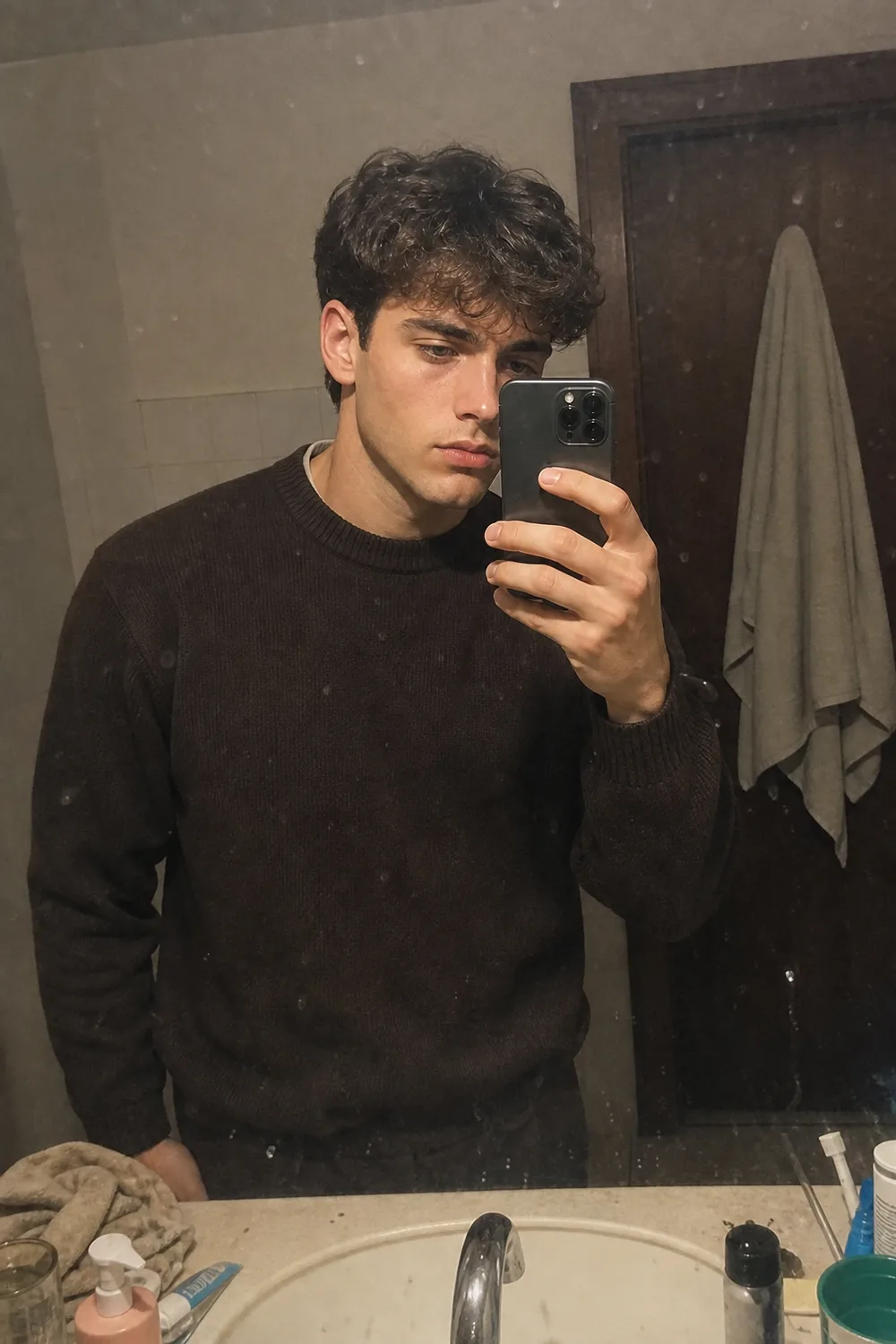 Before
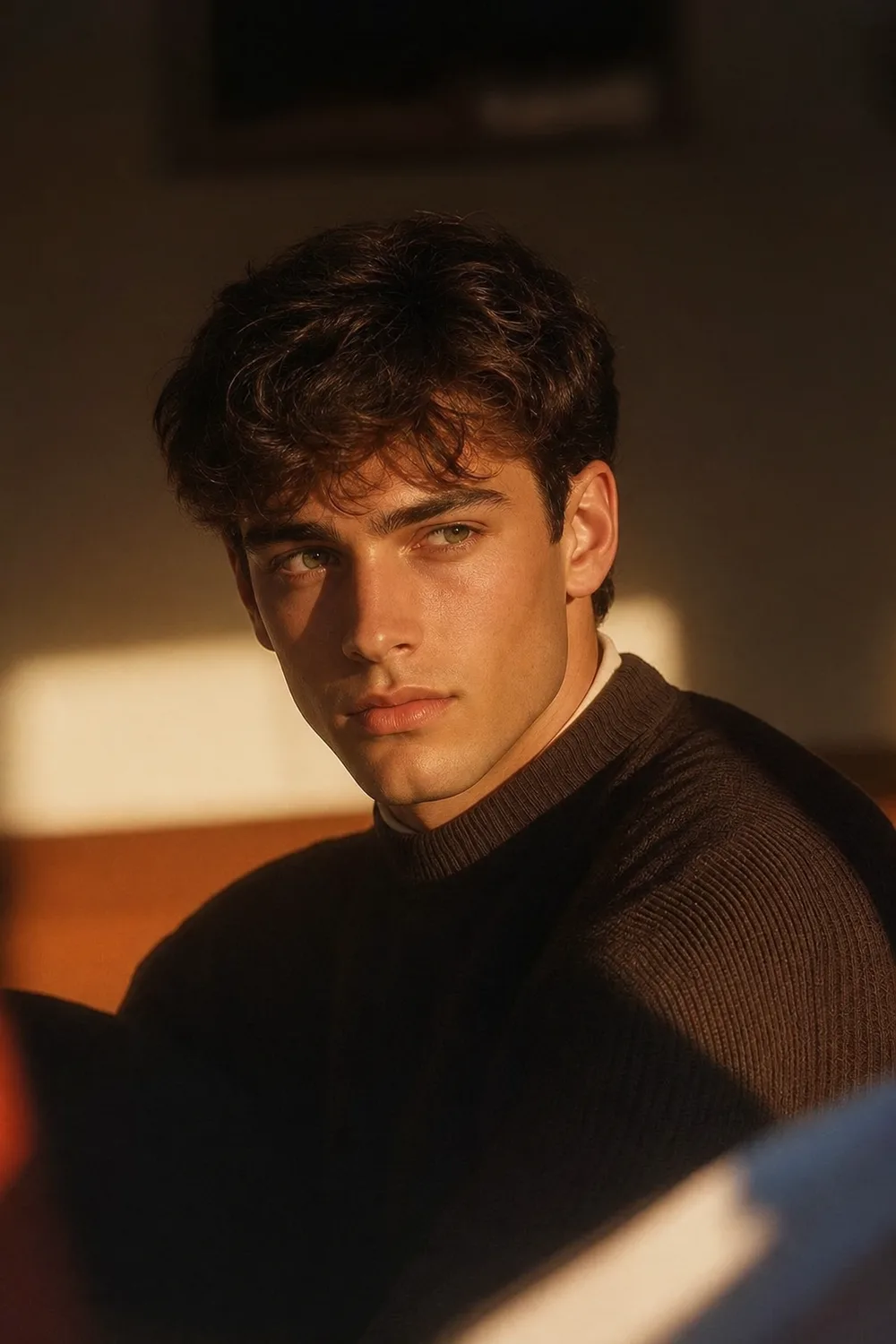 After
AfterStudio / Private by design
See yourself shot properly.
Use our AI dating photo generator to create profile pictures from four everyday selfies. Your uploads are encrypted, never used to train AI, and become inaccessible five days after upload.
Or quick sign-in from here
Quick Verdict: What an AI Dating Photo Generator Actually Is
A true AI dating photo generator trains a small personalized model from your selfies (3 to 40 photos depending on the tool), then generates new images of you in dating-appropriate scenes, outfits, and lighting. The photos are synthetic but the face is recognizably yours. A good one lets you pick scene variety. A bad one outputs a sibling of you.
That narrow definition rules out face swap apps, avatar filters, LinkedIn headshot generators, and phone-camera enhancers. Adjacent categories, not the same product.
Demand is real: 26% of U.S. singles used AI to enhance their dating in 2026 (a 333% YoY jump) per Match and Kinsey Institute data reported by Axios in March 2026. And 30% of active dating app users have experimented with AI-enhanced or AI-generated profile photos per Get Stream's 2026 dating statistics report.
How the Tech Actually Works
All current AI dating photo generators sit on one of three technical stacks. Knowing which stack a tool uses tells you more than any marketing page.
Stack 1: LoRA Fine-Tuning (the common one)
LoRA stands for Low-Rank Adaptation, developed by Microsoft researchers and ported to Stable Diffusion by Simo Ryu in 2023 per Replicate's explainer. Instead of retraining a giant base model from scratch, LoRA trains a tiny adapter layer that clips onto an existing base model.
The numbers explain why every consumer tool ended up here. A LoRA run trains in around 8 minutes and produces a file around 5MB (per Replicate). The older DreamBooth method took 20 minutes and produced several-gigabyte checkpoints. LoRA files weigh 10 to 200MB per the zsky.ai training guide and can be loaded instantly. That's what makes $29 pricing possible at scale. Typical LoRA specs per ArtSmart: 20 to 40 images, 30 to 90 minutes of training on 8 to 24 GB VRAM. Consumer tools compress that into 1 to 5 minutes.
Stack 2: DreamBooth-Class Fine-Tuning (the expensive one)
DreamBooth preserves subject identity slightly better than LoRA on close-portrait tasks per the andyhtu.com comparison. Cost: at least 12GB VRAM, multi-gigabyte outputs, and a documented tendency to distort color balance. Few consumer tools still use pure DreamBooth. The ones that do charge more for it.
Stack 3: Zero-Shot Identity Preservation (the fast one)
InstantID (Wang et al., January 2024) and PhotoMaker are the two big zero-shot architectures. No training required. The model takes a single facial image plus landmark conditioning, then generates in your likeness immediately. Trade-off: likeness drifts. Sozee's own comparison warns that uploading multiple photos to Sora-style single-reference models "often leads to confusion and mismatched features." Great for novelty, less great for a profile where every photo needs to plausibly be the same person.
Which stack suits which shopper
| You want | Pick a tool using | Why |
|---|---|---|
| 80 to 200 varied generations of your face | LoRA fine-tune | Best cost/variety ratio, most consumer tools |
| Absolute highest likeness fidelity | DreamBooth-class | Slightly better identity preservation, pay the premium |
| One or two novelty images, no commitment | Zero-shot (InstantID / PhotoMaker) | Fast, cheap, likeness drift acceptable |
| Full control over the stack | Self-hosted LoRA (Cory Zue workflow) | ~$2 end-to-end on Replicate, under an hour |
For the end-to-end workflow (reference photos, prompt tuning, realism audit), Maya Rodriguez wrote the photographer's version at How to Generate Dating Photos With AI.
What a Generator Is Not: Four Adjacent Categories
Most buyer confusion starts right here. The term "AI dating photo generator" gets applied to four different product categories that do different things. Mixing them up is why people end up with Lensa avatars on Hinge and wonder why they're getting no matches.
AI headshot tools
BetterPic, HeadshotPro, HeadshotMaster. Trained on corporate headshot datasets (suit, neutral backdrop, LinkedIn aesthetic). TruShot's 30-day field test measured a 40% lower first-message response rate for BetterPic outputs versus dating-trained alternatives on the same profile. Use a headshot tool for a headshot.
Face swap apps
Canva Face Swap, MorphStudio, AIFaceSwap. These replace a source face onto a target image. No personalized model, no style variety, zero identity consistency across poses because every output is a one-shot composite. The AIFaceSwap landing page itself draws the line: "Make sure you swap faces with consent and avoid using the tool for anything misleading, harmful, or deceptive."
AI art style filters
Lensa Magic Avatars, Remini avatar packs. Stylized renders (anime, Renaissance, fantasy). TruShot rated Lensa 2 out of 10 on realism and found its outputs actively hurt match rates.
Photo enhancers and retouchers
Facetune, Remini upscale. Sharpen, smooth skin, brighten one existing photo. They don't synthesize new scenes, outfits, or body language. Different purchase.
Photo raters (complementary)
Photofeeler, Picker AI score photos you already have. The other half of the workflow. For the category breakdown, see my Photofeeler Alternatives review.
The 7-Dimension Buyer's Checklist
This is what I score every new tool on. If a vendor won't publish a number for one of these, that's data in itself. Make them tell you, or walk away.
1. Reference photos required
How many selfies does the tool need to train? The most important spec, and vendors publish it all over the map. Photo AI: 5 to 20 with high variety. Aragon AI: 6 to 8, "selfies work great." TinderProfile.ai: 5 to 15 across five photo categories (close-up, mid-range, wide, activity, social). TruShot: 8 to 15. Narkis.ai: 10 to 20. Sozee: 3 minimum for single-image recreation. Zero-shot: 1. Rule of thumb: 8 to 15 is the LoRA sweet spot. Fewer and the model collapses into one lighting condition. More than 20 and the marginal gain per photo flattens.
2. Output volume
How many images do you get? MatchPhotos: 200+ for $29. TinderProfile.ai: 100+ in 30 minutes. Aragon: 60 headshots standard (chosen by 83% of buyers). Photo AI: 5 to 10 seconds per image, 16 in parallel. You'll throw most out, so volume matters.
3. Style variety
How many scene/outfit/lighting combinations does the tool expose? Corporate-styled tools fail on dating right here. If the vendor only offers "suit and backdrop" and "casual and backdrop," you're looking at a headshot generator. Look for outdoor, indoor lifestyle, activity, and social styling options in the preset list.
4. Likeness preservation
Does the AI still look like you in the final batch, or does it drift into a generic handsome cousin? TruShot's field test names Aragon for "face drift" where outputs resemble a sibling more than the subject. The test that works: the friend test. Show a close friend a generated photo, no context, and ask "does this look like me?" If they hesitate, the tool failed at likeness. 41% of singles say looking significantly different in real life from profile pics kills attraction (eJuiceDB survey, Feb 2026, via Global Dating Insights). Likeness is not a nice-to-have.
5. Privacy handling
Most shoppers skip this one. It's the most important. In April 2026, the FTC ordered Match Group and Clarifai to delete nearly 3 million dating app photos OkCupid had shared with Clarifai in 2014 for AI training (plus all models trained on them), and imposed a 20-year ban on Match Group misrepresenting data practices, per 9to5Mac. Clarifai founder Matthew Zeiler's internal email spelled out the motive: "We're collecting data now and just realized that OKCupid must have a HUGE amount of awesome data."
Valeria Quadranti, Data Protection Advisor at Trilateral Research: "Organizations must apply data minimization and purpose limitation, collecting only necessary data and avoiding unauthorized repurposing." Under GDPR Article 9, facial images are special category personal data requiring explicit consent. The EU AI Act classifies biometric identification as high-risk and requires marking AI-generated content as synthetic.
Four questions to ask any vendor: are photos or prompts used to train models? Where stored, for how long? Can I delete account and biometric data in one action? Is output watermarked per the EU AI Act? Photo AI Studio deletes within 30 days. Media.io guarantees zero training use. Dating Image Pro encrypts Web Studio uploads in transit and at rest, never uses them for AI training, and makes source uploads inaccessible after five days. CarePhoto states photos "are never used for training AI models." Vendors who won't answer in plain text are the ones to avoid.
6. Delivery time
How long from upload to usable output? TruShot: about 1 minute. Photo AI: 1 minute train, 5-10 seconds per image. Aragon and TinderProfile.ai: 30 minutes. MatchPhotos: 1 hour. BetterPic: up to 3 hours. Self-hosted LoRA: ~20 minutes training, under 1 hour total (Cory Zue's walkthrough).
7. Pricing model
One-time, subscription, or credit pack? MatchPhotos charges $29 one-time for 200+ photos. Remini is $9.99/week (subscription trap category). TruShot's tested scaled-phase cost-per-match came out to $0.12 after $418.73 spent generating 236 matches across four platforms. That unit economic is a better pricing frame than sticker price.
The 2026 Tool Field (Positioning, Not Ranking)
I'm not re-ranking tools here. For the head-to-head field test with match-rate data, see AI Photo Apps for Dating. This is a positioning snapshot against the rubric.
| Tool | Stack | Refs required | Delivery | Notable strength | Notable gap |
|---|---|---|---|---|---|
| Photo AI | LoRA | 5 to 20 | ~1 min train, 5-10s/img | Speed, volume | Older SD-era scene coherence in some outputs |
| Aragon AI | LoRA | 6 to 8 | ~30 min | Clear spec sheet | Face drift on some outputs |
| TinderProfile.ai | LoRA | 5 to 15 | ~30 min | Dating-specific scene presets | Vendor-run editorial |
| TruShot | LoRA | 8 to 15 | ~1 min | Transparent field-test data | Vendor-run but methodology published |
| Narkis.ai | LoRA | 10 to 20 | Varies | Five-dimension self-rubric | Vendor owns one ranked tool |
| MatchPhotos | LoRA | Varies | ~1 hour | $29 one-time for 200+ photos | Heavily self-promotional |
| Dating Image Pro | Web and iOS | 4 selfies | Minutes | Five-day web source retention, no training use, no subscription | Credit-based rather than free |
| Self-hosted (Cory Zue method) | LoRA on Replicate | 10 to 15 | ~20 min train, under 1 hr total | Full stack control, ~$2 cost | Requires comfort with Hugging Face and Replicate |
Specialty signal: FLUX.1 Dev LoRA and FLUX 2 Pro are the current benchmark for character consistency across generations, per Modal's Stable Diffusion 3.5 vs Flux comparison. SD 3.5 Large is stronger on close-cropped eye shots. A vendor telling you which base model they're on is a useful signal.
What to Avoid (The "Don't Pay For This" List)
In rough order of money wasted:
- Corporate-styled headshot tools used for dating. BetterPic, HeadshotPro, HeadshotMaster. The 40% lower first-message response rate TruShot measured isn't an edge case. LinkedIn aesthetics signal the wrong intent on a dating app.
- Face swap apps marketed as dating tools. One-shot composite, no personalized model, no consistency across photos. AIFaceSwap's own marketing copy flags it: consent and no deceptive use.
- Zero-shot tools past novelty. A profile needs 4 to 6 photos that look like the same person. Zero-shot drifts too much across generations to deliver that.
- Tools that won't say what they do with your photos. After the FTC / Clarifai / OkCupid action in April 2026, "we respect your privacy" in a footer isn't enough. If the policy doesn't specify retention and training-data use in plain text, assume the worst.
- Art filters masquerading as photo generators. Lensa Magic Avatars scored 2 out of 10 on realism in TruShot's methodology. Stylized renders aren't profile photos.
- Subscription traps for one-time needs. A $29 one-time fee beats $9.99/week ($519/year). Pick the one-time.
Who Should Use What
Sorting based on the seven dimensions above:
- Most shoppers → LoRA-based dating-trained tools with 8 to 15 references and 30-minute delivery (Photo AI, TinderProfile.ai, TruShot). Best cost/variety ratio for a typical profile refresh.
- Privacy-first shoppers → on-device or guaranteed-no-training vendors. Media.io and CarePhoto commit to no training use. On-device tools sidestep the question. After the April 2026 FTC action, this is harder to skip.
- Technical users → self-hosted LoRA. The Cory Zue walkthrough runs $2 end-to-end on Replicate. His finding worth stealing: adding age and gender to prompts ("a 40 year old man standing at a coffee shop") produced "much closer" likeness than generic prompts.
- Corporate headshot needs → a headshot tool. Different category. Don't send LinkedIn outputs to a dating profile.
- Novelty → zero-shot demos. Cheap, fast, don't build a profile on them.
The Yield Reality
One number vendors bury: usable yield after the realism audit. TruShot's 30-day field test found roughly 3 to 5 usable photos per 100 generated on Aragon, with the rest lost to face drift and hand-proportion errors. Most LoRA tools sit near that ratio. Shortlist spec: tools that give you 100+ images so the 3 to 5% rate still lands 4 to 6 keepers. And on the detection side: 75% of UK dating app users report spotting AI-generated profiles in recent months (Censuswide Feb 2025, via getmatches.ai). Unaudited AI photos are a detection event waiting to happen.
The Honest Summary
An AI dating photo generator is a specific product: a LoRA or DreamBooth-class fine-tuning pipeline that learns your face and paints it into dating-appropriate scenes. Face swap, avatar filter, corporate headshot, and single-photo enhancer are different categories with different results.
The tools that win the 7-dimension rubric look similar from the outside: 8 to 15 reference photos, 30-minute delivery, 100 to 200 outputs, transparent privacy policy, one-time pricing. The ones that lose skip a dimension and hope you don't notice. And whatever tool you pick, the realism audit (hands, hair, eyes, shadows, background lines, jewelry, friend test) is non-negotiable.
For the head-to-head field test with match rates, see AI Photo Apps for Dating. For the start-to-finish workflow, How to Generate Dating Photos With AI is the companion. If the four-selfie workflow fits, create AI dating photos in the Web Studio; the one-time credit pricing is published separately.
Questions, answered.
01What is an AI dating photo generator, exactly?+
A diffusion model (typically LoRA or DreamBooth fine-tuning) that learns your face from a small set of reference photos, then generates new images of you in dating-appropriate scenes, outfits, and lighting. The photos are synthetic but the face is recognizably yours. Face swap apps, Lensa-style avatar filters, and LinkedIn headshot tools are adjacent categories that often get mislabeled as dating photo generators.
02How is an AI dating photo generator different from an AI headshot tool?+
Training data. Headshot tools (BetterPic, HeadshotPro, HeadshotMaster) are trained on corporate portrait datasets (suit, backdrop, LinkedIn aesthetic). Dating photo generators use lifestyle, outdoor, and activity imagery. TruShot's 30-day field test measured a 40% lower first-message response rate for BetterPic outputs versus dating-trained alternatives on the same profile.
03How many reference photos does an AI dating photo generator need?+
It depends on the stack. LoRA-based tools typically want 5 to 20 (Photo AI 5 to 20, Aragon 6 to 8, TinderProfile.ai 5 to 15, TruShot 8 to 15, Narkis.ai 10 to 20). Self-hosted LoRA training uses 10 to 40. Zero-shot tools (InstantID, PhotoMaker) accept 1. Sozee accepts 3 as the single-image minimum. The practical sweet spot for LoRA tools is 8 to 15 diverse photos.
04Is it safe to upload my photos to an AI dating photo generator?+
It depends on the vendor. In April 2026, the FTC ordered Match Group and Clarifai to delete nearly 3 million dating app photos and all models trained on them, plus a 20-year ban on Match Group misrepresenting data practices, per 9to5Mac's coverage. Under GDPR Article 9, facial images are special category personal data. Safer vendors publish their retention and training-data policies in plain text: Photo AI Studio deletes within 30 days, Media.io guarantees zero training use, Dating Image Pro keeps photos on-device, CarePhoto states photos never train models. Ask before you pay.
05How many usable photos should I expect from an AI dating photo generator?+
Roughly 3 to 5 usable photos per 100 generated, per TruShot's 30-day field test of Aragon AI. The rest get lost to face drift and hand-proportion errors. That means tools delivering 100+ images let you finish with a full profile set of 4 to 6 photos after audit. Tools delivering only 20 outputs total are betting on their curation, not yours.
06What is the difference between LoRA, DreamBooth, and zero-shot AI photo generators?+
LoRA (Low-Rank Adaptation, developed by Microsoft and ported to Stable Diffusion by Simo Ryu in 2023) trains a small adapter layer in 5 to 30 minutes and produces files around 5 to 200MB. Most consumer tools use LoRA for cost reasons. DreamBooth fine-tunes the whole model, needs 12GB VRAM, and produces multi-gigabyte outputs with slightly better identity preservation but documented color-balance distortion per the andyhtu.com comparison. Zero-shot (InstantID, PhotoMaker) requires no training and accepts 1 reference photo, but likeness drifts more across multiple generations.
07How much should an AI dating photo generator cost?+
One-time packs typically run $29 to $49 (MatchPhotos $29 for 200+ photos, Aragon standard pack, TinderProfile.ai, TruShot tested at $29). Subscription tools run $9.99/week to $35/month (which annualizes to $519 for a weekly plan, worse than one-time for a typical profile refresh). Self-hosted LoRA via Replicate costs about $2 end-to-end per Cory Zue's walkthrough. TruShot's scaled-phase field test measured $0.12 per match after $418.73 spent generating 236 matches across 4 platforms.
Author / reviewed profile
Jordan Taylor
Jordan reviews dating apps and tech tools for a living. With a decade of experience testing products, Jordan cuts through the marketing hype to tell you what actually works.