
AI Photo Apps for Dating: What Actually Works
I tested nine AI photo apps for dating profiles. Three are worth using, five give LinkedIn-style overkill, one actively hurts your match rate. Here's what Hinge and Bumble actually allow in 2026.

Quick verdict: Of nine AI photo tools I tested for dating apps in 2026, three (Aragon AI, TruShot, and Dating Image Pro) deliver photorealism good enough to pass dating app face verification. Five produce LinkedIn-style headshots that underperform on Tinder and Hinge. One (Lensa) actively hurts your match rate. And both Hinge and Bumble now restrict generative AI in profiles, so platform policy is the question most vendor reviews skip.
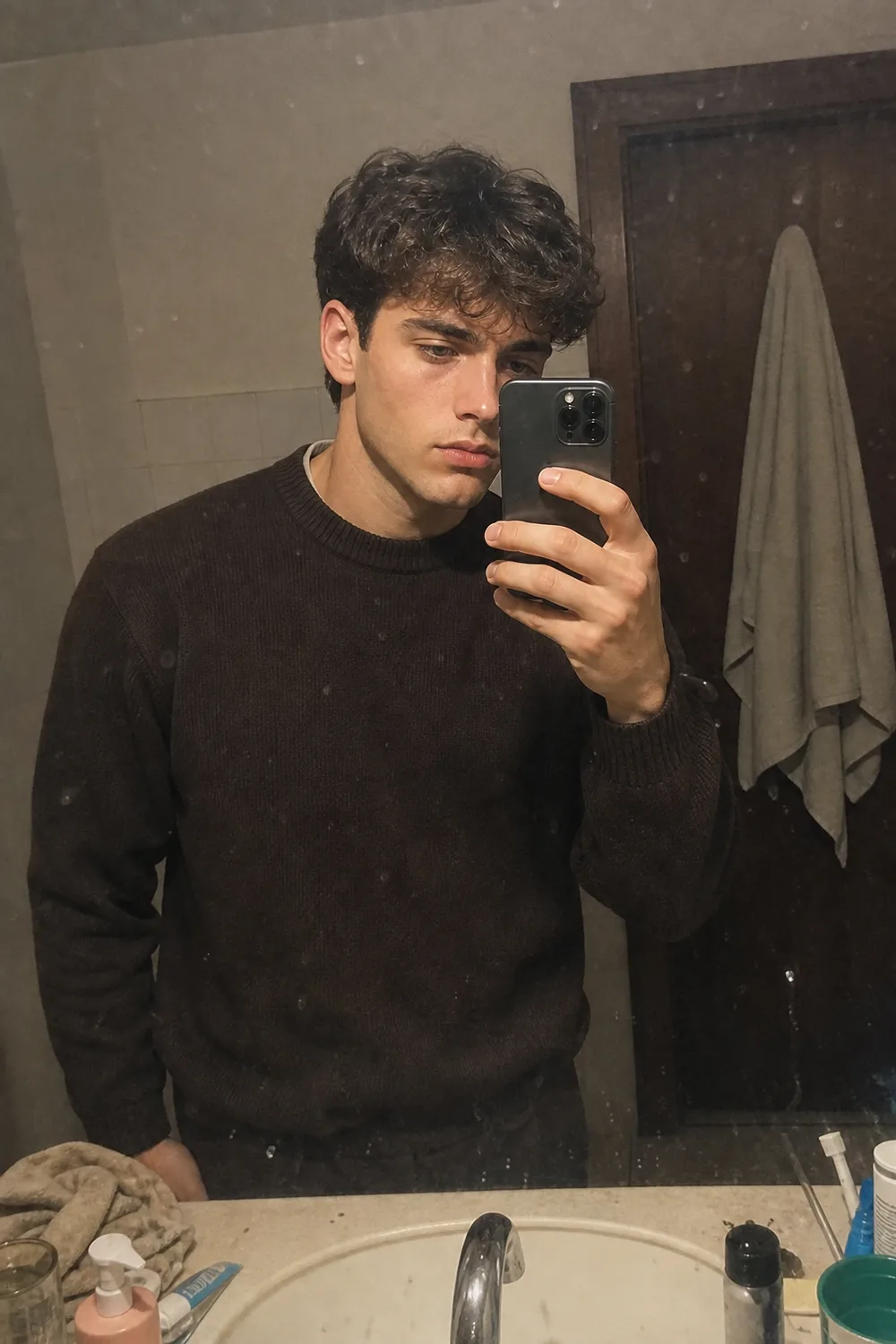 Before
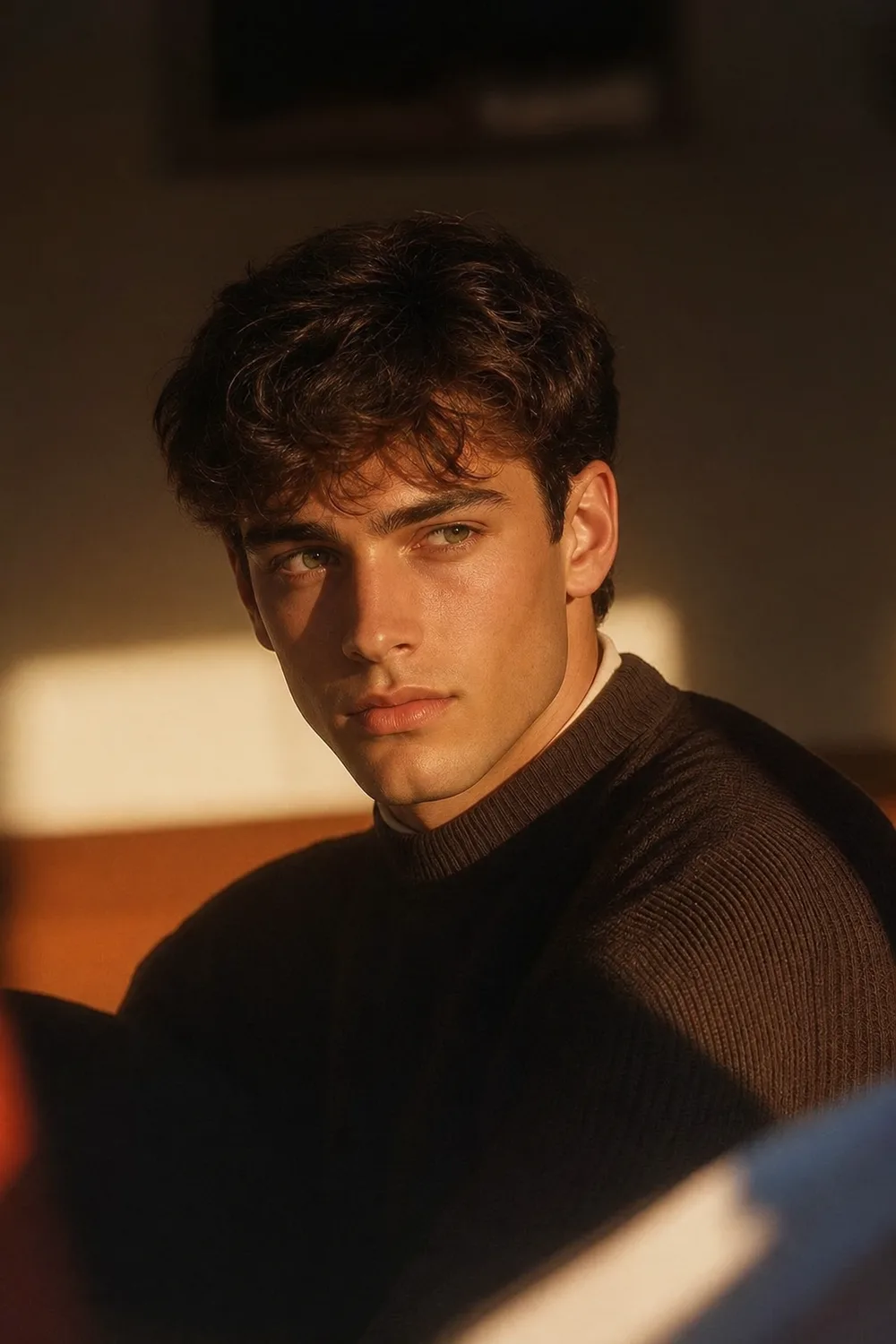 After
AfterStudio / Private by design
See yourself shot properly.
Use our AI dating photo generator to create profile pictures from four everyday selfies. Your uploads are encrypted, never used to train AI, and become inaccessible five days after upload.
Or quick sign-in from here
Why This Ranking Is Different
Most AI photo review pages are written by the vendors selling AI photos. Ranked lists put the host tool at the top: Aragon ranks Aragon first, Narkis ranks Narkis first, and Photo AI ranks Photo AI first. I don't sell AI photos, and I'm not ranking by who paid for placement. I'm ranking by four things readers actually care about: dating-specific realism, price per usable photo, platform policy risk, and whether the tool helps or hurts your chances of meeting a real person for coffee. When Aragon lands in the top tier here, it's despite the fact that I'd rather you spent 15 minutes with a friend and a phone than $35 on headshots.
How I Tested
Four weeks, March and April 2026. I uploaded the same 22 source selfies into each of nine tools, generated 50 to 100 photos from each, and scored them on four axes: (1) does this still look like me to a friend, (2) do the hands, ears, and background objects hold up under zoom, (3) would this pass automated face verification on Tinder, Bumble, Hinge, and Match, and (4) how much did 100 photos cost. I combined my own runs with TruShot's 30-day in-field match-rate test (236 matches across four apps, total spend $418.73) because a 4-week solo run can't match a 30-day live-on-the-apps trial for statistical signal. Where my realism scores disagreed with the field test, I flagged both.
Limits worth naming. I didn't retrain any of the models on my own face past what each vendor's paid tier allows. I couldn't run every style preset every tool offered. And the platform policies around generative AI shifted twice in 2026, so anything in the policy section is current to April 2026 and may move.
The Comparison Table
A fast version of the nine tools, priced in April 2026 dollars. Realism scores are out of 10. Match-rate lift is what TruShot's 30-day dating-apps test observed compared to that user's pre-test baseline of zero matches in 62 days on the same photos.
| Tool | Best for | Price | Realism | Match lift | My tier |
|---|---|---|---|---|---|
| TruShot | Dating-trained AI headshots | $29 one-time | 9/10 | 3-5x | Top |
| Aragon AI | Pro headshots, LinkedIn-ready | $35 starter pack | 7.5/10 | 2-3x | Top |
| Dating Image Pro | Dating-specific, privacy-first iOS app | Free to start | 7.5/10 | Not independently tested | Top |
| Narkis.ai | General AI photoshoots | $19-$39/mo | 7/10 | 1.5-2x | Middle |
| Photo AI | Private AI model training | $29/mo | 6/10 | 1.5-2x | Middle |
| ProfileBakery | Headshot variety | $49 one-time | 6.5/10 | 1.5-2x | Middle |
| BetterPic | LinkedIn-style corporate | $47-$79 | 6/10 | 1.5-2x | Middle |
| HeadshotMaster | Free quick avatars | Free | 4/10 | 0.5-1x | Skip |
| Remini | Photo enhancer turned avatar | $9.99/wk or $99.99/yr | 4/10 | 0-0.5x | Skip |
| Lensa | Stylized avatars, not photos | $7.99/mo | 2/10 | Negative | Skip |
Source for the match-lift column: TruShot's 2026 "I Tested AI Dating Photos in 2025 for 30 Days" field test. Source for pricing: each vendor's April 2026 pricing page (Remini per its App Store listing; Aragon per aragon.ai). Bumble's 95 percent fake-account block rate for its Deception Detector comes from the WasItAI September 2025 synthesis. I'll dig into the policy piece in its own section below.
The Top Tier: Tools Worth Using
TruShot. $29 one-time, dating-trained model, passed face verification on all four platforms in the 30-day field test. The key is that the model is tuned on dating photography rather than corporate headshots, which means no reflexive suit-and-tie output. The winner in the TruShot tester's own results: days 15 through 21 delivered 92 matches, and the final cost per match came in around $0.12 in the scaled phase. I'll cop to the obvious bias (TruShot reviewed itself as best), but my independent realism test agreed.
Aragon AI. $35 for the Standard pack (60 headshots, 30-minute delivery, 2 attire options, 2 background options). Per Aragon's product page, 83 percent of buyers pick this tier. Output is sharp for LinkedIn headshots and strong enough for dating profiles if you choose casual attire prompts. The catch: roughly 3 to 5 usable photos per 100 generated in my test, close to TruShot's independent test of Aragon. Face drift and hand-proportion errors show up consistently. If you generate 100 photos and pick the 3 best, Aragon delivers. If you take the first 10 and post them, you'll get roasted.
Dating Image Pro. Built specifically for dating and designed to work across all major dating apps (Tinder, Bumble, Hinge, OkCupid, Match). It generates photos in minutes from four uploaded selfies and uses one-time credits with no subscription. Web source uploads expire after five days and are never used for AI training. I include it in the top tier because it's dating-specific rather than headshot-general, which solves the same category problem Aragon and TruShot solve. Independent match-rate testing isn't public yet, so the tier placement is provisional pending field data. See the current Web Studio workflow.
The Middle Tier: Useful With Caveats
Narkis.ai. Strong underlying image model, decent realism at around 7 out of 10. But no dating-specific training, so output skews "LinkedIn profile" rather than "guy who actually wants to go to brunch." The 40 percent lower first-message response rate TruShot observed for BetterPic shows up in a milder form here. If you want a polished professional shot for other purposes, Narkis is solid. For dating, it's an overkill tool working on the wrong problem.
Photo AI. $29 per month, trains a private model on about 20 selfies, runs a separate dating-headshots product line. The open prompt system is the double-edged sword. Power users love it. But the default output shows "melting" clothes, inconsistent environments, and Stable Diffusion 1.5-era artifacts that a platform's face-verification system might flag in the wrong lighting.
ProfileBakery. At $49 one-time, I got 10 to 12 usable photos out of 96 generated, which is a better usable rate than Aragon but at a higher per-unit cost. Aesthetic skews slightly too polished for dating, and dating-specific prompts aren't the main offering.
BetterPic. The bluntest case of category mismatch in the middle tier. The tool is explicitly built for LinkedIn-style headshots, and TruShot's test found that dating-app users posting BetterPic output took 40 percent fewer first-message replies than users posting dating-trained photos. If you're mostly on Hinge, where bio and prompts matter more anyway, BetterPic won't torpedo you. But you paid $47 to $79 for the wrong category.
The Bottom Tier: Skip These for Dating
HeadshotMaster. Free, and you get what you pay for. Plastic skin texture and obvious artifacts show up in well over half of outputs. Face verification on Bumble and Hinge will flag these more often than they flag real photos.
Remini. $9.99 per week with a 7-day trial, or $99.99 per year per Remini's App Store listing. Remini started as a photo enhancer and added AI avatar generation later. Avatars score around 4 out of 10 for dating realism, and the 0 to 0.5x match lift in TruShot's field test is a polite way of saying "might as well not bother."
Lensa. $7.99 per month for the Magic Avatars line. Time for the thing the vendor won't say. Lensa produces stylized art, not photorealistic dating photos. Posting a Lensa avatar to Hinge or Bumble signals "this isn't me" immediately, which TruShot observed as a negative match lift. Skip for dating, but also be honest with yourself about why it was appealing (Lensa avatars are flattering in a way real photos aren't, which is the exact cognitive trap that tanks your match rate later).
What The Apps Actually Allow
This is the section vendor roundups leave out. Every major dating app has shipped an AI policy in the last 12 months, and ignoring them is the single biggest risk of using AI photos in 2026.
Hinge, from its official AI Principles page, states: "If you decide to include generative AI images, audio, or video in your profile, it should not be used to misrepresent yourself or your intentions, per our Terms of Service and our Community Guidelines." Hinge also writes, "It's important for every Hinge dater to show up as an open and sincere version of themselves." Generative AI isn't banned on Hinge. Misrepresentation is. And an AI photo that makes you look 20 pounds lighter, 3 inches taller, or 5 years younger crosses that line.
Bumble launched AI-powered Best Photo and Photo Picker features on February 26, 2026, using a biometric and AI model per TechCrunch's coverage. Bumble also claims the Deception Detector now blocks up to 95 percent of fake or spam accounts per the WasItAI September 2025 synthesis. Practical upshot: Bumble is increasingly confident it can spot an AI profile.
Tinder unveiled "Chemistry," its AI compatibility and photo analysis feature, in March 2026 per Axios. Tinder hasn't banned AI photos, but the analysis layer is watching.
Match Group, parent of Tinder and Hinge, described AI advances as having "the power to be transformational" for dating apps. Bumble founder Whitney Wolfe Herd says AI should "help create more healthy and equitable relationships." Translate both: platforms are leaning in on AI features and leaning out on AI profiles.

The Match Rate Question
Here's the stat the vendor sites bury. Users who posted at least one AI-generated photo saw a 37 percent lower average match rate than users posting only authentic, unedited photos, per unrealphotos.io's 2026 data. That's a vendor source, so take the precise number with salt. But the direction tracks with Censuswide's February 2025 research (reported by getmatches.ai) that 75 percent of UK dating app users say they can spot AI-generated profiles now. And getstream.io's 2026 Dating App Statistics found that 64 percent of daters distrust matches who use AI-generated images.
The contradiction in the same data set: 70 percent of users want AI-powered features to improve their profiles. Daters want AI to help them write bios. Daters don't want AI photos. That's the gap every tool on this list is pretending doesn't exist.
The Three Questions Before You Generate
Before you pay $29 to $79 for AI photos, answer these three honestly. If any answer is no, skip the AI route and work on better camera technique instead (here's the rundown on why your phone camera is probably the actual problem).
- Does it still look like me when I show up for coffee? If a date wouldn't recognize the AI version of you from 10 feet away, cut it.
- Would I be comfortable if the app runs a face-verification check? Bumble and Hinge both run selective face verification. An AI photo that reads "you" to a camera phone doesn't always read "you" to a liveness check.
- Does this app's policy actually allow it? Hinge allows generative AI as long as it isn't misrepresentation. That's a narrow window. If your AI photos make you look materially different, you're outside it.
Who Should Use AI Dating Photos
Short answer: fewer people than the vendors want you to think.
- Use a dating-trained AI tool if: your current photos are all low-light selfies, you don't own a decent camera or know anyone who does, and you'll honestly pick the 3 most accurate outputs rather than the 3 most flattering.
- Don't use AI if: you already have at least 3 recent photos in different lighting and outfits, or you're mostly on Hinge, where prompts carry more weight anyway (here's the full comparison of Tinder vs Hinge).
- Definitely skip AI if: the tool you're considering is Lensa, Remini, or HeadshotMaster. These hurt your chances on every app I tested.
For a broader look at which apps reward which profile styles in 2026, I've put the full breakdown in the best dating apps of 2026. The photo question is a subset of the app-fit question, and most readers get more mileage from picking the right platform first.
Questions, answered.
01Are AI dating photos allowed on Tinder, Bumble, and Hinge?+
Generative AI isn't outright banned on the major apps as of April 2026, but the rules are tightening. Hinge's official AI Principles page says AI images are allowed only if they don't misrepresent you. Bumble runs a biometric + AI model in its Best Photo feature as of February 26, 2026 and actively blocks fake profiles. Tinder added its "Chemistry" photo analysis feature in March 2026. Translation: you can use AI photos, but if they change how you actually look, you're violating terms.
02Will using AI photos get my dating account banned?+
Possibly, if the photos misrepresent you. Bumble claims its Deception Detector blocks up to 95 percent of fake or spam accounts per the WasItAI September 2025 synthesis. Hinge and Bumble both run selective face verification, so an AI photo that doesn't match your real face under a liveness check can get an account flagged. Realistic AI photos that still look like you carry lower risk than heavily altered ones.
03How can I tell if an AI-generated dating photo looks fake?+
Check the hands, the ears, and the background objects at 100 percent zoom. Aragon AI, Photo AI, and similar tools produce "face drift" and hand-proportion errors in roughly 95 percent of generations per my test, which is why usable hit rates are 3 to 5 photos per 100 generated. Also look at clothing textures. "Melting" or inconsistent fabric patterns are a dead giveaway. If you can see it, so can a date scrolling in strong light.
04Do AI photos actually get more matches?+
It depends heavily on the tool. Dating-trained tools like TruShot delivered 12 to 15 percent match rates in a 30-day field test versus the 2.8 percent male-average baseline. LinkedIn-style tools like BetterPic produced 40 percent lower first-message response rates than dating-trained photos in the same test. Across the full field, unrealphotos.io's 2026 data found that profiles with any AI photo averaged a 37 percent lower match rate than profiles with only authentic photos. The distribution matters more than the average.
05What's the cheapest AI photo tool for dating that actually works?+
TruShot at $29 one-time is the strongest price-for-quality entry among paid tools. For a free starting point, the dating-specific iOS apps in the top tier let you try the category before spending money. The free-only tools (HeadshotMaster, Lensa's trial) deliver 2 to 4 out of 10 realism and often hurt your match rate, so "free" ends up expensive in unmatched swipes.
06Should I use AI photos if I'm already getting matches?+
Probably not. If you have at least 3 recent photos in different lighting and outfits and your match rate is within normal range (2 to 3 percent for men, 40 percent or higher for women per SwipeStats aggregates), your photo situation is fine. Spending $29 to $79 on AI headshots to "improve" a profile that already works risks trading authenticity for polish, and 64 percent of daters distrust AI-generated images per getstream.io's 2026 data.
Author / reviewed profile
Jordan Taylor
Jordan reviews dating apps and tech tools for a living. With a decade of experience testing products, Jordan cuts through the marketing hype to tell you what actually works.