
What Women Look For in Dating Profiles (2026 Data)
Hinge, OkCupid, and Photofeeler data on what women actually swipe right on, vs what they say they want. The signals that decide a profile in two seconds.
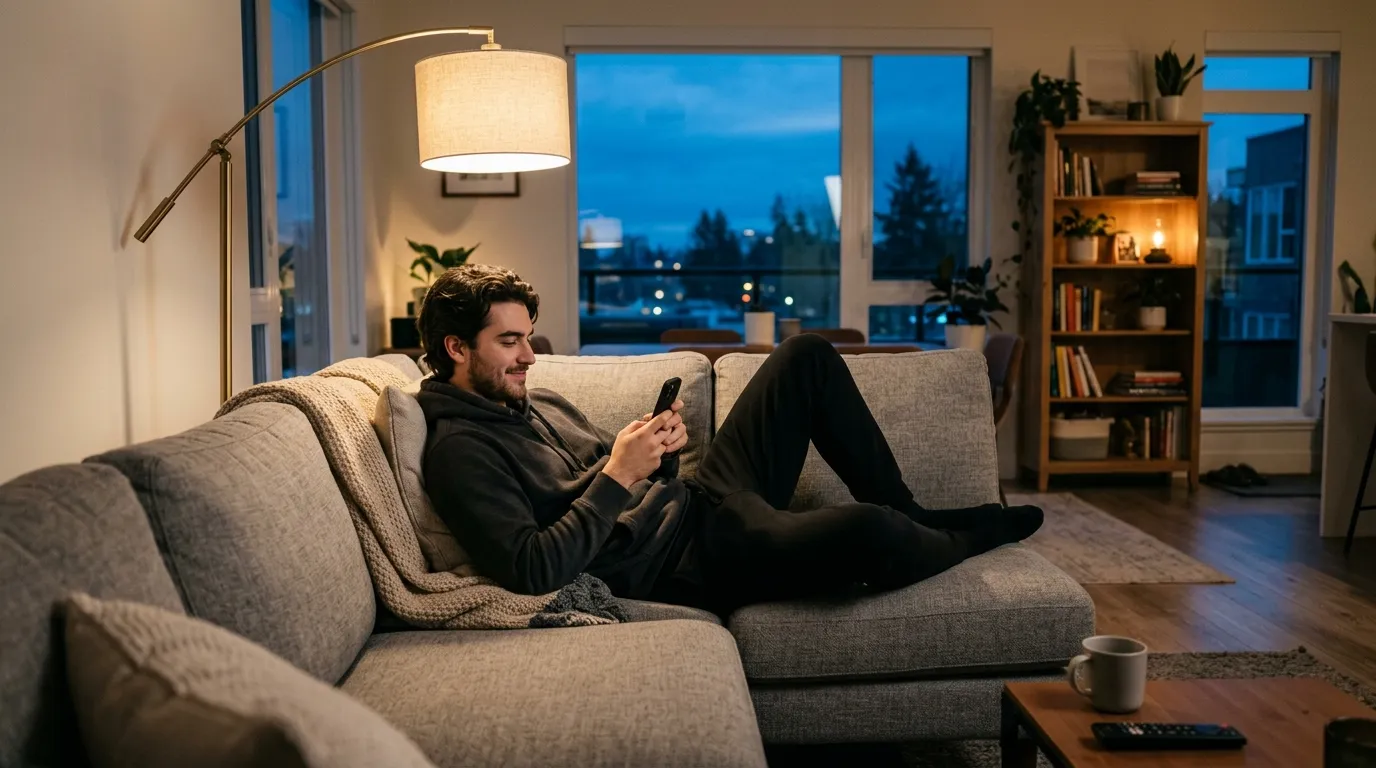
Women decide on a dating profile in less than two seconds. That isn't an opinion. Logan Ury, Hinge's Director of Relationship Science, put a number on it: "Two seconds is all it takes for a Hinge user to decide on a profile. We need to make those two seconds count." For anyone trying to read women's minds on dating apps, those two seconds are also where most of the answer lives.
What women say they want and what they actually swipe right on aren't the same thing. Pew Research's 2023 dating-app survey found that 72% of women on apps say it's very important that a profile shows what kind of relationship the person is looking for. Then look at Bruch and Newman's 2018 paper in Science Advances, which mapped real swipe behavior across thousands of accounts: women's reply rate sits around 5%, and the desirability curve they swipe by is sharply hierarchical. The bios get read. The photos still do most of the lifting.
So this isn't a piece about reading women's minds. (We can't.) It's a piece about reading the gap between two well-documented data sets, and using that gap to decide where to spend your editing effort tonight.
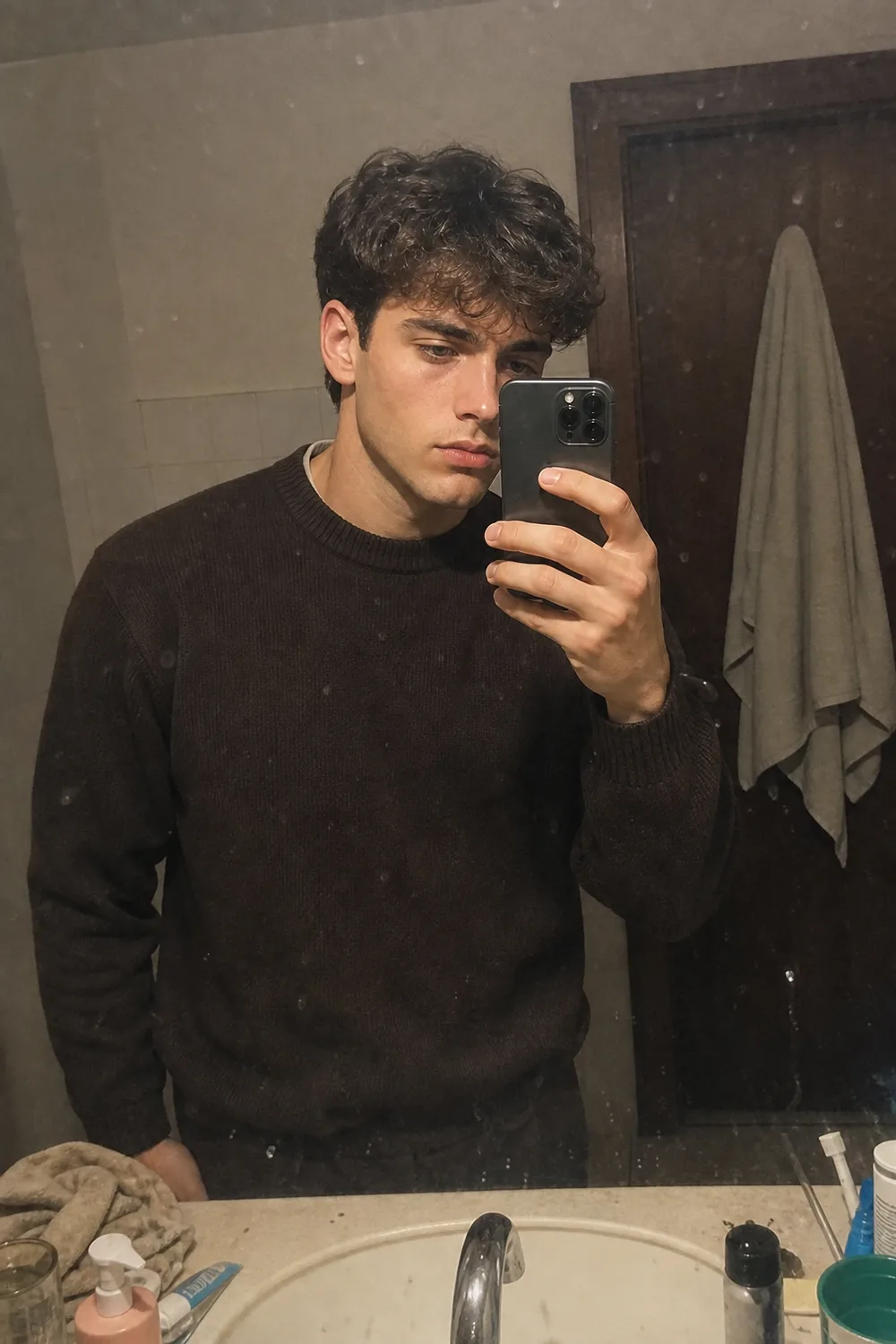 Before
 After
AfterStudio / Private by design
See yourself shot properly.
Use our AI dating photo generator to create profile pictures from four everyday selfies. Your uploads are encrypted, never used to train AI, and become inaccessible five days after upload.
Or quick sign-in from here
The Two-Second Filter
The first second of a profile review is photo 1. The 2024 Hinge editorial cycle clocked the snap-judgment moment at roughly 0.4 seconds for a single image. TruShot's panel of dating-app users put the average decision speed for an entire profile at 1.7 seconds. By the time a woman's thumb starts moving, most of the work is already done.
Photofeeler, a service that lets users get strangers to rate their dating photos, scores men on three dimensions: Smart, Trustworthy, and Attractive. (Women are scored on Smart, Confident, and Authentic instead, which already tells you something.) The Photofeeler-D3 deep-learning model, published as arXiv:1904.07435, hit a Pearson correlation of 0.81 with crowd-rated photo attractiveness on the female-rating-male task. Translation: the way a photo reads to women is predictable enough that an algorithm gets it right four times out of five.
What does that filter actually look at? Hinge's 2017 Profile Picture Report, the largest dataset Hinge has published on this question, found candid photos receive 15% more likes than posed ones. Smiling with teeth out-performs no-teeth smiles by 23%. Sport photos get 75% more likes. Profiles where the user is alone in the first photo correlate positively with success. Most of those signals can be built into a profile by Tuesday.
The lesson is to understand which of your six photo slots gets 90% of the verdict. (Hint: the first one.) If your photo 1 isn't a clear, well-lit, eye-contact, smile-with-teeth shot of just you, that's where to start, regardless of how good the bio is. Our breakdown of the most common dating photo mistakes covers the killers in detail.
The Selectivity Asymmetry (Why Her Bar Is So High)
The behavioral data on who women actually like is brutal in a specific way. Bruch and Newman's 2018 study, published in Science Advances, analyzed messaging behavior on a major free dating site across New York, Boston, Chicago, and Seattle. Both genders pursue partners about 25% more desirable than themselves, but the male desirability curve is broad and gradual. The female desirability curve is sharply hierarchical. Reply rates from women sit at around 5% on average and drop close to zero for messages punching too far above the sender's tier.
The match data follows the same shape. SwipeStats' 2026 panel of 7,000+ Hinge profiles found the top 1% of men collect 16.4% of female likes, the top 10% collect 58%, and the bottom 50% collect 4.3%. The male match rate on Hinge runs 2 to 5%. The female match rate runs 23 to 30%. On Bumble the gap is wider: roughly 45% female match rate against 3% male.
Tinder's like distribution is even more lopsided. A 2015 economist analysis (replicated by SwipeStats since) found a Gini coefficient of 0.58 in male-Tinder-user popularity, more unequal than 95% of national income distributions. The top 10% of men receive about 58% of all female right-swipes.
The front door is narrow, and women have to filter a profile in a fraction of a second to keep the queue moving. (We'd all do the same with that volume.) The marginal investment in a better photo 1 returns more than the same investment in a longer bio. That math holds even before any of the bio rules below come into play.
What Women Self-Report Wanting
Pew Research Center's 2023 study, "From Looking for Love to Swiping the Field," surveyed 6,034 US adults including 2,098 ever-online-daters. The picture it paints of female priorities is consistent and concrete. Among women on apps, 72% say it's very important that a profile shows what kind of relationship the person is seeking, against 58% of men. Lifestyle clarity (drinking, smoking, kids, religion) ranks higher for women than men in self-report. Recent photo? Both genders agree that one matters: 71% of women rate it very important, 64% of men.
Women self-report wanting clarity, intent, and warmth. The Hinge 2025 D.A.T.E. Report, which surveyed about 30,000 daters worldwide, found 49% of heterosexual Gen Z women hesitate to initiate deep talks because they'd rather the other person go first. Only 17% of Gen Z men cite the same reason. Pew adds another asymmetry: among ever-online-daters, only 14% of women have ever asked someone out on a dating app first, against 52% of men. Women's default behavior is to wait for a clear, specific approach.
Open the profile and ask the simple question: can a stranger tell within ten seconds whether you want a relationship or a hookup, what your weeks look like, and whether you'd be the kind of person she could spend a normal Tuesday evening with? If not, she's more likely to keep scrolling than to ask. Erika Ettin, founder of A Little Nudge, has put it bluntly in her Forbes contributor work: "The single biggest mistake men make on dating apps is treating their profile like a resume. Women aren't hiring you. They're imagining a Tuesday night with you."
Read that one again. The bio's job is to give her a Tuesday to imagine.

What Women Actually Swipe On
Now compare the self-report to the behavioral data, because that's where the surprises live. Profile completeness is the simplest lift: profiles 85%+ complete get 8x more matches than half-filled ones, per Match.com's editorial summary of in-app data. Six photos beat three or fewer (Tinder's own published data). And a full-body shot increases match rates by 203%, with profiles that lack one getting 45% fewer matches.
Hinge's data on prompt-versus-photo engagement is the one number that catches most men off guard. Likes on text prompts are 47% more likely to lead to a date than likes on photos, per Hinge's 2024 internal data shared in their Newsroom. Voice Prompts on Hinge are 32% more likely to lead to a date. Filling all three Hinge prompt slots is associated with 73% more quality matches per SwipeStats. Hinge's "Convo Starters" feature (a like accompanied by a written message) is twice as likely to lead to a date as a plain like, and Hinge has documented that 72% of users are more likely to consider someone who used one.
Women read prompts. They read them harder than men do. (This shouldn't be surprising, given Pew's data on women weighing relationship-intent text more heavily.) But there's a paradox in the behavioral data too. SwipeStats found that not displaying occupation on Tinder correlates with 39% more matches, and that bartenders averaged a 13.87% match rate while software engineers averaged 3.95%. Women claim to filter on stable career signals. The act of "showing off" the career, especially the high-status one, depresses match rates instead. The signal that hits is a person doing something interesting, not the resume slot.
Translation: keep the photos clean and varied, fill the prompts with story not status, and let the lifestyle signals come through showing rather than telling.
The Instant-Skip Red Flags
Some signals trigger a "no" before a profile gets a real read. The data on this is consistent across coaching practitioners (Eddie Hernandez, Hayley Quinn, Blaine Anderson, ROAST Dating, BetterPic) and consumer surveys.
A 2022 Passport Photo Online study of 1,021 American daters found 41% of women cited weird angles as a top photo "sin," 41% cited heavy editing, and 40% cited smoking. Sixty percent of rejected profiles had strange or unfriendly facial expressions. Ninety percent of women had swiped left specifically because photos were too obviously manipulated. Photofeeler's "8 Photo Mistakes" study found photos with both a hat and sunglasses dragged composite ratings 1 to 2 points across all three dimensions.
Tinder's own 2016 internal data flagged two signals: users wearing glasses are 15% less likely to be right-swiped, and users wearing hats are 12% less likely. (The implication isn't that glasses are bad. It's that obscuring the face is.)
The synthesized red-flag list women's-side coaches keep flagging:
| Red flag | Why it kills |
|---|---|
| Snapchat / Instagram filters | Reads as insecurity. Distorts the face she's evaluating |
| Sunglasses across all photos | Eye contact is the trust signal. No eyes, no read |
| Bathroom mirror selfie | Lighting is harsh. Background reads as effortless effort |
| Group photo with no clear "you" | If she has to play "Where's Waldo," she's already gone |
| Fish-holding photo | Cliché now. Even fishermen are tired of it |
| Visible cropped-ex (feminine arm) | Reads as either careless or unresolved |
| All-car selfies | Suggests the car is the personality |
| Shirtless gym selfie outside swim context | Acceptable on a beach. Strange in front of a mirror |
The Green Flags Women Consistently Mention
The flip side of that list is the consensus from coaches like Logan Ury, Erika Ettin, Blaine Anderson, Connell Barrett, and Eddie Hernandez. The "green flag" list reads as the opposite of the red one, but a few items deserve their own line.
A clear face photo as photo 1, taken in good light, with eye contact and a real smile. (Hinge data: smiling with teeth beats no-teeth by 23%.) At least one full-body shot. Travel photos receive 30% more likes than non-travel photos on Hinge despite only 3.4% of profiles having one. Photos with friends are 74% more likely to get likes overall, but only when paired with a clear photo 1 of just you.
On the bio and prompts side, Hayley Quinn has said in editorial round-ups, "I'm always interested in the photos that look like they were taken in the middle of a normal day, not staged. Those are the photos that women linger on." On the bio, Logan Ury's rule from Hinge editorial is "show, don't tell." The most-replied-to prompts read like a half-finished story or a small confession, not a list answer like "I love adventure."
Hinge has published the prompts that consistently get the most engagement: "Two truths and a lie," "I bet you can't," "Together, we could," "My greatest strength," and "The way to win me over is." None of those reward a brag-box answer. All of them reward specificity. Dr. Jess Carbino, the former Tinder and Bumble sociologist, put it this way: naming "Gustav Klimt" instead of "art" hands the reader a topic. That's the move.
The Profile Audit (Use This Tonight)
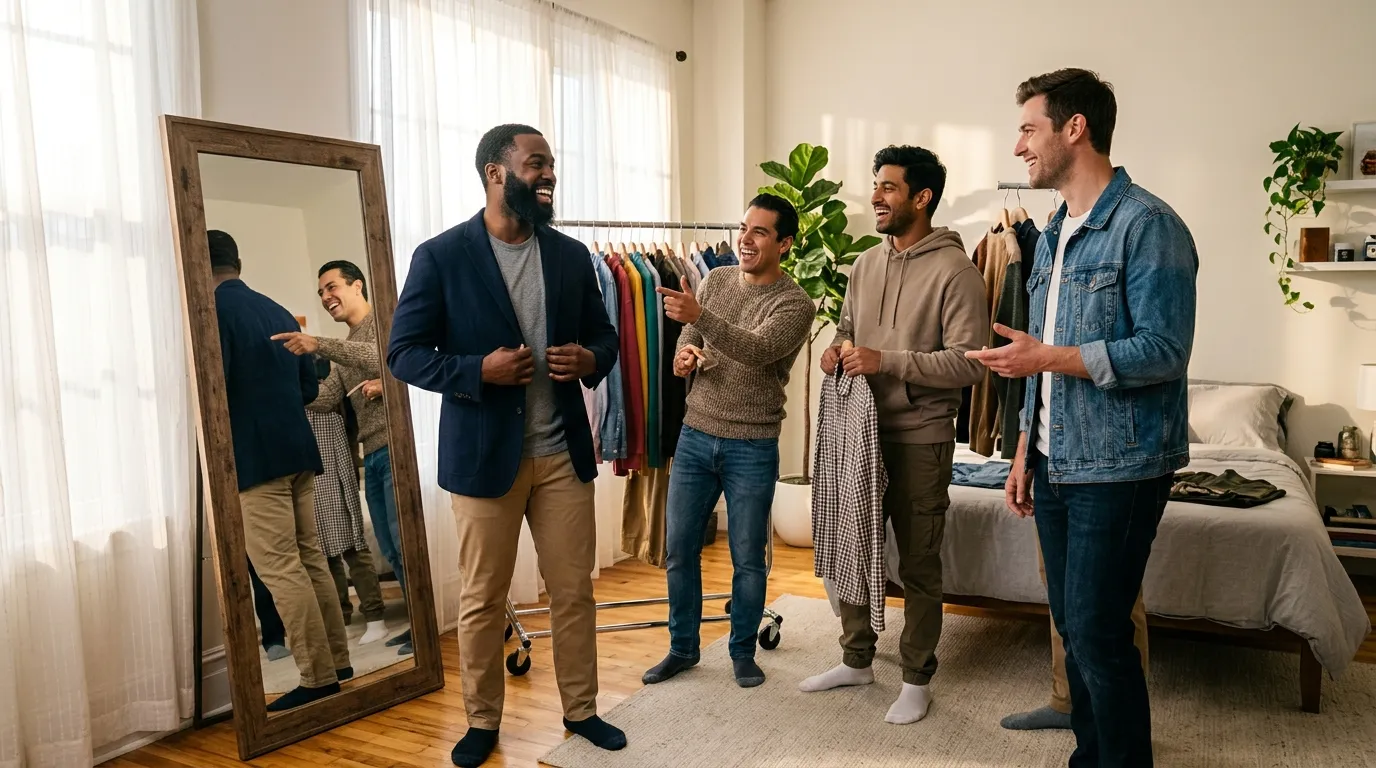
Run your profile through this list with someone you trust. Open it on your phone the way a stranger would. If you can't check every box, the rewrite is going to pay back the time.
Photos
- Photo 1 is a clear, well-lit, eye-contact, smile-with-teeth shot of you alone
- At least one full-body photo is in the set
- At least one photo of you doing something specific (not posing for a "doing it" shot)
- No more than one group photo, and only if you're visibly the focus
- No sunglasses in photo 1
- No bathroom mirror, no fish, no all-car set
- Six total photos (Tinder's own data shows the lift)
Bio and prompts
- The first sentence works as a hook on its own
- One specific anchor (place, opinion, weird detail, named hobby) is in the bio
- What kind of relationship you're looking for is clear within two sentences
- Hinge users: all three prompt slots filled
- At least one prompt invites a reply (story-style, not list-style)
- No "fluent in sarcasm," no "ask me anything," no 6'2" as a personality
Lifestyle and intent
- Drinking, smoking, kids, religion fields filled honestly
- Recent photo (within 12 months, no haircut surprises later)
- No photos that contradict each other (suit photo, boat photo, gym photo with no link between them)
- Not all selfies. At least three taken by someone else
The bio and prompts work in tandem with the photos. A bio formula with rewrite examples covers that side in depth, and our Tinder bio ideas piece has 50+ formats that work across platforms. If photos are the part holding the profile back, Dating Image Pro turns four selfies into professional-looking dating photos in minutes, which gets the foundation in place before the bio rewrites earn their keep.
Where to Spend the Effort (and Where Not To)
The behavioral data points to a useful priority list, even if it isn't the one men's magazines usually print. Photo 1 carries the most weight of any slot on the entire profile. The bio matters, but it matters less than men think. Prompts on Hinge punch above the rest of the bio. The career and height fields punch below.
Where men usually over-invest: long bios that read like resumes, photos that signal status (cars, suits, crypto wallpaper), prompt answers that brag, and the gym selfie. The data on all four is either neutral or actively negative.
Where men usually under-invest: photo 1 quality (most photo 1s are too dark, too far, or too cluttered), one good full-body shot, a single specific lifestyle photo, and a Hinge Voice Prompt with a real conversational tone in it. Our deeper piece on how to stand out on dating apps walks through the prompt-versus-photo data in more depth.
The two-second verdict isn't fair, but it's the room you're playing in. And the good part is that nobody's asking for perfection. The data only asks that the first photo work, the bio say what you actually want, and the prompts sound like a person rather than a brand.
One last note. A great profile won't fix a mismatch with the app's audience, and it won't fix the wider dynamics behind Bruch and Newman's reply-rate floor. But the gap between the average male profile and a well-audited one is wide enough to move your numbers in a week. Worth the Tuesday evening spent.
Questions, answered.
01What do women look at first on a dating profile?+
Photo 1, every time. Hinge data clocks the first impression at roughly 0.4 seconds, and TruShot panel research found average swipe decisions land at 1.7 seconds for the whole profile. The first photo carries 80 to 90% of the verdict. If it's blurry, dark, or you're not in it alone, the bio rarely gets a read.
02Does my bio actually matter, or is it all about photos?+
It matters, just not the way most men think. Hinge's 2024 data found likes on text prompts are 47% more likely to lead to a date than likes on photos. Pew Research's 2023 study found 72% of women say it's very important a profile shows the person's relationship intent. The catch: the bio gets read after photo 1 earns the look, not before. So spend your editing time accordingly.
03What is the single biggest red flag for women on dating profiles?+
Obscured faces. Sunglasses in every photo, hats plus sunglasses, heavy filters, group photos where she has to find you. Photofeeler data shows hat-plus-sunglasses photos drag composite ratings 1 to 2 points across Smart, Trustworthy, and Attractive. Tinder's own 2016 study found users wearing sunglasses or hats are 12 to 15% less likely to be right-swiped. Eye contact is the trust handshake, and you're hiding it.
04Should I list my height and job on my dating profile?+
Height yes, in numbers, with no commentary. SwipeStats and Pew both find women filter on lifestyle clarity, and "ask me if it matters" reads as evasive. On occupation the data's counterintuitive. SwipeStats found that not displaying job on Tinder correlates with 39% more matches, and bartenders out-perform software engineers in match rate. So show what you actually do during the day in a photo, not in a job-title text field.
05Are women on dating apps actually looking for relationships in 2026?+
Yes, more than the meme suggests. Tinder's 2024 Green Flags Report found 68% of women on Tinder are seeking a relationship (against 53% of men). The Knot's 2025 Real Weddings Study found 27% of US engaged couples met on a dating app, with 36% of those couples meeting on Hinge. Women self-report wanting intent, and the wedding data backs it up. The selectivity's high. But the goal's real.
06How many photos should a dating profile have to give women enough to swipe on?+
Six. Tinder's own published data shows profiles with six photos out-perform those with three or fewer, and Hinge mandates the same minimum. The full-body shot isn't optional either: profiles without one get 45% fewer matches per dating-app research compilations. Six well-chosen photos beat ten chaotic ones, every single time.
Author / reviewed profile
Sam Patel
Sam writes about modern dating, relationships, and the psychology of attraction. With a background in behavioral science and years of interviewing couples, Sam brings research and real stories together.