
Dating Profile Bio Tips That Actually Get Responses
A dating coach's bio formula with 12+ rewrite examples. What to put in your dating app bio so people actually message you, and what to delete tonight.
Forget what you've heard about "showing your personality" in your dating profile bio. That advice sounds correct and changes nothing. The bios that get messages do three specific things, and the bios that get skipped do one specific thing. Once you can spot the difference, the rewrite is a ten-minute job per app.
A bio's job isn't to describe you. It's to hand a stranger a reason to send the first message instead of swiping past. Sound familiar? Most singles get this backwards because dating coaches keep telling them to be "authentic" without saying what authentic looks like in 300 characters. So let's get specific.
Here's the rule that runs the rest of this piece: short bios beat long bios. Tinder co-founder Sean Rad has said the optimum is 15 to 45 words. SwipeStats' 2026 Tinder dataset shows bios between 1 and 50 characters out-perform longer ones by 73% on match rate. Hinge's 2024 Newsroom data on prompt-versus-photo engagement found that likes on text prompts are 47% more likely to lead to a date than likes on photos. Bios get read, and they get judged in about three seconds. The bio just needs to earn the seconds it gets.
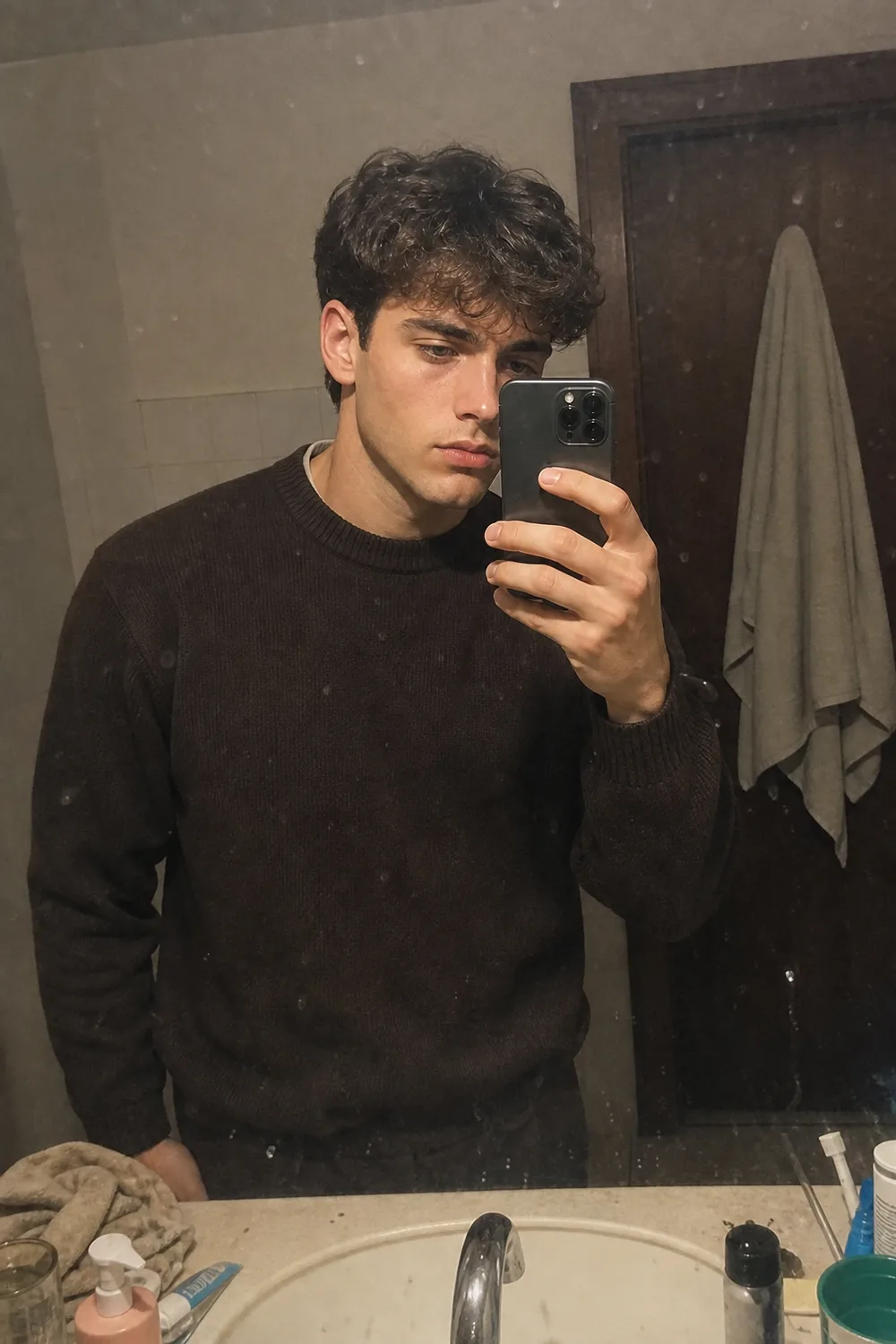 Before
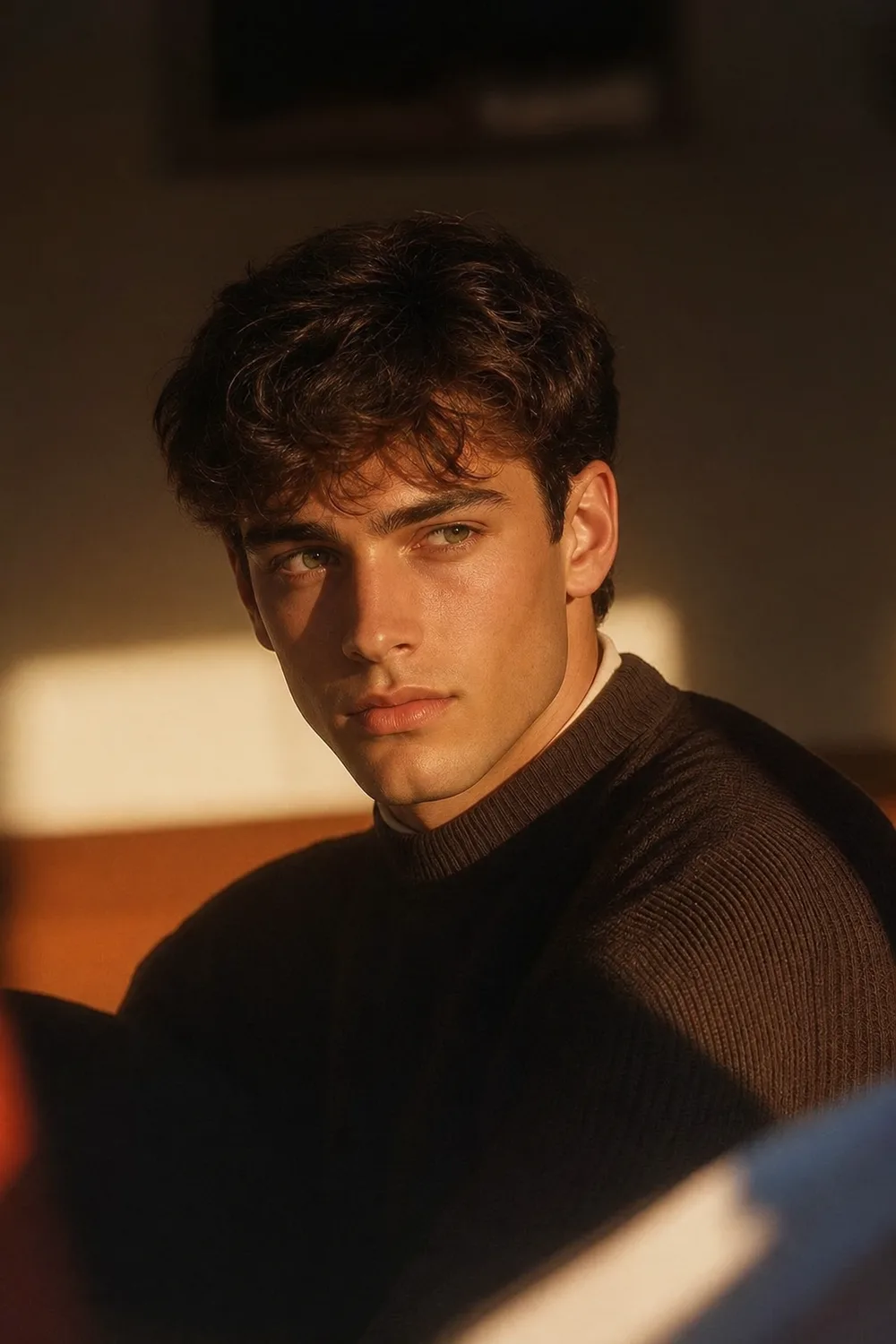 After
AfterStudio / Private by design
See yourself shot properly.
Use our AI dating photo generator to create profile pictures from four everyday selfies. Your uploads are encrypted, never used to train AI, and become inaccessible five days after upload.
Or quick sign-in from here
The Universal Bio Formula (SOH)
Across Tinder, Bumble, and Hinge prompts, the same three-part structure holds. I call it the SOH formula because nothing about it needs to be fancy.
S is one Specific anchor: a place, a hobby with a brand name attached, a weird detail. O is one low-stakes Opinion or small confession. H is one implied question or Hook the reader can grab. A working bio uses two of those three. A great bio uses all three in two sentences and stops.
Here's what each piece is doing.
The specific anchor replaces the vague trait. "I love food" doesn't anchor anything. "I have ranked every ramen place within a 15-minute walk of my flat" anchors. Dr. Jess Carbino, the former Tinder and Bumble sociologist with a PhD from UCLA, put it this way: naming Gustav Klimt instead of "art" or James Acaster instead of "comedy" hands the reader a topic, signals real appreciation, and immediately filters in the right kind of match. (That last part matters more than people realize. A good bio repels the wrong matches faster than it attracts the right ones.)
The low-stakes opinion replaces personality adjectives. "Funny" is a claim. "I will absolutely fight you about whether scrambled eggs are dinner" is a personality. High-stakes opinions are conversation killers on a dating app, but the opinion still has to be a real opinion. "Pizza is good" doesn't qualify. "Detroit-style is the only pizza shape worth ordering" does.
The implied question is the conversational opening you leave for the reader. Photofeeler's editorial team has flagged this for years: bios that finish on a half-question or a "tell me about" line out-message bios that finish on a full statement. r/Bumble threads on what makes women write Opening Moves return the same answer with depressing regularity. Their bio left me something to write about. Give the reader the hook.
Character Limits by Platform (Print This)
The formula doesn't care which app you're on. The character ceiling does. Pasting a Tinder-length bio into a Hinge prompt slot truncates you mid-thought, and pasting a Hinge-prompt sentence into Bumble's About me wastes 250 free characters.
| Platform | Bio field | Character cap | Other text slots |
|---|---|---|---|
| Tinder | About me | 500 chars (about 80-100 words) | 9 photo slots, 1 minimum |
| Bumble | About me | 300 chars (about 50-60 words) | 6 photos + 3 preset prompt answers |
| Hinge | 3 written prompts | 150 chars per prompt (about 25 words) | 6 photos required, Voice Prompts up to 30 seconds |
Three rules of thumb that hold across all three apps.
First, stay near 15 to 45 words for any single text field. Sean Rad's number isn't arbitrary. Look at the SwipeStats data again: short bios out-perform long ones consistently, and the lift is biggest in the 1 to 50 character bracket.
Second, don't blank-leave a bio field on any platform. Hinge's own Newsroom data found 63% of Hinge users say they don't know what to put on their profile, but the platform also reports that filling all three prompt slots is associated with 73% more quality matches per SwipeStats' 2026 Hinge panel. Voice Prompts on Hinge are 32% more likely to lead to a date than text-only prompts. (The data is loud about this.) An empty bio is a free choice to lose matches.
Third, match the rhythm to the field. Tinder's 500 chars wants two or three short sentences. Bumble's 300 wants exactly two. Hinge's 150-character ceiling wants one sentence with a small hook. Trying to cram a Tinder bio into a Hinge prompt is the single most common bio mistake I see.
Photos still come first, every single time. The bio cannot rescue a profile where photo 1 is dark, blurry, or you're hidden behind sunglasses. Our piece on what women actually swipe right on covers the photo math in detail. If your photos are the part holding the profile back, Dating Image Pro turns four selfies into professional-looking dating photos in minutes, which gets the foundation in place before any bio rewrite earns its keep.
Why List Bios Fail
The single biggest mistake men make on dating profile bios is treating them like a resume. Erika Ettin, founder of A Little Nudge, has said this repeatedly in her Forbes contributor work: women aren't hiring you, they're imagining a Tuesday night with you. A list of traits is a resume. A bio is a trailer.
Here's why list bios fail mechanically. They fill the character budget without creating a single conversation hook. Read these and try to send a first message to either of them.
- "Engineer. 6'1. Love hiking and dogs. Ask me anything."
- "Doctor. Travel. Foodie. Fitness. Looking for someone real."
Neither sentence asks a question. Neither anchors a specific. Neither has an opinion. They're flat. Worse, they read interchangeable, which is the one thing you can't be in a stack of 60 profiles. (I've seen this pattern hundreds of times.)
Connell Barrett, who wrote Dating Sucks, but You Don't, puts the rule plainly: "Show (with specifics), don't tell (with vagueness). 'I live for rock climbing in Colorado' paints a clear picture. 'I love to travel' or 'I like the outdoors' says nothing." Take any line in your current bio. If you can't picture exactly what the writer was doing last Tuesday, the line is a list item, not a bio sentence.
Blaine Anderson, the dating coach featured on Shark Tank, adds a useful follow-on: the first two sentences of a bio are the most important, because many readers won't make it past them to the better parts. So if your specific anchor lives at the bottom, move it up. The first line carries the verdict.
The Rewrite Library: 12 Cliches Fixed
The cleanest way to learn the SOH formula is to see it applied to common bio openings. Each example below pairs a real-world cliche with a rewrite that fits a specific platform's character ceiling. Steal the rhythm, not the words.
For the introvert or quiet career-focused
Before: "I love quiet nights in, hiking, and a good book."
After (Bumble, 300 chars): "Re-reading East of West for the fourth time and ranking every ramen place within a 15-minute walk of my flat. If you have a strong opinion about either, we'll get along."
Before: "Engineer by day, foodie by weekend."
After (Tinder, 500 chars): "I'm the person at dinner who quietly knows the best place to get coffee tomorrow. Currently learning to cold-brew (badly). Looking for someone who can recommend one underrated bookshop and one overrated brunch."
For the social connector
Before: "Always up for an adventure!"
After (Hinge prompt, 150 chars): "Last weekend I taught two strangers how to play pickleball badly. The weekend before that I crashed a stranger's wedding (invited)."
Before: "Looking for my partner in crime."
After (Tinder, 500 chars): "I have a color-coded spreadsheet of every concert I've been to since 2018. Tell me your favorite live set and I'll tell you whether we should get tacos before or after this date."
For the parent
Before: "Single dad to a 6 year old. Looking for someone real."
After (Bumble, 300 chars): "Dad to a six year old who currently believes octopi are pets. Mostly home by 8, mostly in bed by 10, mostly happy to match with someone who finds that more relaxing than tragic."
Before: "Mom of one, no drama."
After (Hinge prompt, 150 chars): "I'll absolutely tell you about my four year old's restaurant ratings unless you ask me not to. (Pizza place: 'sticky.' Fancy place: 'sticky.')"
For the career-focused
Before: "Doctor. 6'1. Looking for ambitious women only."
After (Bumble, 300 chars): "Spend my days in a hospital and my evenings either at the climbing gym or pretending I'm going to the climbing gym. I'm bad at small talk and good at a long walk. If you're between jobs, between cities, or between hobbies, that's interesting too."
Before: "Lawyer. Type A. INTJ. Driven."
After (Tinder, 500 chars): "I argue for a living. I cook badly to relax. I'm trying to get better at one and not the other (you guess which). Recommend me a single book or a single bar."
For the creative or artist
Before: "Musician, painter, dreamer."
After (Hinge prompt, 150 chars): "I scored a short film for an old colleague last spring and I still can't listen to it. Send me your favorite movie soundtrack."
Before: "Actor. Don't ask me to do an accent."
After (Tinder, 500 chars): "Currently in rehearsals for a play you haven't heard of, and recovering from a haircut you might not approve of. I make a serious carbonara and a passable Old Fashioned. Recommend me a Sunday morning."
For the funny or self-deprecating
Before: "Fluent in sarcasm. 5'9 (it matters)."
After (Tinder, 500 chars): "5'9, owns a cast-iron pan, has never finished a crossword. I'll pretend I've been to the restaurant you suggest and Google it under the table."
Before: "I'm not like other guys."
After (Bumble, 300 chars): "I'm very much like other guys. I'll text you back in three to seven minutes, I'll overshare about my dog within ten, and I will absolutely have an opinion about the new pizza place that opened on your block."
For the recently moved
Before: "New to the city. Show me around!"
After (Hinge prompt, 150 chars): "Moved here in March and have eaten at exactly four restaurants. Two of them are the same chain. Help."
Notice what every "after" example does. It anchors a specific (a named book, a real activity, an actual neighborhood). It risks a small opinion or confession. It hands the reader something to write back about, or it asks an outright question. None of them describe "who I am." They describe what the writer was doing last Tuesday, which is exactly the trailer Erika Ettin is talking about.
The 2026 AI-Bio Tells (Delete These Tonight)
In April 2026 there's a new failure mode that didn't exist three years ago: the bio that obviously came out of ChatGPT. The Cut's 2025 survey found 11% of daters have used AI to write their bios and 10% have used AI for opening lines. Tidio's 2026 Love in the Age of AI report puts AI-generated dating content at roughly 1 in 4 Americans. Censuswide's February 2025 UK research found 75% of dating-app users say they can spot AI-generated profiles. eJuiceDB's 2026 survey, run on 1,000 actively dating US adults, found 56% see AI-generated photos as a red flag and 46% dislike AI-written messages.
Translation: more readers can spot AI bios than can't.
Here are the tells. If you see any of these in your current bio, delete the line tonight.
- The "In a world where..." opener. Used in roughly zero human-written bios.
- The parallel-construction triplet: "Whether it's hiking, cooking, or losing at chess." Three matched verbs in a row is an AI fingerprint.
- The "let's create memories together" closer. Same family: "looking for someone to laugh with, cry with, and grow with."
- Em-dash pile-up. ChatGPT loves the em dash. Real bios use periods. (Dating Image Pro's house style bans em dashes for exactly this reason.)
- "Adventures await" and any variant of "embark on a journey" or "navigate love together."
- Triplets that sound like they balance: "I love long walks, deep conversations, and great food." If a sentence reads like it was generated, it was.
These aren't banned because they're AI tells specifically. They're banned because they say nothing. The fact that a generative model produces them is downstream of the real problem: the writer outsourced the personality. AI can't anchor a specific to your actual life. It can only produce the median bio. And the median bio is what gets skipped.
How Women Read Bios Differently (and Why It Matters)
Pew Research Center's 2023 study, From Looking for Love to Swiping the Field, surveyed 6,034 US adults including 2,098 ever-online-daters. Among women on apps, 72% say it's very important that a profile shows what kind of relationship the person is seeking, against 58% of men. Logan Ury, Hinge's Director of Relationship Science, has said it more directly: most men assume the bio doesn't matter because women only look at photos. The data says women read bios harder than men do, and they read for two specific things. Do you sound interesting, and do you sound safe.
The "do you sound interesting" half lives in the specific anchor. The "do you sound safe" half is harder to spot, but it lives in tone. Bios that demand ("don't waste my time," "no players," "if you don't like dogs swipe left") read as red-flagged regardless of intent. Bios that brag without a smile read closed-off. But bios that sound like a real person at a dinner party read open.
Hinge's 2025 D.A.T.E. Report, surveying about 30,000 daters worldwide, found that 49% of heterosexual Gen Z women hesitate to initiate deep talks because they'd rather the other person go first. Pew adds another asymmetry. Among ever-online-daters, only 14% of women have ever asked someone out on a dating app first, against 52% of men. So the burden of writing a bio that earns a first message disproportionately sits on the men who want one.
Two practical follow-ons.
First, the implied-question hook in the SOH formula isn't optional for men. Without it, a bio is asking a woman to write to a stranger first, which the data says she's already inclined not to do. Bumble's women-message-first design is the rare app where the math works the other way. And even there, Bumble's own data shows women with 2 to 3 prompts receive 33% more responses than women with no prompts.
Second, the "sound safe" filter means the funny self-deprecating bio out-performs the funny aggressive one almost every single time. "I'm 5'9 and own a cast-iron pan" lands. "5'9 since you'll ask, I lift four times a week, no fakes" doesn't, even though it's the same height. Different signal entirely.
The 12-Point Bio Audit (Use This Tonight)
Run your current bio through this list before you rewrite anything. If you can't tick at least nine of these, the bio needs a rewrite, not a tweak.
- The bio names a specific anchor (place, hobby with a brand attached, named book or show or album).
- The bio contains one low-stakes opinion or small confession.
- The bio ends on a hook the reader can grab.
- The bio sits at 15 to 45 words. (On Hinge prompts: two short sentences each.)
- No "fluent in sarcasm," "looking for my partner in crime," "ask me anything," or "just ask."
- No "live, laugh, love" or "work hard, play harder."
- No height-as-a-personality line ("6'1 since you'll ask").
- No "DM for Snap or IG."
- No demands ("don't waste my time," "no fakes," "swipe left if").
- No three-item parallel-construction lists.
- No em dashes anywhere. (This is mostly a 2026 AI tell at this point.)
- No content that contradicts the photos. (Suit photo plus "casual coffee enthusiast" reads off.)
The checklist is the easy part. The hard part is being honest about which boxes your current bio fails. Hand the bio to a friend and ask them to read it as a stranger would. They'll tell you in fifteen seconds.
If your bio is doing the heavy lifting and your photos still aren't pulling weight, our piece on 50+ Tinder bio ideas that get matches covers Tinder-specific formats in depth, and our deeper look at how to stand out on dating apps walks through the originality data from the 2022 Tilburg PLOS ONE study (4,289 ratings across 308 profiles), which found original profile texts increased perceived intelligence and humor and reduced perceived oddness in measurable, replicable ways.
The Iteration Mindset
Bios reward iteration. Logan Ury's "date like a scientist" line applies here too. Write the bio, give it ten days, see what changes in your match rate, change one line, give it another ten days. Apps don't punish bio updates. The point isn't to land on a "perfect" bio (that bio doesn't exist). The point is to land on a bio that earns more first messages than it did last week.
Three rules to leave with: the bio is a trailer rather than a resume, specifics beat adjectives every time, and the implied question matters more than the rest of the bio combined. A short bio with one weird-but-warm detail beats a long bio that describes everything you do. Always.
Questions, answered.
01How long should a dating profile bio be?+
Short. Tinder co-founder Sean Rad says the optimum is 15 to 45 words, and SwipeStats' 2026 Tinder data shows bios between 1 and 50 characters out-perform longer ones by 73% on match rate. Tinder caps the bio at 500 characters, Bumble at 300, and Hinge prompts at 150 each. Hitting the cap isn't the goal. Hitting the right rhythm is: two or three short sentences on Tinder, two on Bumble, one with a hook on a Hinge prompt.
02What is the SOH bio formula?+
SOH stands for Specific anchor, low-stakes Opinion (or small confession), and implied-question Hook. The specific anchor replaces vague traits ("I have ranked every ramen place within a 15-minute walk of my flat" instead of "I love food"). The opinion replaces personality adjectives ("Detroit-style is the only pizza shape worth ordering" instead of "funny"). The hook is the half-question or "tell me about" line you leave at the end so the reader has something to write back about. A working bio uses two of the three. A great bio uses all three in under 45 words.
03What should I delete from my bio tonight?+
Anything on the cliche list: "fluent in sarcasm," "looking for my partner in crime," "ask me anything," "just ask," "live, laugh, love," "work hard, play harder," and any height-as-personality line ("6'1 since you'll ask"). Also delete any AI-tell phrases: "In a world where," "let's create memories together," "embark on a journey," and any three-item parallel-construction list ("Whether it's hiking, cooking, or losing at chess"). These don't cost matches because they're wrong. They cost matches because they say nothing, and the reader's word budget is small.
04Do women actually read dating profile bios?+
Yes, and harder than men do. Pew Research Center's 2023 study (n=6,034) found 72% of women on apps say it's very important that a profile shows what kind of relationship the person is seeking, against 58% of men. Hinge's 2024 Newsroom data found likes on text prompts are 47% more likely to lead to a date than likes on photos. Logan Ury, Hinge's Director of Relationship Science, says women read bios for two things: do you sound interesting, and do you sound safe. The bio's job is to answer both within two sentences.
05Can I use ChatGPT to write my dating bio?+
You can, but most readers will spot it. Censuswide's February 2025 UK research found 75% of dating-app users say they can spot AI-generated profiles. eJuiceDB's 2026 survey of 1,000 US adults found 56% see AI-generated content as a red flag. The Cut's 2025 survey found 11% of daters now use AI for bios. The tells are easy to learn: "In a world where" openers, parallel-construction triplets, em-dash pile-up, and "let's create memories together" closers. Use AI for brainstorming if you want, but rewrite it in your own voice with one specific anchor from your actual life. AI can't write the weird-but-warm detail that makes a bio land.
06How often should I update my dating profile bio?+
Treat it like a small experiment. Write the bio, give it about ten days on the app, watch what changes in your match rate, then change one line and give it another ten days. Hinge's "Prompt Feedback" feature, launched in 2024, exists exactly because 63% of Hinge users said they don't know what to put on their profile. There's no algorithmic penalty for updating a bio, and the data on which line is doing the work shows up within a week or two. Logan Ury's rule applies here: date like a scientist. Run the experiment.
07Should men's bios and women's bios look different?+
They serve different jobs. Men's bios disproportionately need an implied-question hook because Pew 2023 data shows only 14% of women have ever asked someone out on a dating app first, against 52% of men. So a man's bio has to earn the first message from her. Women's bios on apps where women message first (Bumble) work differently: Bumble's own data shows women with 2 to 3 prompts receive 33% more responses than women with no prompts, and the prompts work as conversation invitations. The SOH formula holds for both. The "H" piece carries more weight in men's bios.
Author / reviewed profile
Alex Chen
Alex has helped over 5,000 singles improve their dating profiles and build confidence. With a background in psychology and 8 years of dating coaching experience, Alex knows what actually works on dating apps.