
Shoot Source Photos for AI Dating Headshots: Step-by-Step
A practical capture-to-AI workflow to shoot source photos for authentic, verification-safe dating headshots. Includes camera settings, 12 essential poses, lighting diagrams and exact prompts.

Introduction
Your profile photos decide your first impression—get them right before you feed them to AI. Shoot a 12-photo source set using varied expressions, angles and outfits with consistent lighting and high-quality camera settings; keep at least one untouched verification selfie. Use those real images as references for subtle AI enhancement only, preserving identity to pass dating-app verification and look authentic.
This guide gives a step-by-step capture workflow: prep, recommended camera settings, two lighting diagrams, a 12-shot checklist with filenames, wardrobe/background rules, EXIF & consent hygiene, exact AI prompt templates mapped to each shot, and a post-AI vetting checklist.
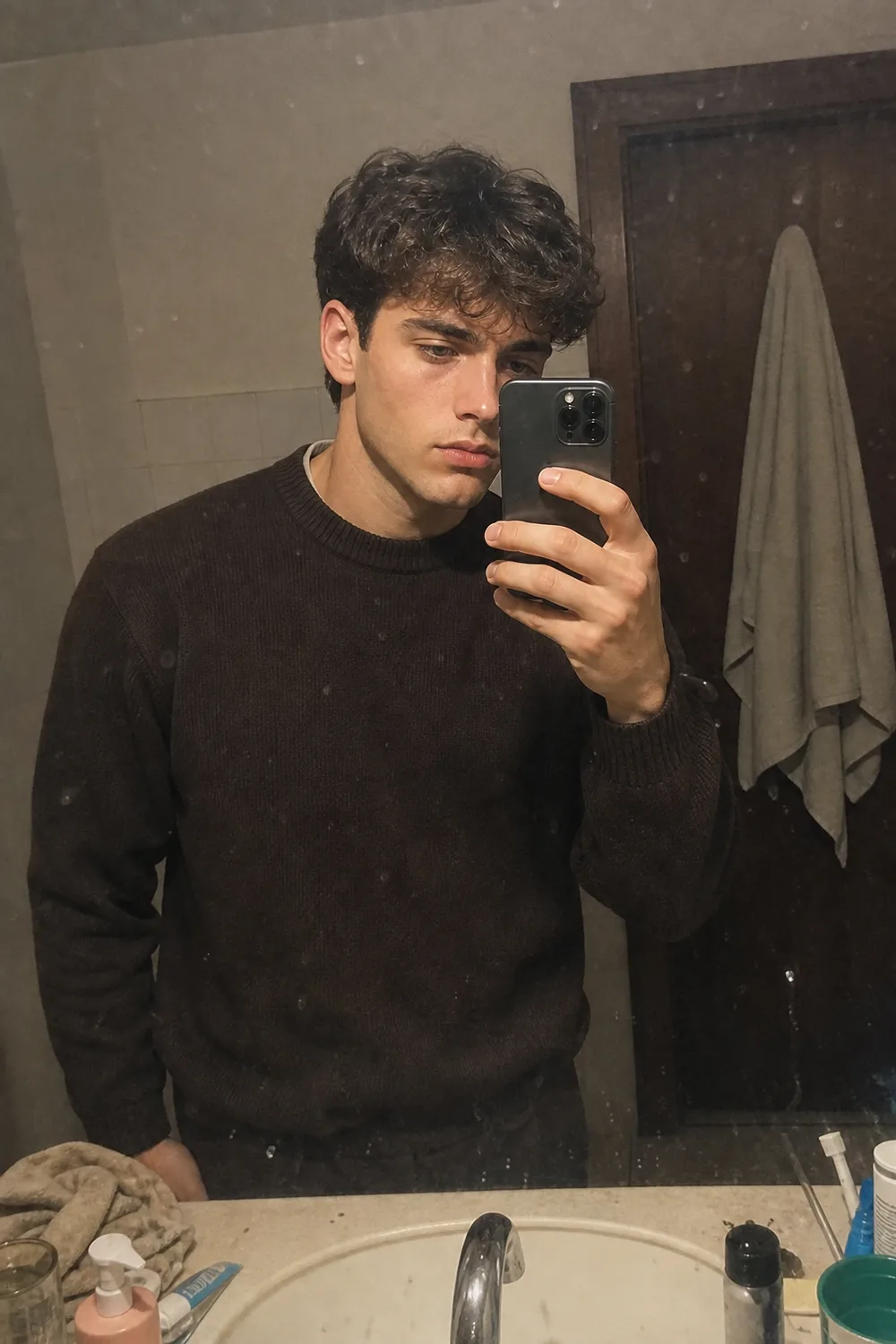 Before
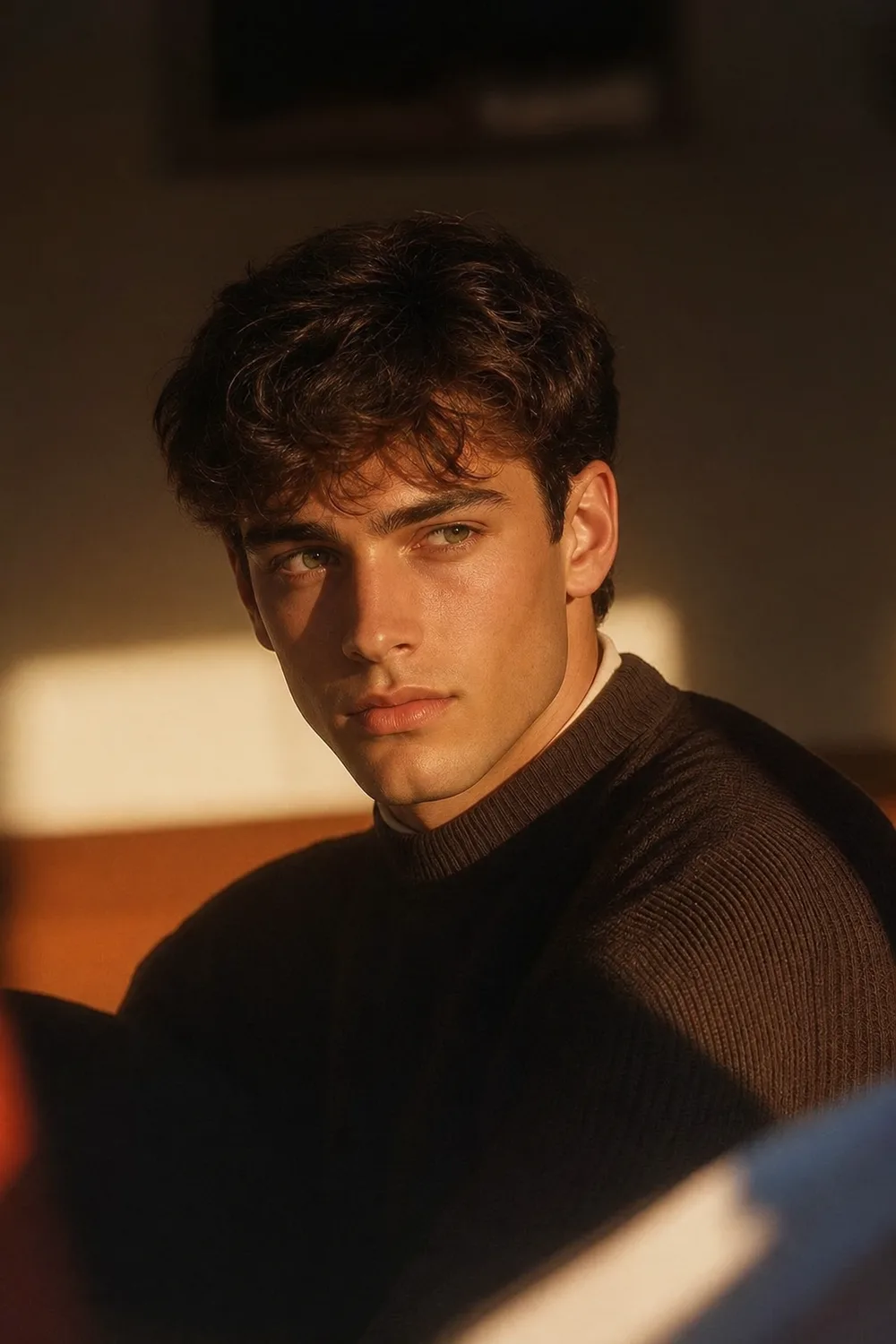 After
AfterStudio / Private by design
See yourself shot properly.
Use our AI dating photo generator to create profile pictures from four everyday selfies. Your uploads are encrypted, never used to train AI, and become inaccessible five days after upload.
Or quick sign-in from here
Why source photos matter for AI dating headshots
Source photos for AI dating headshots determine how faithful and believable any AI-generated variations will be. Dating platforms and research consistently show photos drive first impressions and match rates far more than profile text.
High-quality, varied real source photos reduce the risk of AI-detection and create authentic results because they supply natural texture, consistent proportions, and real lighting references. AI performs best when it has diverse, accurate examples of your face and body.
Platform context: Tinder, Bumble, Hinge and others introduced AI tools and tightened verification from 2024–2025. Many now use metadata checks, forensic scans, and liveness selfies to flag synthetic images. Ethically, avoid heavy identity-altering edits: modest enhancements preserve trust and reduce ban risk.
Quick prep checklist before the shoot
Do the basics: shave/trim or style hair, iron clothes, hydrate skin, and get a good night’s sleep. Grooming increases natural confidence and reduces the need for heavy retouching.
- Outfits: pack 3 looks — casual, smart-casual, statement. Prefer solids and color contrast with your skin tone.
- Shooting help: use a friend or photographer; if solo, use a tripod + remote or timer. Third-person shots usually outperform arm-extended selfies.
- Verification images: choose 1–2 headshots to keep untouched for platform verification.
- File naming: decide a convention before shooting (example: 01_head_neutral_RAW.jpg).
Gear and camera settings (phone and camera options)
Recommended devices: modern flagship phones (iPhone 12+/Pixel 6+/recent Android) or a mirrorless/DSLR with a 50–85mm equivalent lens. That focal range gives natural compression and flattering portraits.
Shooting modes: use Aperture-priority (Av) or Manual (M) on cameras. On phones, use the tele lens or portrait mode for depth-of-field mimicry.
- Aperture: f/1.8–f/2.8 for headshots; f/2.8–f/4 for waist/full-body.
- Shutter speed: ≥1/125s (1/160–1/250 recommended handheld).
- ISO: 100–400 daylight; 800–1600 indoors as needed—watch noise.
- Focus: single-point AF on the nearest eye or use eye-detection AF.
- White balance: Auto is OK; set to daylight/window for consistency when possible.
- File format: shoot RAW if available; at minimum high-quality JPEG. Keep at least one RAW/unedited file per pose.
Practical tips: capture 3–5 frames per pose to pick the most natural expression and motion-free image. Label originals immediately and back them up to a private folder.
Lighting diagrams: 2 simple setups that flatter every face
Good lighting beats fancy gear. Use either a large window or a single softbox setup depending on budget and location.
Setup 1 — Natural-window soft light
Place the subject about 45° to a large window for soft, directional key light. Use a reflector or white wall opposite to fill shadows and keep contrast gentle.
- Subject: 45° to window, camera at eye level.
- Fill: white reflector, sheet of foamcore, or bounce off a wall.
- Notes: north-facing or shaded windows produce consistent soft light; golden hour outdoors gives warm tones.
Setup 2 — Single softbox (45° loop lighting)
Key softbox positioned 35–45° from camera and slightly above eye level creates flattering loop shadows. Add a weak fill or reflector on the opposite side to soften contrast.
- Softbox height: slightly above eye-line, angled down for catchlights.
- Optional: small background light or rim for separation if available.
Quick tips for mixed-light scenes: avoid combining daylight and warm indoor bulbs without gels; pick one color temperature and stick with it to avoid odd skin tones.

The 12-shot checklist: exact poses, order & filename examples
Capture a 12-shot set to give AI and human viewers balanced coverage: face, body, lifestyle, and a verification image. For each pose take 3–5 frames with small expression shifts. Use clear filenames like 01_head_neutral_RAW.jpg.
- Neutral headshot — straight-on (01_head_neutral_RAW.jpg): chest-up, neutral/soft smile. Primary thumbnail candidate.
- Close smile — tighter crop (02_head_smile_RAW.jpg): eyes engaged, natural teeth visible.
- Laughing / candid (03_candid_laugh_RAW.jpg): head tilt, open expression — energy shot.
- 3/4 portrait (04_3-4_portrait_RAW.jpg): shoulders rotated 30–45°, classic flattering angle.
- Side profile (05_profile_RAW.jpg): soft profile to show bone structure.
- Full-body casual (06_fullbody_casual_RAW.jpg): natural stance, weight on back leg.
- Seated relaxed (07_seated_RAW.jpg): approachable vibe, knees angled.
- Activity/action (08_action_prop_RAW.jpg): holding coffee, walking, instrument — shows hobbies.
- Outdoor/environmental (09_outdoor_RAW.jpg): context shot in park/urban setting.
- Close serious / sultry (10_close_serious_RAW.jpg): neutral or softer smile for variety.
- Selfie-style (11_selfie_style_RAW.jpg): arm-extended look; friend-shot is better if possible.
- Verification selfie / liveness-style (12_verification_RAW.jpg): neutral, full-face, untouched for platform checks.
Advice: pick a "hero" outfit for shots 01–04 and vary clothing for the rest. Export both RAW (archived) and high-quality JPEGs for AI input.
Wardrobe, background and styling rules
Outfit choices markedly affect perception. Bring three outfit types and focus on solid colors that complement your skin tone.
- Avoid small busy patterns and prominent logos that distract from the face.
- Vary necklines (V, crew, open collar) to subtly change framing and perceived proportions.
- Accessories: minimal and intentional — a watch or simple necklace is fine; limit sunglasses/hats to one look.
- Backgrounds: neutral, uncluttered, and 3–6 ft behind you for depth and natural blur.
One rule: keep the primary headshot simple — clear face, clean background, and no heavy props.
EXIF, consent and privacy hygiene
Keep originals and EXIF data in a private archive. Originals serve as evidence if a platform questions image authenticity.
Note: many apps strip EXIF on upload, and detection includes more than metadata. Originals still help in appeals and show provenance if needed.
- Back up RAW originals locally and in a secure cloud folder.
- Get a simple written release if a friend or photographer helps: name, date, permission to use and edit photos.
- Keep at least one untouched verification selfie that matches your current appearance and be ready to do live checks.
How to feed your source photos to AI safely and ethically
Principles: use AI for subtle enhancement and variation, not identity replacement. Preserve facial proportions and recognizable features.
Include both face crops and full-body shots in your reference set so the AI learns proportion, posture, and context. Provide the hero headshot as the main identity anchor.
- Good uses: lighting consistency, minor skin corrections, wardrobe color swaps, and background matching.
- Avoid: generating a new face, heavy morphing, or edits that materially change who you look like.
- Dos: keep some real photos on your profile and retain untouched verification images.
Exact prompt templates mapped to each source shot
General prompt structure: tell the AI to preserve identity, limit edits, and output multiple subtle variations. Always specify crop and intended use.
Example general prompt to reuse:
Use reference [IMAGE_FILENAME]. Produce a realistic, lightly-enhanced image preserving facial features and proportions. Improve lighting and skin tone only; no feature changes. Output 3 subtle variations; crop chest-up unless stated. Keep results verification-safe.
Shot-specific short templates (copyable)
- IMAGE_01 — 01_head_neutral_RAW.jpg: "Reference 01_head_neutral_RAW.jpg. Slightly brighten, soft catchlights, neutral background blur, minimal retouch. Output 3 color variants (natural, warm, cool)."
- IMAGE_02 — 02_head_smile_RAW.jpg: "Reference 02_head_smile_RAW.jpg. Enhance warmth and eye sparkle; preserve smile authenticity; subtle vibrance."
- IMAGE_03 — 03_candid_laugh_RAW.jpg: "Reference 03_candid_laugh_RAW.jpg. Keep motion energy; add subtle warmth and a touch of film grain; crop mid-chest."
- IMAGE_04 — 04_3-4_portrait_RAW.jpg: "Reference 04_3-4_portrait_RAW.jpg. Soften left-cheek shadow; maintain jawline; natural color correction."
- IMAGE_05 — 05_profile_RAW.jpg: "Reference 05_profile_RAW.jpg. Preserve profile proportions; enhance contouring subtly; neutral background."
- IMAGE_06 — 06_fullbody_casual_RAW.jpg: "Reference 06_fullbody_casual_RAW.jpg. Keep outfit and proportions; balance color for outdoor/indoor context."
- IMAGE_07 — 07_seated_RAW.jpg: "Reference 07_seated_RAW.jpg. Maintain pose and relaxed look; mild color boost; preserve texture."
- IMAGE_08 — 08_action_prop_RAW.jpg: "Reference 08_action_prop_RAW.jpg. Keep motion feel; enhance colors of prop; no face alterations."
- IMAGE_09 — 09_outdoor_RAW.jpg: "Reference 09_outdoor_RAW.jpg. Match outdoor light; keep background context; gentle contrast."
- IMAGE_10 — 10_close_serious_RAW.jpg: "Reference 10_close_serious_RAW.jpg. Subtle mood grading, maintain skin texture and eye color."
- IMAGE_11 — 11_selfie_style_RAW.jpg: "Reference 11_selfie_style_RAW.jpg. Match phone selfie look; preserve natural shadows and framing."
- IMAGE_12 — 12_verification_RAW.jpg: "Reference 12_verification_RAW.jpg. DO NOT alter facial structure. Only correct white balance/exposure. Save untouched copy for verification."
Prompting notes: always include a "preserve identity / no face morphing" clause. Request small sets of variations (3–4) and specify crop ratios. If the AI service offers platform presets, choose the relevant app profile.

Post-AI vetting and upload checklist
Before you upload, run a visual truth test: does the photo look like you in real life? If a variant looks off, discard it or dial back AI strength.
- Verification: keep at least one untouched headshot that matches your current appearance exactly for liveness checks.
- Export formats: save app-ready JPEGs in 1:1 and 4:5 crops; keep high-resolution masters for archiving.
- Filename best practice: include shot number, intent, and version (example: 01_head_neutral_v1_edit.jpg).
- Upload order: clear face-first photo, then lifestyle and full-body images; refresh images every 2–3 months to stay current.
Pro, DIY and AI: choose the right approach
Compare three approaches: professional photographer, DIY shoot, or AI-assisted edits. Each has trade-offs in cost, authenticity, and risk.
- Professional: higher upfront cost, guaranteed authentic lighting and framing — best for long-term investment.
- DIY: lower cost, quick control; use a friend or tripod plus the 12-shot workflow to get strong source material.
- AI-assisted: great for subtle variations, color matching, and expanding looks — best when used to augment real photos, not replace them.
Final recommendation: combine real source photos with conservative AI edits. That maximizes match potential while minimizing detection and ethical issues.
Quick visual assets and downloadable checklist (what to include)
Include these downloadable assets to streamline your shoot:
- Lighting diagrams (window and softbox SVG/PNG).
- Printable 12-shot checklist and filenames folder structure.
- Crop ratio cheat-sheet (1:1, 4:5) and simple consent/release template.
If you publish downloads, note image licensing and recommend users only upload photos they own or have permission to edit.
Limitations, legal and ethical risks
Platform policies change; always check Tinder, Bumble, Hinge or other app rules before uploading AI images. Detection tools evolve and can use more than EXIF metadata.
Ethical risk: misrepresentation can harm potential dates and lead to bans. Keep edits realistic and avoid creating a substantially different appearance.
Detection note: platforms may use forensic analysis and liveness checks; storing originals helps appeals but does not guarantee immunity.
Conclusion
Shoot a disciplined 12-photo source set with consistent lighting, strong camera settings, and clear filenames. Use AI to enhance and expand those real images conservatively, and keep at least one untouched verification selfie. This capture-to-AI workflow maximizes authenticity, improves match potential, and reduces the risk of platform flags.
Want the downloadable checklist, lighting SVGs, and ready-made prompt file? I can prepare a ZIP with assets and editable prompt templates on request.
Questions, answered.
01Are AI-generated dating photos allowed on Tinder, Bumble, or Hinge?+
It depends — most major apps now restrict or flag AI-generated images and generally require at least one unaltered, recent photo on your profile. Tinder, Bumble and Hinge have added AI detection and reporting tools since 2024–2025, so using AI images risks demotion, removal or verification requests; best practice is to use AI only for subtle enhancements and keep clear, untouched photos for verification.
02How many unedited real photos should I keep on my profile for verification?+
Keep at least one to two recent, unedited photos reserved for verification, with one clear face shot for liveness/selfie checks. Many platforms require a non‑altered face or body photo and may cross‑check uploads against live selfies or short video prompts, so store originals privately to appeal flags and make your first photo a truthful, easily matched image.
03Will AI-enhanced photos actually get me more matches?+
Yes—subtle, realistic improvements to lighting, color and clarity can increase perceived attractiveness and boost matches, but authenticity matters more than extreme edits. Research shows modest enhancements convert better than heavy retouching; overly synthetic or misleading images can erode trust, trigger app detection, and reduce offline success, so use AI to refine not replace your real look.
04Which shots are best to include as source images for AI headshot generators?+
Provide a varied 12-shot set: a straight-on neutral headshot, close smile, laughing candid, 3/4 portrait, side profile, full-body, seated, activity/action, outdoor environmental, serious close, a selfie-style frame, and an unedited verification selfie. High-quality, well-lit, recent images across angles, outfits and distances help AI preserve identity and produce believable stylistic variations.
05How do I prepare a verification selfie that won’t be flagged after AI editing?+
Shoot a recent, high-resolution verification selfie with even natural light, neutral expression, eyes visible, and minimal filters, then keep an untouched original saved privately. Use this exact unedited image for any app-required liveness checks and avoid using heavily altered versions as your primary face photo; if you edit other images, ensure they still closely match the verification selfie.

Author / reviewed profile
Emma Blake
Emma Blake is a dating coach and portrait photographer with 8+ years of experience helping singles improve their online dating profiles. She has worked with over 2,000 clients and her advice has been featured in Cosmopolitan, Elite Daily, and The Dating Insider. Emma holds a B.A. in Psychology from NYU.