
Should You Pay for Pro Dating Photos or Use AI in 2026
A decision-focused playbook to choose pro vs AI dating photos in 2026—includes ROI models, A/B test templates, vendor cost ranges, cohort recommendations, and rollout steps.

Main answer: In 2026, choose professional photos when authenticity, trust, and diverse social shots matter (older cohorts and relationship-focused users). Use AI dating photos for fast, low-cost variation testing and lighting/consistency fixes. The best ROI for most singles is a hybrid: hero real photos (≥70% of gallery) plus targeted AI-enhanced variants.
This playbook quantifies ROI, shows side-by-side effects, lists vendor price ranges, supplies A/B test templates, and gives a 90-day rollout plan by age, gender, and app.
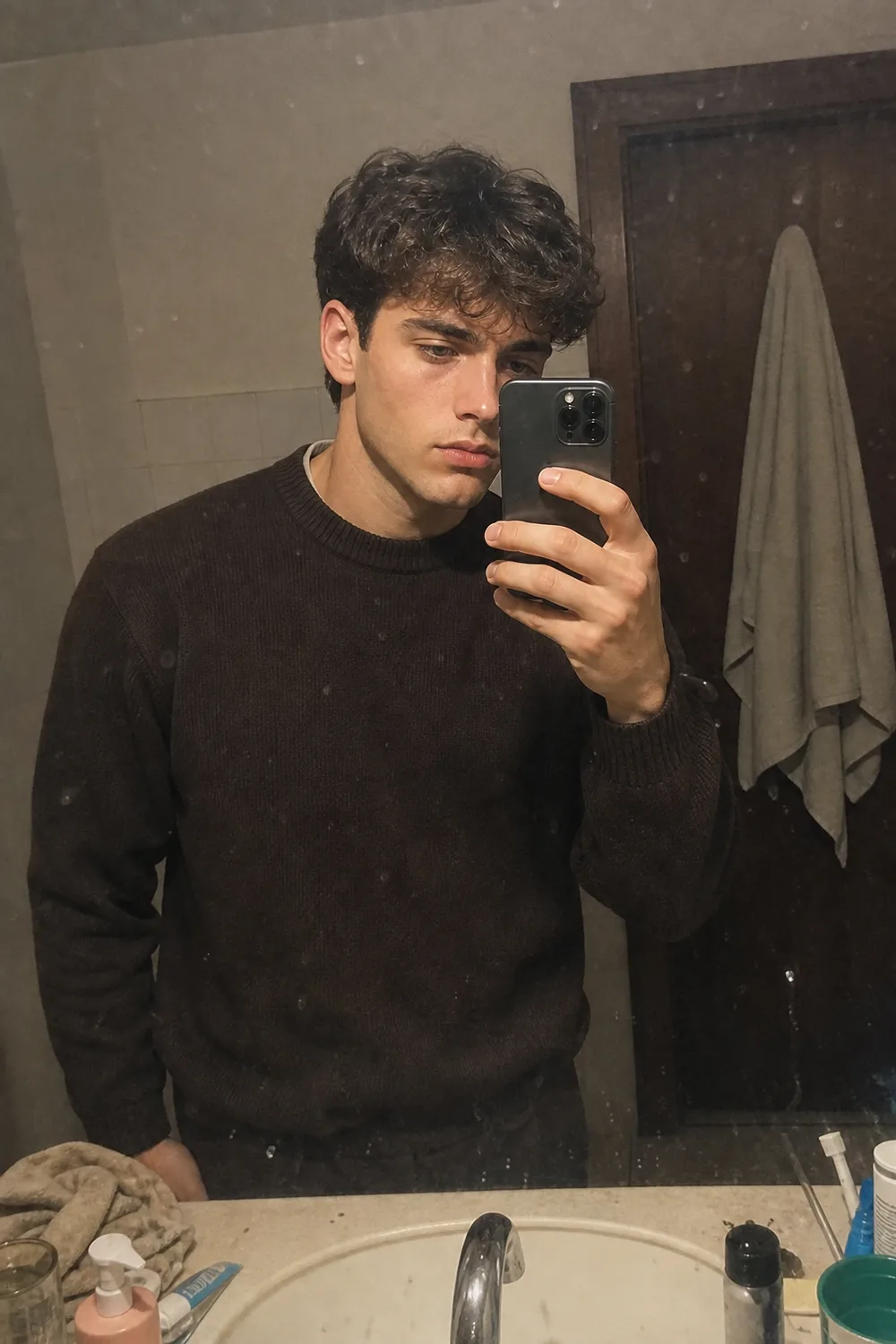 Before
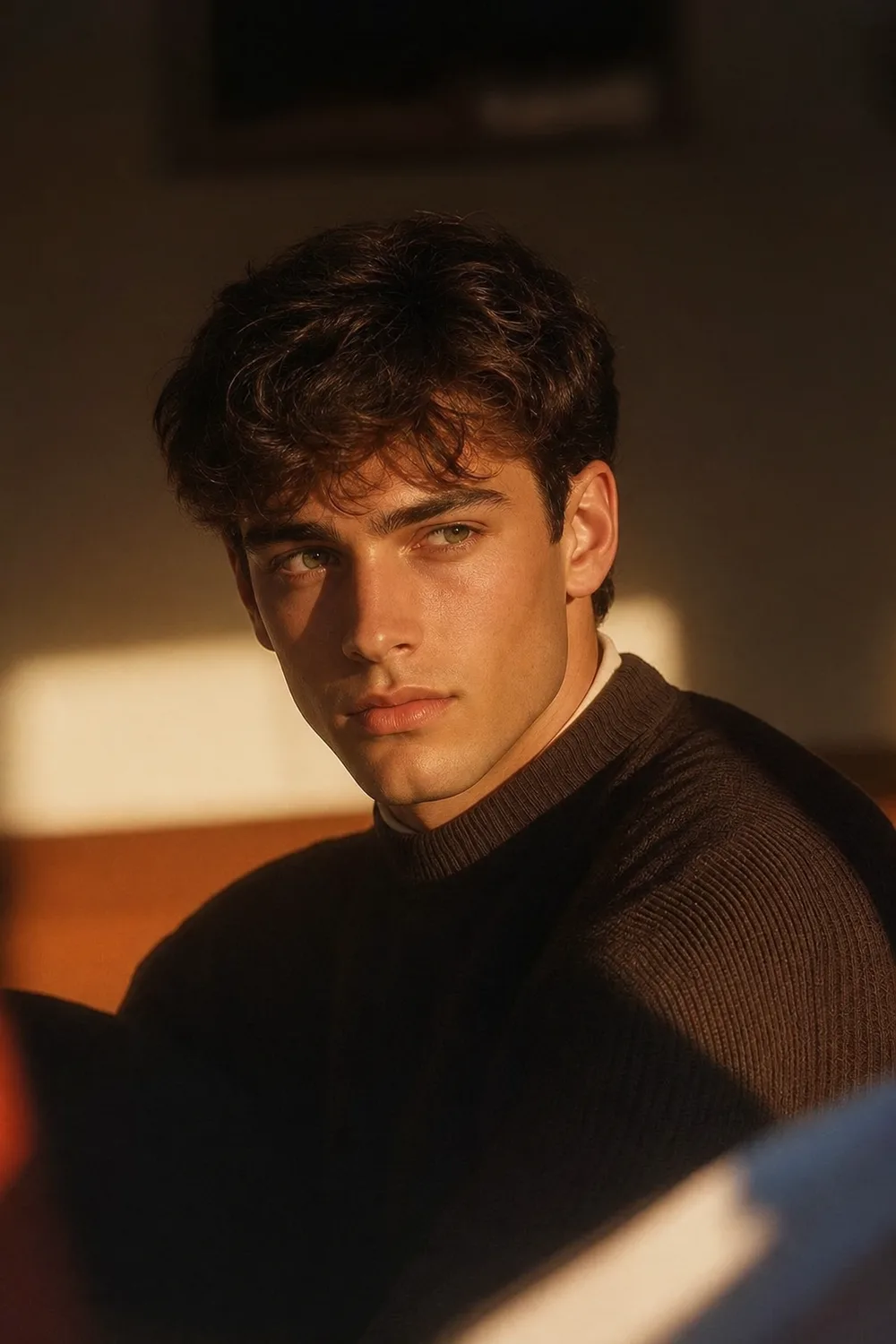 After
AfterStudio / Private by design
See yourself shot properly.
Use our AI dating photo generator to create profile pictures from four everyday selfies. Your uploads are encrypted, never used to train AI, and become inaccessible five days after upload.
Or quick sign-in from here
Why photos matter in 2026: key data and performance signals
Photos remain the single biggest driver of match rate across Tinder, Bumble, and Hinge. Aggregated industry studies from 2024–2026 show high-quality photos can increase matches anywhere from ~20% to 300% depending on baseline quality, platform, and metrics measured.
Important signals to track:
- Hero photo quality — often drives the largest single uplift (2x–3x in many samples).
- Contextual photos & prompts — Hinge-style contextual images and prompt-linked photos can boost engagement by ~30%–67%.
- Verification & freshness — verified images and recently-updated profiles gain more exposure and trust; “fresh” photos can multiply exposure and response rates.
AI photo tools usually produce short-term raw-match increases (~10%–30%) by improving lighting, consistency, and crop; however, some studies report weaker downstream conversation quality and higher drop-off when images appear inauthentic.
Platform rules, risks, and trends you must know
Major apps emphasize accurate, self-representative photos. Bumble and Hinge explicitly ban deepfakes or images meant to impersonate; Tinder’s enforcement is evolving and mixes automated detection with user reports.
Key platform risks:
- Detection risk — fully synthetic or heavily altered images can be flagged or reported; false positives happen and can disproportionately affect certain skin tones.
- Bias & fairness — automated moderation systems are imperfect; use conservative edits to avoid misclassification.
Product trends to watch: native in-app AI optimizers (photo selection, camera-roll analysis), more platform-side guidance for “best photo,” and tighter verification workflows to reward authentic creators.
Vendor types and price ranges (2024–2026 snapshot)
Two primary vendor classes: local/pro photographers and AI headshot / personal-AI-photographer services.
- Local/pro photographer: $150–$1,200+ depending on city and package. Typical deliverables: 5–12 edited images; higher tiers include hair/makeup, multiple looks, and full retouching.
- AI headshot services: tiers range from $20–$60 (packs of dozens of images), mid-tier $50–$150 for more control, to enterprise pricing in the hundreds for custom outputs.
Ancillary costs to budget:
- Hair & makeup: $50–$200
- Wardrobe/styling: $0–$300
- Per-image manual retouch: $10–$50/image

ROI framework: how to quantify the value of photos
Quantify photo ROI with a small set of inputs and a simple formula.
Inputs to track
- Baseline match rate (M0): matches per 1,000 impressions or per 100 swipes.
- Investment (P or A): photographer cost P or AI cost A, plus ancillaries.
- Uplift (U_m, U_r): relative increase in match rate and reply rate (use conservative and optimistic estimates).
- Useful life (L): how long images remain effective (commonly 3 months as a working assumption).
Formulas
- Incremental matches per 1,000 = M0 * (U_m)
- Cost per incremental match = (P or A) / (Incremental matches over L)
Illustrative example (conservative):
- Baseline M0 = 20 matches per 1,000 impressions.
- Photographer uplift U_m = +50% → +10 incremental matches per 1,000.
- Photographer cost P = $450; useful life L ≈ 3 months (assume 3,000 relevant impressions in that window).
- Incremental matches over L = 10 matches/1,000 * 3 (for 3k impressions) = 30 incremental matches.
- Cost per incremental match = $450 / 30 ≈ $15 per incremental match.
If an AI pack A = $40 produced a similar uplift (less likely), cost per incremental match would be ~$1.33 — but factor in reputational and downstream conversation-quality risks. Use A/B testing to validate assumed uplifts.
Decision playbook: when to hire a photographer, when to use AI, and when to combine both
Use these rules of thumb to decide quickly.
When to hire a pro photographer
- Need strong authenticity and trust for in-person meetups or older cohorts (30s–40s).
- Want diversified portfolio: hero, full-length, social/action shots, lifestyle images.
- Your current photos are low-quality or inconsistent.
When to use AI dating photos
- Need fast, low-cost variants to A/B test lighting and crops.
- Existing photos are decent but need consistency or minor retouching.
- You're in a younger, experimentative cohort and iterate quickly.
Hybrid recommendation (best ROI for most)
Adopt a 70/30 rule: keep ≥70% real photos and use AI for up to 30% of gallery slots. Make pro-shot hero images your primary profile photos, then use AI to create alternate crops, platform-specific crops, and subtle lighting variants.
Quick checklist flow:
- Audit current images → measure baseline.
- Run a fast AI quick-win test (2–7 days).
- Book a pro shoot if hero still underwhelming.
- Expand with AI after the shoot to create app-specific variants.
A/B test templates: copy-paste experiments to run on Tinder, Bumble, Hinge
Run 7–14 day cycles and aim for n≥200–500 impressions per variant where possible. Change one variable at a time and rotate timings to avoid algorithmic bias.
Template A — Primary-photo test
- Variant 1 (Control): Current primary photo.
- Variant 2: Professional hero photo.
- Variant 3: AI-enhanced hero photo (subtle edits only).
Metrics to capture: match rate per 100 swipes, reply rate, messages per match, first-date conversion. Run each variant for 7–14 days and capture at least 200 impressions per variant.
Template B — Photo-order & mix test
- Control: 6-photo set (all real).
- Variant A: 4 real + 2 AI-enhanced (hero remains real).
- Variant B: Hero pro photo + lifestyle/social photos from pro shoot.
Track likes→match conversion, message initiation rate, and downstream quality metrics (date rate, second-date rate).
Template C — Cohort-segmented test
Split by cohorts (22–29, 30–37, 38–45) and gender. Run the same visual variants per cohort to discover which groups tolerate AI variants and which prefer pro photos.
Step-by-step rollout plan (90-day timeline)
Follow this staged timeline to move from audit to continuous optimization.
Stage 0 — Audit (1–2 days)
- Inventory all images; discard low-quality or contradictory photos.
- Record baseline metrics: matches per 1,000, messages per match, reply rate.
Stage 1 — Quick wins with AI (1–3 days)
- Generate 20–100 AI variants from 5–10 selfies; select 2–3 authentic-looking images.
- Run a short A/B test against control for 7–14 days.
Stage 2 — Professional shoot (2–6 weeks planning; 1-day shoot)
- Book photographer, plan wardrobe, book hair/makeup if desired; budget $250–$800+.
- Shoot deliverables: 6–12 edited images to be used as hero and lifestyle shots.
Stage 3 — Hybrid expansion (immediate)
- Use AI to create alternate crops, platform-specific variants (Tinder hero, Hinge lifestyle), and subtle lighting matches for app testing.
- Budget $20–$100 for expansion packs.
Stage 4 — Continuous testing & refresh (ongoing)
- Rotate images monthly, run short A/B cycles, and evaluate conversation quality and in-person conversion.
- If authenticity complaints rise, reduce AI share and re-test.

Side-by-side case studies and how to present results
Structure each case study with: before image, after image (pro or AI), KPI change, sample size, and duration. Always anonymize and obtain consent for real-user screenshots.
Recommended table fields:
- Profile cohort (age/gender)
- Variant (control / pro / AI)
- Matches per 1,000
- Messages per match
- Reply rate and first-date conversion
- Sample size & test duration
Two short hypotheticals:
- Photographer case: 34F switched to pro hero + social shots → matches/1k rose 80% and first-date conversion rose 40% over 6 weeks (n≈2,500 impressions).
- AI case: 26M used AI variants to optimize lighting → raw matches/1k ↑ 25% but reply rate fell 10% (n≈1,200 impressions), indicating volume lift but slightly lower conversation quality.
Recommendations by app, age, and gender
App-specific guidance:
- Tinder: Swipe-first—use a high-impact hero. Younger users can test AI variants but keep hero authentic.
- Hinge: Context & prompts matter—prioritize authentic lifestyle shots; pro shoots excel here.
- Bumble: Verification & trust-first—use real photos for hero and social proof shots; keep >70% real.
Age cohort rules:
- 22–29: experiment with AI; iterate quickly.
- 30–37: balanced approach—pro hero + AI expansions.
- 38–45: invest in professional photography for authenticity.
Gender notes: women often benefit more from social-proof and verification photos; men typically gain from action/social shots—allocate budget to produce those assets accordingly.
Risks, ethics, and platform compliance (what to avoid)
Ethical guidelines:
- Do not misrepresent core traits: age, ethnicity, or body type.
- Avoid fully synthetic head-to-toe images that mislead about how you look in person.
Platform policy & detection risk:
- Fully synthetic images and impersonation increase the risk of being reported or downranked.
- Reduce false-positive detection risk by favoring real photos and conservative AI edits.
Privacy & safety tips: be ready to disclose enhancement if asked; avoid using AI images that would cause discomfort at an in-person meeting.
Quick checklist and budget scenarios (ready-to-use)
Quick checklist:
- Follow 30/70 rule: ≥70% real photos.
- A/B test schedule: 7–14 days per variant; one variable at a time.
- Track: matches/1,000, reply rate, messages/match, first-date conversion.
Three budget scenarios:
- Minimal: AI pack $20–$60 — fast uplift, low cost, test quickly.
- Balanced: Pro shoot $300–$600 + AI $40–$100 — recommended: strong hero + rapid variants.
- Premium: Full pro + stylists + edits $800–$1,500 — for high-investment goals.
Conclusion: pick a data-first hybrid approach
Short recap: use a hybrid strategy—majority real photos (≥70%) with AI used to expand variants and speed A/B testing. Apply ROI math and the A/B templates above to validate assumptions on your own profile.
Call to action: run the provided A/B tests, track the recommended metrics, and iterate on the 90-day rollout. If you want next steps, ask for the downloadable A/B spreadsheet, vendor checklist, or a ready-to-publish post draft.
Questions, answered.
01Are AI-generated dating photos allowed on Tinder, Bumble, and Hinge?+
Partially—major apps allow edited or enhanced photos but prohibit deceptive deepfakes or images intended to impersonate someone else. Policies and enforcement vary by platform and are evolving, so use AI for subtle enhancements rather than full synthetic replacements; user reports and algorithmic flags target obviously misleading images. Keep most images authentic to reduce the risk of reports or downranking.
02Will AI photos actually increase my matches compared with a professional shoot?+
Yes, AI images often lift raw match rates quickly, but professional photos usually produce stronger downstream signals like longer conversations and higher meetup rates. Studies show AI/optimizer tools can boost matches by ~10–30% while high-quality pro photos can produce 2x–3x uplifts in some tests; the best approach for ROI is a hybrid: pro hero photos plus AI variants for scale and testing.
03How many AI images is safe to use without damaging authenticity or getting flagged?+
A practical rule is to keep at least 70% of your gallery real photos and limit AI-generated or fully synthetic images to about 30% or fewer. Avoid using AI as your hero image and use subtle, consistent enhancements rather than radical edits; this minimizes authenticity concerns and reduces the chance of being reported or algorithmically downranked.
04Do professional dating photos provide measurable ROI for different age groups?+
Yes—professional photos tend to show stronger measurable ROI for older cohorts (30s–40s) where authenticity and long-term signals matter, while younger users (22–29) can extract quicker, cheaper gains from AI testing. Example: a $300 pro shoot can yield cost-per-incremental-match around $30–$60 in conservative scenarios, whereas a $40 AI pack may lower cost-per-match but often at the expense of conversation quality.
05Should I disclose that a photo was AI-enhanced if someone asks?+
Yes—be prepared to disclose or acknowledge AI enhancement when asked, because transparency preserves trust and avoids awkwardness at in-person meetings. Minor retouching or lighting tweaks are widely accepted, but if an image materially alters appearance you should be honest; many daters prefer clarity and it reduces mismatch risk.

Author / reviewed profile
Emma Blake
Emma Blake is a dating coach and portrait photographer with 8+ years of experience helping singles improve their online dating profiles. She has worked with over 2,000 clients and her advice has been featured in Cosmopolitan, Elite Daily, and The Dating Insider. Emma holds a B.A. in Psychology from NYU.