
A/B Test AI Dating Photos: Safe Way to Boost Matches
A step-by-step, privacy-first A/B testing guide for comparing AI-enhanced vs real dating photos on Tinder/Hinge/Bumble — with detection checks, a 14-day tracker and safety rules.

Want to know if AI-enhanced photos can boost your matches without risking verification flags or distrust?
Yes — you can safely A/B test AI dating photos against real photos using a privacy-first 14-day playbook: run multi-tool detectors and a quick visual audit, keep at least 60% genuine photos, use conservative edits, track impressions-to-match metrics daily, and revert immediately if verification or flags appear.
This post gives a step-by-step 14-day test plan, pre-publish detection checks, ethical rules (60/40 real-to-AI), daily metrics to track, troubleshooting for verification/flags, and practical editing tips so you can test performance without compromising safety or trust.
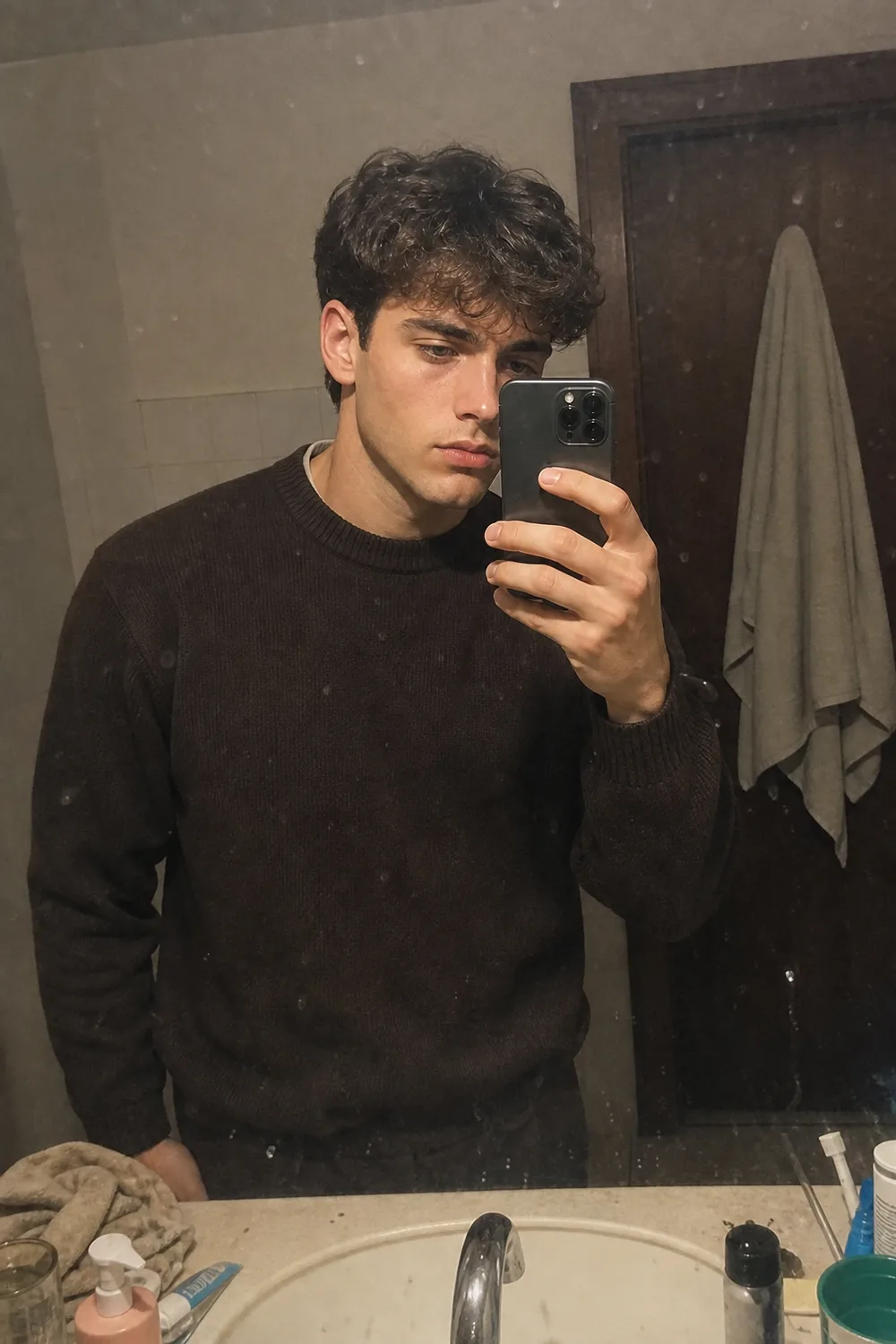 Before
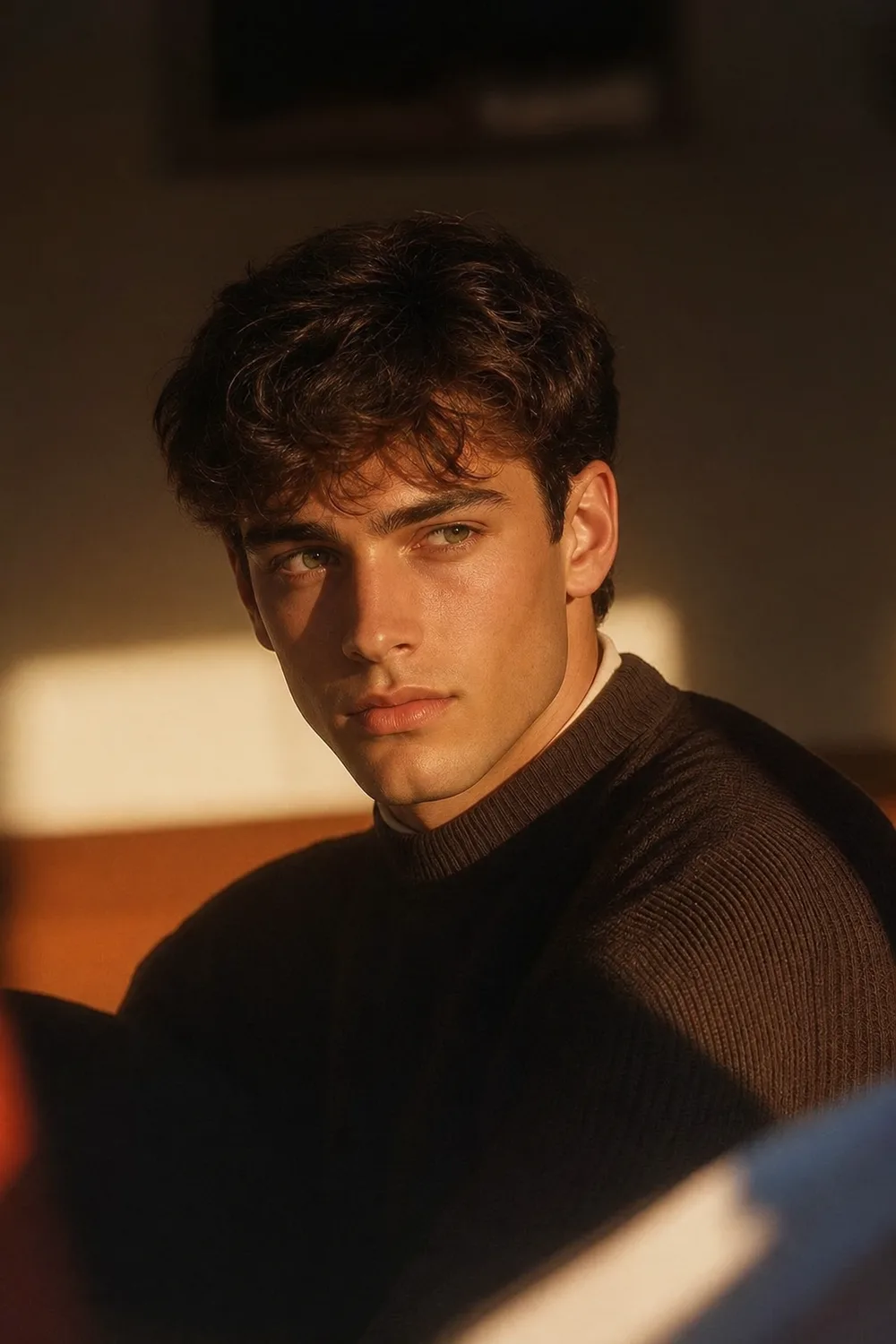 After
AfterStudio / Private by design
See yourself shot properly.
Use our AI dating photo generator to create profile pictures from four everyday selfies. Your uploads are encrypted, never used to train AI, and become inaccessible five days after upload.
Or quick sign-in from here
Photos drive the majority of initial engagement on Tinder, Hinge and Bumble. High-quality visuals can lift impressions and swipe rates dramatically, while poor photos often result in near-zero responses.
Industry analyses and platform summaries from 2024–2025 repeatedly show that better lighting, composition, and clarity improve swipe and match rates. Some smaller studies and surveys from 2024–2025 also report a mixed outcome for AI-enhanced images: increased swipes but sometimes fewer substantive replies and a modest uptick in reports for perceived “inauthenticity.”
Controlled A/B testing beats guessing because it isolates variables: you measure actual match-to-message and conversation-to-date conversions, not just vanity swipes. That prevents confounds like time-of-day effects, bio tweaks, or different audience pools from biasing results.
Major dating platforms (notably Match Group brands) use photo verification flows that compare a live selfie or short liveness video to profile images. These systems generate face maps and biometric comparisons rather than relying on metadata alone.
When a verification selfie doesn't match your profile images, apps can require re-uploads, reduce visibility, or flag the account for review. Platforms are expanding these checks — some markets already see mandatory or strongly encouraged liveness checks.
That matters for AI photos because detection and verification systems look for geometric and facial-feature consistency. If your AI edits materially change eye color, facial geometry, scars, or hair, the verification flow can flag a mismatch and trigger escalation or manual review.
Follow this five-step pre-publish workflow before exposing any AI-enhanced photo as a primary image.
- Manual identity audit
Visually compare the AI variant to the original. Look for material differences: eye color shifts, altered nose/cheek geometry, missing scars/moles, different facial hair, or dramatic age/ethnicity changes. If you notice material differences, don't use that version as a primary photo.
- Run multi-detector checks
Use at least two independent detectors (enterprise or reputable web tools). Interpret conservatively: detectors can give false positives, especially in low light or diverse skin tones. Treat detectors as risk-assessment tools, not final verdicts.
- Prefer low-risk edits
Favor lighting, color correction, minor retouching, background blur, and contrast adjustments. Avoid generative face replacement, identity-warping transforms, or altering ethnicity/age in visible ways.
- Save originals and metadata offline
Store unedited originals and any timestamps in a private folder. Originals are crucial if you must comply with verification requests or appeal a flag.
- Optional self-verification test
Before publishing, try an in-app selfie or short liveness test (if available) to see how your live capture reads compared to profile photos. This helps preempt mismatches.

Goal: compare AI-enhanced vs. real primary photos while minimizing detection risk. Use a sequential 14-day approach for the cleanest signal.
Preparation (Day 0)
- Choose a genuine control primary (best recent unedited headshot).
- Create 1–2 AI-enhanced variants that preserve identity (no face swaps).
- Enforce the 60/40 real-to-AI ratio across the full profile (e.g., 5 photos => at least 3 genuine).
- Record baseline metrics for the previous 14 days: impressions, matches, messages, reply depth, and dates.
- Keep bio, prompts, and photo order unchanged except for the primary swap.
Option A — Sequential 14-day test (recommended)
- Days 1–7: Run the control primary (genuine). Log daily metrics.
- Days 8–14: Replace the primary with an AI-enhanced variant. Log daily metrics.
- Compare week 1 vs week 2 on key KPIs (conversion rates and safety incidents).
Option B — Parallel app split (faster, more confounded)
- Put control primary on one app and AI primary on another for 14 days.
- Be aware: app audiences and algorithms differ, so results are less clean.
Daily metrics to track
- Impressions / profile views
- Matches (swipes-right → match)
- Incoming message count
- Message depth (average first-message word count or % ≥15 words)
- Response rate to your first message
- Conversations → date conversions (scheduled or agreed-to meetups)
- Verification prompts, flags, or reports (safety incidents)
Reporting template & formulas
- Swipe-to-match = matches / impressions
- Match-to-message = conversations started / matches
- Quality ratio = % messages ≥15 words
- Date conversion = scheduled dates / conversations
- Safety incidents = total verification prompts + flags + reports
Use the 60/40 rule: at least 60% of visible profile photos should be genuine recent photos. That reduces misrepresentation risk and improves verification success.
Key guidelines:
- Use AI to enhance, not replace. Keep core identity signals intact (face shape, hairline, prominent marks).
- Disclose noticeable edits when appropriate — transparency reduces emotional harm and report risk.
- Include candid activity photos (full-body, hobbies) to signal consistency across images.
- Never use composites of other real people or sexualized deepfakes. Avoid creating realistic images of someone else without consent.
If verification is requested, act quickly. Prompt compliance is the fastest route to resolution and reduces escalation risk.
Practical steps by scenario:
- “Please verify” prompt (photo/video selfie)
- Complete the in-app liveness flow immediately.
- Have your originals ready in case support asks for proof.
- Photo flagged or account limited
- Revert the primary to an unedited genuine photo right away.
- Contact support, attach originals and brief context, and request manual review.
- Reported by a match for misrepresentation
- Apologize, remove the AI image, and follow platform remediation guidance.
- Repeated reports raise suspension risk — prioritize removal if someone feels misled.
- Suspension or ban
- Use the formal appeals process. Provide originals, timestamps, and verification selfies if requested.
- Explain edits calmly and request a manual review rather than assuming automated decisions are final.
Use conservative editing to improve appeal while preserving identity signals.
- What to change
- Lighting and exposure
- Color balance and contrast
- Subtle skin smoothing (low intensity)
- Background clean-up or gentle bokeh
- Crop and composition to emphasize face and eyes
- What to avoid
- Altering facial geometry, eye color, or major identifying marks
- Adding or removing facial hair in ways that change identity
- Full generative face swaps or composites
Photo ordering strategy
- Keep the most authentic photo as the primary image.
- Place stylized or lightly AI-enhanced variants later (positions 3–4) where viewers expect variety.
- Include at least 2–3 candid photos showing full body, activities, or context to reinforce consistency.
- Test one variant at a time and keep your bio the same. Log dates and times for each swap for accurate tracking.
Short pre-publish checklist to print or copy:
- Maintain 60/40 real-to-AI photos across your profile.
- Run two independent AI-detection checks on any AI image.
- Complete a manual identity audit comparing AI to original.
- Save originals and timestamps offline.
- Record baseline metrics and set a 14-day test schedule (7 days control, 7 days variant).
- Stop and revert immediately if a verification prompt or flag appears.
Daily fields to capture (spreadsheet-ready):
- Date
- App (Tinder / Hinge / Bumble)
- Primary photo used (control / variant)
- Impressions / profile views
- Matches
- Incoming messages
- Average first-message word count
- Response rate (%)
- Conversations → date attempts
- Verification prompts / flags / reports
How to interpret results:
- Compare week-over-week conversion rates (swipe-to-match, match-to-message, date conversion).
- Watch safety incidents closely — any verification prompt during the variant week is a red flag to stop and revert.
- Beware small-sample noise: a few days of variance is normal; look for consistent changes across the 7-day windows.
- Account for seasonality and time-of-day effects by keeping posting behavior constant.
A/B testing lets you measure whether AI edits help your dating outcomes, but prioritize verification readiness, transparency, and ethical boundaries. Use conservative edits, keep at least 60% real photos, run multi-tool checks, and follow the sequential 14-day playbook to collect meaningful data.
If you want the ready-made CSV tracking sheet or a printable checklist card, ask and I’ll generate them for you. Share your test results or questions and I’ll help interpret the KPIs and troubleshoot any verification issues.
Authoritative sources to check for policy updates and deeper context:
- Match Group Photo Verification / Face Check (official safety pages)
- Wired / The Verge coverage of verification rollouts
- Sensity (deepfake detection resources and limitations)
- Bloomberg reporting on user sentiment and AI in dating
Platform policies and verification tech evolve rapidly — check official app pages before you publish images as primaries.
Questions, answered.
01Are AI-enhanced dating photos allowed on Tinder, Hinge and Bumble?+
Short answer: not explicitly banned, but they can violate platform rules if they materially misrepresent your identity. Platforms like Match Group encourage photo verification and prohibit impersonation or deceptive images; light edits (lighting, color, minor retouching) are usually tolerated, while generative or identity-changing images increase risk of flags, verification requests, or reduced visibility. Follow each app’s rules and keep most photos genuine to avoid problems.
02How likely are AI photos to trigger verification or be detected?+
AI photos have a nontrivial detection and verification risk: apps combine automated scans, liveness checks, and user reports, so noticeably altered images are more likely to prompt Face Check or flags. Detection tools exist but are imperfect—enterprise detectors can err—so assume some risk, especially if edits change facial geometry, skin tone, or other identity markers.
03What’s the safest way to use AI without getting banned or reported?+
The safest approach is conservative editing and a 60/40 rule: keep at least 60% of profile photos as recent, unedited photos and use AI only for subtle enhancements (lighting, color, background cleanup). Save originals, run two independent detector checks, position the most authentic photo first, and comply promptly with any in-app verification or support requests to minimize escalation.
04How do I measure whether AI photos actually improve meaningful matches?+
Measure with a controlled A/B test over a 14-day window: track impressions, matches, incoming messages, message depth (e.g., % ≥15 words), response rate, and date conversions for a control week versus an AI-photo week. Also record verification prompts and reports as safety KPIs—compare match quality, not just swipe volume, since AI often raises swipes but can lower meaningful replies.
05If my account is flagged, what should I do first?+
If flagged, the first step is to comply with any in-app verification requests and immediately replace the primary photo with an original, unedited image. Then contact support with originals and a brief explanation, request manual review if needed, and pause any AI edits until resolved; ignoring verification or repeated reports increases the chance of suspension.

Author / reviewed profile
Emma Blake
Emma Blake is a dating coach and portrait photographer with 8+ years of experience helping singles improve their online dating profiles. She has worked with over 2,000 clients and her advice has been featured in Cosmopolitan, Elite Daily, and The Dating Insider. Emma holds a B.A. in Psychology from NYU.